In Athens, power can only change its face

When opposition leaders in a country are monitored using spyware, when the investigation into a train disaster that claimed 57 lives is stifled by political maneuvering, when the state’s allocation of resources is driven by partisan logic, and when the members of the independent broadcasting authority are appointed with the ruling party’s approval, these incidents cannot be treated as separate crises. They are all products of a single system.
Greece today presents a picture to the public that goes far beyond isolated scandals.
As the Mitsotakis government enters its seventh year, the issue it faces is a deep crisis of legitimacy arising from the systematic erosion of institutional trust.
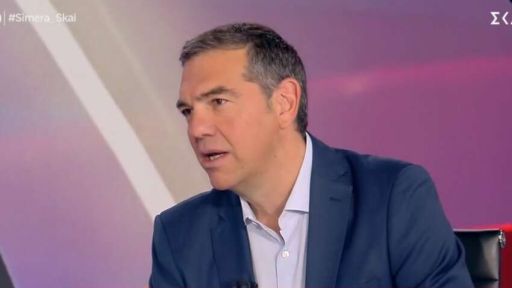
The growing anger across the country, however, has recently brought Alexis Tsipras back onto the political stage in Athens.
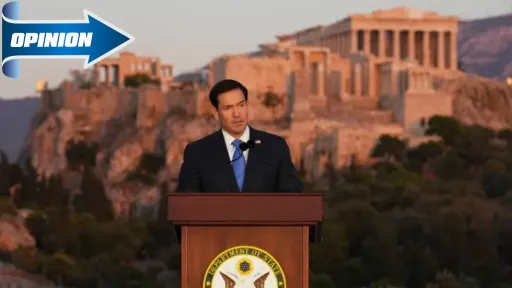
The new movement, the Greek Left Alliance (ELAS), launched against the backdrop of the Acropolis, signals just how substantial a political force this pent-up frustration has become.
But does this shift represent a genuine political breakthrough, or is it merely the product of opportunism brewing in the gaps of a fragmented opposition?
State erodes from within
What makes the perception of decay in Greece so persistent is the systematic interconnection between each issue.
When the Predator wiretapping scandal broke in 2022, the government’s initial reaction was to dismiss the matter as the work of “private actors.” However, the truth behind this narrative soon came to light.
Upon taking office in 2019, Mitsotakis had placed the National Intelligence Service, EYP, directly under his own office; this decision created an intelligence structure that was removed from oversight mechanisms and accountable only to the prime minister.
When the scandal broke, the intelligence chief and the prime minister’s nephew and chief adviser were forced to resign.
The government presented the link between the two developments as a coincidence. The opposition, however, interpreted it as a structural failure.
Far from putting an end to this debate, the legal proceedings only deepened it. The investigation, which began in March 2022, dragged on for years; in July 2024, the Supreme Court acquitted the intelligence services and political officials.
Subsequently, in February 2026, an Athens court convicted four individuals, including Tal Dilian, the founder of Intellexa and a former Israeli intelligence officer. However, not a single state official was put in the dock.
A lawyer summarized the situation as follows: “Someone who hasn’t followed this case would assume that the phones of 87 people were tapped by four individuals, acting on their own initiative, using software marketed exclusively to state intelligence services.”
The accountability produced by the legal process was an accountability without names.
The situation on the media front serves to complete this picture.
The Human Rights Watch documented that press freedom has been systematically eroded since New Democracy came to power in 2019. The report’s findings also included the discriminatory allocation of state advertising funds to media outlets close to the government and overt editorial interference at the public broadcaster ERT.
The members of the independent broadcasting regulatory body were reappointed in September 2023, bypassing the traditional consultation process. In the vote, only the far-right party Elleniki Lysi stood alongside New Democracy.
The fact that institutional independence has been put up for auction in such a blatant manner has accelerated the build-up of public perception.
When it comes to the issue of EU fund irregularities, it is clear that the criticism is no longer merely the language of internal opposition. The European Public Prosecutor’s Office submitted a 3,000-page dossier to the Greek Parliament in June 2025. The investigation also covers the former minister of agriculture.
Greece has so far been fined 415 million euros; with the expansion of the investigation, this figure is expected to reach billions.
The direct involvement of European institutions makes it difficult to frame the issue as merely an internal administrative problem.
When considered individually, each of these issues could be presented as controversial but defensible political decisions.
When read together, however, the picture takes on a different meaning: centralize the oversight powers, discipline the media, disrupt the balance within independent bodies, manage EU funds according to a partisan logic, and deflect investigations into public disasters by subsuming them within political calculations.
These events reflect a coherent approach to governance.
Tsipras’s return and what he brings with him
When founding ELAS, Tsipras claimed that the Greek state had “fallen into the hands of a caste that viewed state property as spoils.” He declared the restoration of institutional independence and the rule of law to be his primary objectives.
The rhetoric is forceful, the timing calculated.
Feeding off the widespread disillusionment caused by rising living costs, energy prices and mounting scandals, he aims to unite the fragmented left-wing electorate under a single banner and make it harder for Mitsotakis to secure an absolute majority.
However, this return comes with a historical burden.
Tsipras, who came to power in 2015 with a landslide election victory against austerity policies, was forced to back down at the negotiating table with Brussels by the end of that year and sign the bailout package.
Syriza, the left-wing ruling party that once governed Greece, suffered two heavy election defeats in quick succession. Tsipras stepped down as leader in 2023, resigned from parliament, and the party effectively disbanded.
Mitsotakis described this resurgence as the old Syriza, now operating under a new tax scheme, characterizing it as a “glorious plunge into the past”.
It would be misleading to interpret the government’s reaction as a mere defensive reflex. Tsipras’s track record is also controversial among opposition voters.
Moreover, traces of the Syriza era can be found in the wiretapping cases: the number of legal requests for negotiations regarding the EYP surged from 4,871 in 2015 to 11,680 by 2019, and the approval process was facilitated by the Syriza government, as recorded.
Tsipras has embraced the narrative of “institutional decay.” Yet a significant part of that narrative was written during his own tenure.
In the Greek public sphere, neither Mitsotakis nor Tsipras is perceived as a genuinely “new breed” of politician. Both are regarded as elites aligned with the European mainstream.
This observation clearly highlights the fundamental obstacle facing ELAS: the fact that the answer to the question of who benefits most from the narrative of institutional decay is the very figure who has been complicit in that decay gives rise to a decisive contradiction.
The political landscape also contains a third variable.
Maria Karystianou, who has emerged as the voice of the families of those who lost their lives in the Tempi disaster, has also founded her own political party. Mitsotakis responded to this development by stating that he approached it with a natural skepticism towards figures who claim that “only they are honest, and everyone else is corrupt.”
The fragmentation of the opposition to this extent could, in theory, complicate the ruling party’s electoral arithmetic. In practice, however, it prevents the alternatives from forming a clear center of gravity.
Does government grow stronger as opposition fragments?
Fragmentation within the opposition remains the key factor strengthening the government’s hand. In a country where the scars of the 2010s crisis are still fresh, many voters prefer Mitsotakis’s predictability to the uncertainty of a fragmented left.
The government is deliberately nurturing this situation; rather than actively fragmenting the opposition, Mitsotakis prefers to allow it to remain fragmented.
Breaking this pattern requires a structural transformation that goes far beyond a mere shift in rhetoric.
Whilst the narrative of institutional decay has gained traction among voters, its reflection at the ballot box depends on a credible alternative vision. That vision has yet to take shape.
ELAS’s programmatic framework encompasses income growth, decent wages, a strengthened welfare state, accessible housing and health care services, and more humane migration policies.
Each of these points is legitimate. However, viewed together, they appear to be a repetition of the series of promises made repeatedly since 2015. The freshness of the rhetoric must be assessed alongside its feasibility.
The true impact of Tsipras’s return may not lie in his capacity to seize power directly, but rather in his potential to reshape the existing balance of power.
Whilst initial poll data suggests ELAS could secure up to 18% of the vote, there is also talk that former conservative Prime Minister Antonis Samaras is pursuing a separate political initiative that will fuel divisions within New Democracy.
This is less a sign of a single-polar power struggle and more an indication that the political landscape has entered a multi-polar restructuring process.
Greece faces elections in 2027, but the real issue is the narrative, rather than the timetable.
The question of whether Predator is operated via the state broadcaster or through private actors remains unanswered. It remains unclear who will bear responsibility for the Tempi disaster. Investigations into EU funds continue to expand. International concerns regarding media independence have been documented.
The narrative of institutional decay, which brings all these issues under a single umbrella, retains its credibility. But the political power of this narrative is directly linked to the credibility of the figure who carries it.
Tsipras is stepping into this void; a part of that void has been opened up by his own past.
Greece’s political crisis hinges on whether institutions will truly become independent.
The ballot box will point to one person; accountability is another matter.
By Zeynep Gizem Ozpinar for turkiyetoday