NATO Summit opens in Ankara with focus on defense, Türkiye-US tie

NATO leaders convened in Ankara on Tuesday for the alliance's 2026 summit, with defense spending, military modernization, support for Ukraine and transatlantic security dominating the agenda, while high-level talks between Turkish President Recep Tayyip Erdogan and U.S. President Donald Trump signaled a possible breakthrough in long-standing defense disputes between Ankara and Washington.
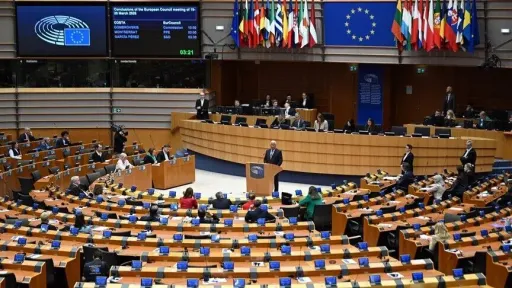
The two-day summit opened with a NATO Defense Industry Forum, where the alliance unveiled a series of multinational projects aimed at expanding military production, strengthening surveillance capabilities, countering drone threats and enhancing space cooperation.

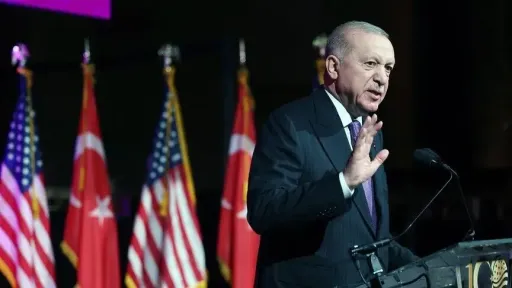
Meeting on the sidelines of the summit, Erdogan said he expected a "favorable decision" on Türkiye's bid to rejoin the U.S.-led F-35 fighter jet program, expressing confidence that previous U.S. commitments would be honored.
"The F-35 issue is not a new one for us," Erdogan said, noting that Türkiye had previously received commitments regarding aircraft deliveries and arguing that Turkish participation would strengthen both the country's defense and NATO's collective security.
Türkiye was removed from the F-35 program in 2019 after acquiring the Russian S-400 air defense system, with Washington arguing the system posed risks to the stealth fighter. Ankara has consistently rejected that assessment, insisting the two systems can coexist and maintaining that its exclusion violated program agreements.
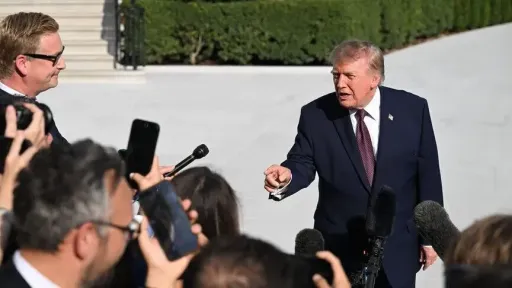
Trump indicated a significant shift in U.S. policy, saying his administration intends to lift sanctions imposed on Türkiye under the Countering America's Adversaries Through Sanctions Act (CAATSA) and would "certainly consider" restoring F-35 sales.
"We're going to be taking the sanctions off. We don't want to sanction friends," Trump said, adding that he was coordinating with senior administration officials to finalize the decision. Under U.S. law, however, permanently ending CAATSA sanctions requires congressional procedures.
Trump also dismissed concerns surrounding Türkiye's S-400 purchase and described bilateral relations as stronger than ever, praising Erdogan as "a respected leader" who has transformed Türkiye into a major military power.
The two leaders also discussed regional security, including the war in Ukraine, developments in Syria, Iran-U.S. relations and the humanitarian situation in Gaza.
Erdogan said Türkiye would continue mediation efforts aimed at improving relations between Washington and Tehran and expressed hope that the summit would contribute to peace efforts in Gaza. He also reaffirmed Ankara's commitment to helping facilitate negotiations between Russia and Ukraine.
Trump said both Russian President Vladimir Putin and Ukrainian President Volodymyr Zelenskyy wanted to reach a settlement, describing the conflict as "carnage" and expressing optimism that mediation efforts, including those led by Türkiye, could help bring the war to an end.
The U.S. president also praised Syria's interim leadership for stabilizing the country and reiterated concerns about burden-sharing within NATO, urging European allies to assume greater responsibility for their own defense.
NATO launches major defense projects
The summit began with the NATO Defense Industry Forum, where Secretary General Mark Rutte announced a series of multinational initiatives designed to accelerate defense production and modernize allied capabilities.
Among the flagship projects are additional Airbus A330 Multi Role Tanker Transport aircraft, joint procurement of MQ-4C Triton surveillance drones, and plans to replace NATO's aging AWACS fleet with up to 10 Saab GlobalEye airborne surveillance aircraft.
Rutte also unveiled the "Drone Edge" initiative, under which allies will invest more than $40 billion over the next five years in counter-drone capabilities while significantly expanding drone operator training.
Other initiatives include the "Front Door" procurement platform to simplify defense industry access to NATO programs, the NATO Engine project to expand industrial manufacturing capacity across member states, a critical raw materials initiative to secure strategic supply chains, and HALO, a multinational effort to strengthen military space capabilities.
Türkiye's defense industry highlighted
Türkiye emerged as one of the summit's key contributors to NATO's expanding defense agenda.
Deputy Secretary General Radmila Shekerinska announced Turkish participation in multiple multinational capability projects, including NATO's integrated air defense systems, satellite surveillance and military communications.
Türkiye will also contribute two domestically produced observation satellites to NATO's collective space capabilities and continue supporting the Alliance Persistent Surveillance from Space initiative.
Speaking alongside Rutte, European Commission President Ursula von der Leyen described Türkiye as one of NATO's largest military powers and an important partner for both the alliance and the European Union.
She said closer cooperation between Türkiye and European defense initiatives presented significant opportunities as Europe accelerates defense investment.
Rutte praised Türkiye's defense industrial model, citing the country's network of roughly 3,000 defense companies as an example that other allies are studying.
"NATO is already benefiting from what Türkiye is doing in terms of defense industrial output," he said, highlighting companies such as ASELSAN and Türkiye's growing role in supplying defense technologies across the alliance.
Leaders focus on security challenges

As the summit entered its second day, Rutte said NATO had become "much stronger" through increased defense spending and stressed the need to prevent Russia and China from expanding their influence in strategically important regions such as the Arctic.
He said allied leaders were also expected to reaffirm that Iran must never acquire nuclear weapons and discuss the security of maritime trade through the Strait of Hormuz.
The summit, hosted by Türkiye on July 7-8, brings together leaders of NATO's 32 member states to advance commitments on defense spending, expand military production, sustain support for Ukraine and address evolving security challenges facing the alliance.
Source:AA