Tensions flare again in Strait of Hormuz after tanker struck as NATO weighs possible response

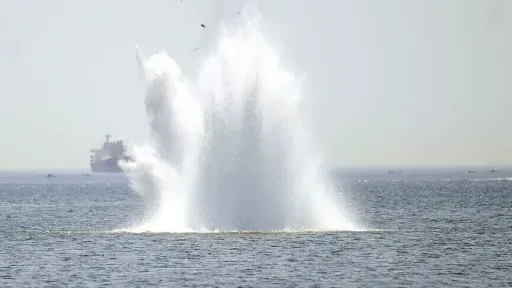
Security concerns in the Strait of Hormuz escalated on Monday after an oil tanker caught fire when it was struck by a projectile off the coast of Oman, while reports indicated renewed Iranian attacks on commercial shipping.
The United Kingdom Maritime Trade Operations (UKMTO) said the incident occurred about eight nautical miles east of Limah, Oman, as the tanker was sailing southbound.
According to UKMTO, the vessel was struck on its port side by an "unknown projectile," causing a fire. The agency said no casualties or environmental damage were reported and advised ships transiting the area to exercise caution while authorities investigate.
Axios, citing two unnamed U.S. officials, reported that Iran's Islamic Revolutionary Guard Corps (IRGC) fired at least two missiles at commercial vessels in the Strait of Hormuz. One official said a second ship was also hit and sustained significant damage.
Iranian media, citing unnamed sources, claimed a Qatari oil tanker traveling through the Omani route with U.S. Navy support had been targeted after ignoring repeated warnings.
Fragile truce under renewed pressure
The latest incident has raised concerns over the durability of a memorandum of understanding signed last month between Washington and Tehran to halt hostilities and reopen the strategic waterway following weeks of military confrontation.
Although commercial shipping resumed after the agreement, Iran has maintained that vessels must remain within an authorized corridor along its coastline rather than returning to pre-conflict navigation arrangements.
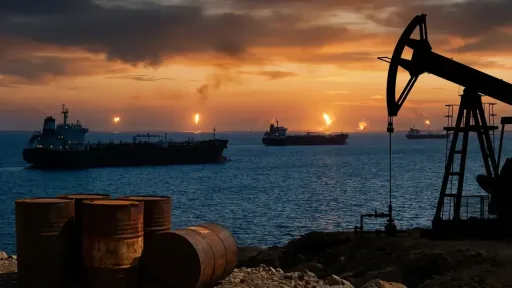
The Strait of Hormuz remains one of the world's most important energy transit routes, with the U.S. Energy Information Administration estimating that around 20 million barrels of crude oil passed through the waterway each day in 2024, accounting for nearly one-fifth of global oil supply.
NATO says any Gulf mission requires political consensus
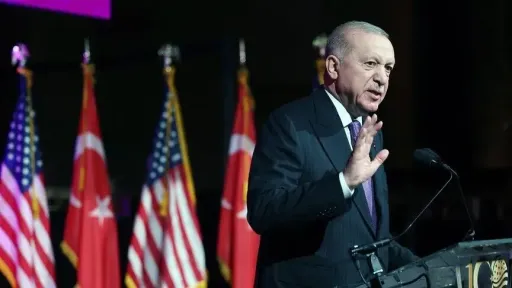
As NATO leaders gather for the alliance's summit in Ankara, a NATO official said any potential alliance mission to safeguard the Strait of Hormuz or clear naval mines would depend on political agreement among member states.
Asked whether NATO was considering a mission similar to its mine-clearing operation in the Black Sea, the official said any deployment would "fully depend on how the situation evolves and also on the level of political consensus within the alliance."
The official described the Gulf as an important area for testing new military capabilities because of its complex security environment, extensive use of unmanned systems and ongoing demining activities.
However, the official noted that any future military presence might not necessarily operate under NATO command.
Without unanimous backing, the official said operations would more likely be carried out through "coalitions of the willing," since the Gulf is not traditionally within NATO's area of responsibility.
The official added that several allies are already increasing their presence in the region, noting that France and the United Kingdom have deployed assets while a Dutch frigate is also heading to the area.
Trump says diplomacy preferred but military option remains
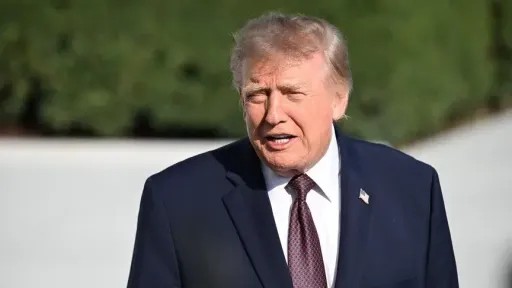
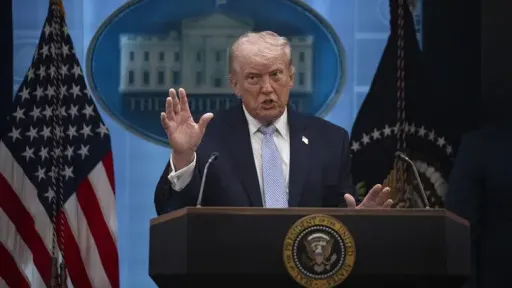
Before departing for the NATO summit in Ankara, U.S. President Donald Trump said Washington remained committed to negotiating a nuclear agreement with Iran but warned that military action remained an option if diplomacy failed.
"We're either going to make a deal or we're going to finish the job," Trump told reporters at the White House.
He said he preferred a negotiated solution but insisted that Iran could not be allowed to acquire a nuclear weapon.
Later, speaking during a White House event, Trump claimed recent U.S. military operations had significantly weakened Iran's armed forces and repeated that Tehran was eager to reach an agreement.
"We're gonna win one way or the other. We'll win the nice way or the not nice way," he said.
Source:turkiyetoday