Eastern Macedonia and Thrace Regional Council says no to buses on new Demircik–Bulgarian border road

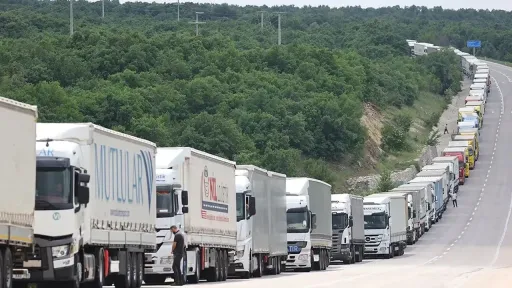
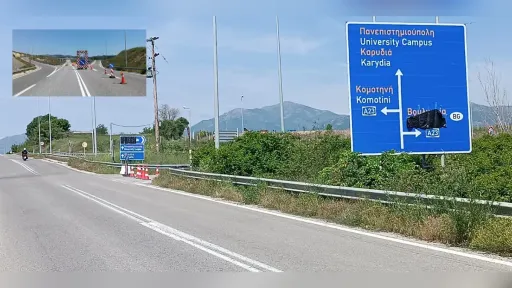
The Regional Council of Eastern Macedonia and Thrace (EMT) has decided not to allow buses to operate on the newly inaugurated Dimario–Greek-Bulgarian Border Road, citing serious concerns over road safety and the condition of the surrounding transport network.
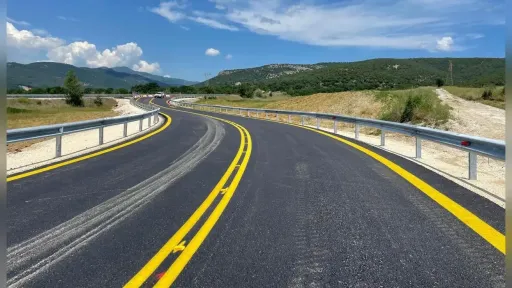
The issue was discussed during the Council’s session on Wednesday, January 28, following the recent inauguration of a 7-kilometer section of the road by Greece’s Minister of Infrastructure and Transport, Christos Dimas.
Debate Over Vehicle Restrictions on the New Border Route
The initial proposal submitted to the Council recommended:
However, the opposition strongly objected, not only to the circulation of buses but also to allowing lighter vehicles under 3.5 tons.
Opposition members argued that beyond the newly completed section, the remaining road network is old, narrow, and unsuitable for increased cross-border traffic, particularly as it passes through residential areas and provincial roads with widths as narrow as five meters in certain locations.
Regional Governor: Road Still Incomplete
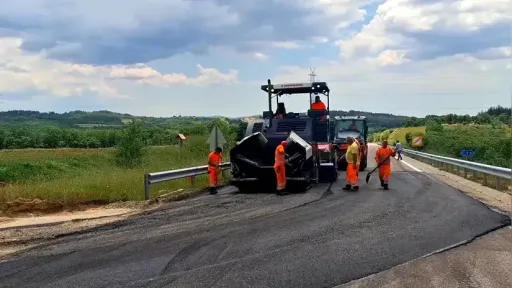
Regional Governor Christodoulos Topsidis acknowledged that while the Dimario–Bulgarian Border road has been opened to traffic, two additional sections remain unfinished, limiting its full functionality.
According to Topsidis, the Technical Services Department assessed bus circulation and found significant challenges due to:
- Roads passing through villages,
- Narrow provincial road segments,
- Increased safety risks with added border traffic.
Despite this, the service initially proposed allowing buses, noting that KTEL buses already operate within local settlements.
Long-Standing Demand for Bus Routes
Governor Topsidis described the operation of bus routes through border crossings as a long-standing request, expressing the view that activating the Dimario crossing could also enhance traffic flow through the Nymfaia vertical axis.
He added that increased police presence, requested from the Ministry of Citizen Protection, along with the potential economic benefits for the region, were factors supporting the original proposal.
However, he warned that if buses are excluded from the outset, it may take many years before such routes are eventually introduced, given delays in completing the remaining road segments.
Safety Concerns From Regional Officials
Deputy Regional Governor for Transport and Communications, Irfan Chatzigkene, emphasized that residents demand assurances regarding:
- Road safety,
- Accident prevention,
- Protection of local communities.
He proposed restricting both buses and heavy vehicles until the remaining sections of the road are completed and called for guarantees on proper road signage and traffic management.
Opposition Calls for Withdrawal or Closure of the Road
Opposition leader Christos Metios, head of the “New Regional Renaissance” faction, criticized both the proposal and the broader handling of the project, calling for the issue to be withdrawn entirely.
He accused the regional administration of poor planning and political opportunism, arguing that warnings about the inadequate road network had been ignored before and after the inauguration.
Similar concerns were raised by regional councillors Nikos Tsalikidis and Stergios Iliopoulos, who described the project as a “European-level road connecting to rural dirt roads.”
Iliopoulos proposed closing the road entirely until:
- All sections are completed,
- Safety conditions are fully guaranteed.
€30 Million at Risk if Road Had Not Opened
Responding to criticism, Governor Topsidis revealed that the inauguration was expedited because failure to open the road by February 15 would have required Greece to return €30 million in EU funding.
He placed responsibility on the previous regional administration, stating that for 6.5 years no adequate preparation had been made for the road’s operation, despite known delays in completing the remaining sections.
Final Decision: No Buses Allowed
Ultimately, due to the concerns raised during the debate, the Council approved the proposal without allowing buses to use the new road.
The decision was passed by the ruling majority, while the opposition refused to support it.