Eastern Macedonia and Thrace needs investment strategy with strong social sustainability, experts say in Gümülcine Forum
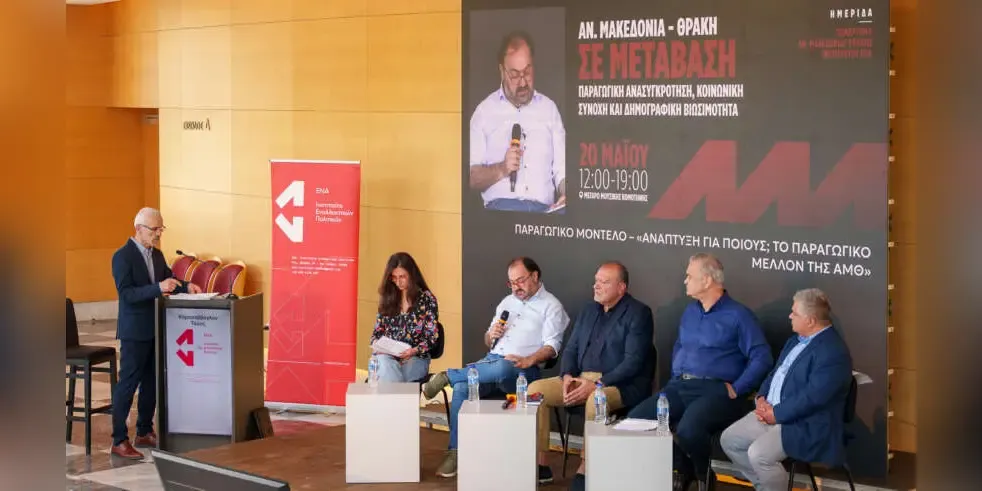
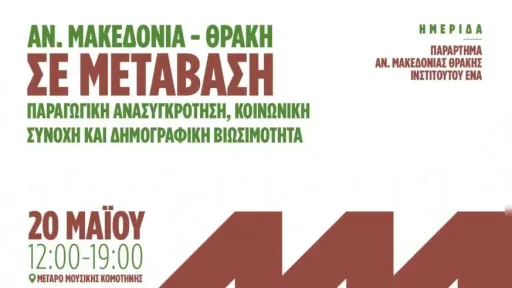
A wide-ranging discussion on development, demographic pressures, and social cohesion in Eastern Macedonia and Thrace took place during a policy forum organized by the ENA Institute’s regional branch in Gümülcine on May 20, 2026.
The event, titled “Eastern Macedonia–Thrace in Transition: Productive Reconstruction, Social Cohesion and Demographic Sustainability,” brought together politicians, academics, and civil society representatives to address the region’s long-term challenges.
The forum highlighted the urgent need for a renewed development model, with participants emphasizing that the region is facing interconnected pressures including demographic decline, shifts in the productive economy, energy transition, and weakening social trust in institutions.
In the opening speech, Stathis Giannakidis underlined the importance of designing a sustainable growth strategy focused on population retention, economic restructuring, and long-term regional viability.
The first panel focused on demographic change and social inequalities, pointing to growing disparities between urban centers and rural areas, infrastructure deficits, and difficulties in maintaining an active workforce in the region.
The second discussion centered on the regional production model and the question of “development for whom,” with emphasis on energy investments, agri-food production, and manufacturing. Speakers stressed the need to ensure that large-scale investments translate into tangible benefits for local communities and stable employment opportunities, while also recognizing the value of smaller-scale initiatives with strong social and environmental impact.
The final panel addressed the link between political strategy and regional planning, highlighting the role of Democritus University of Thrace as a key institutional actor. Discussions also explored the need to rebuild public trust in politics, strengthen local governance mechanisms, and encourage new forms of political cooperation and consensus-building.