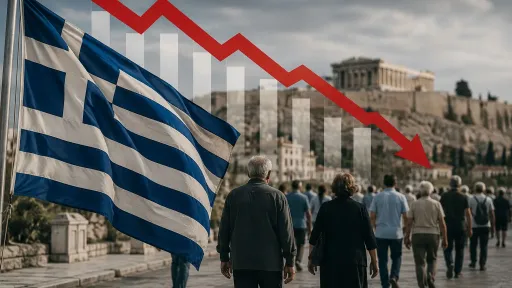
Greece faces deepening demographic crisis: 650,000 more elderly expected by 2050

Greece is confronting an accelerating demographic crisis, with projections indicating that the population aged 65 and above will increase by 650,000 by 2050. At the same time, the country’s total population is expected to decline by approximately 1.25 million, falling below 9 million from today’s roughly 10 million legal residents, according to research by the Institute for Demographic Studies and Research.
The study, led by Viron Goktzamanis of Thessaly University, highlights the dual challenge of an aging population and shrinking youth demographics, with low fertility and declining numbers of children under 14 cited as the main drivers.
Sixfold Increase in Elderly Population
- Between 1951 and 2023, the population aged 65+ increased sixfold.
- In contrast, total population grew only 1.4 times in the same period.
- The share of 65+ individuals rose from 7% in the early 1950s to 23% in 2024.
- By 2050, the elderly population is projected to rise by an additional 650,000.
Fertility Rates Plummet
Annual births have fallen dramatically from around 117,000 in 2007-2008 to 65,500 in 2025. Most births (approximately 90%) occur among women aged 25-44, yet this group’s population declined by 27% between 2007 and 2025 due to:
Collapse of post-1980 fertility rates
- Mass emigration of women in this age group after 2010
- Social Security Under Pressure
Experts warn that countries facing similar demographic challenges, like Greece, will soon experience structural pressures on pension systems, social protection expenditures, and labor force availability.
Policy Recommendations
The study proposes measures to counter demographic decline, including:
- Reducing the high costs of child-rearing, particularly in education and healthcare.
- Improving work-family balance.
- Expanding affordable housing for youth to ease the housing crisis.
- Supporting young people in their transition to adulthood and increasing real incomes.
- Reducing uncertainty about the future, which currently delays marriage and childbearing.
Greece Among Europe’s Oldest Countries
International comparisons show:
West Africa: 65+ ratio at 3%
East Asia: 10%
Europe: 21%
EU average: 27.5%
Japan leads globally at nearly 30%
In Europe, Italy, Greece, Bulgaria, Finland, and Portugal all have 65+ ratios around 23–24%.
China’s rapid aging is notable: Greece’s 65+ share took 58 years to rise from 9% to 23%, whereas China reached the same increase in just 25 years.
Experts emphasize that falling fertility accelerates population aging, directly impacting economic balance. In Greece, the demographic crisis is no longer a future projection—it is a present reality. Structural reforms will be critical for the country’s social and economic sustainability.