Tempi train crash trial descends into chaos

Three years after the Tempi train disaster that killed 57, the trial’s opening day descended into confusion as families protested courtroom conditions and demanded accountability.
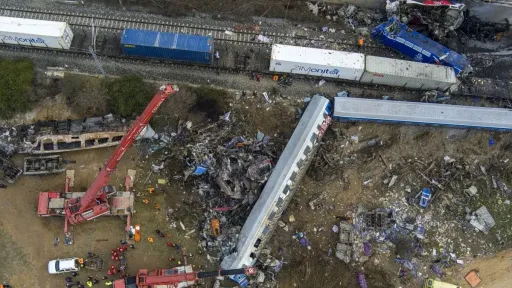
The long-awaited trial over the Tempi train crash began in Larissa but quickly descended into chaos. The February 28, 2023, collision near Tempi claimed 57 lives, many of them students returning from a holiday weekend.
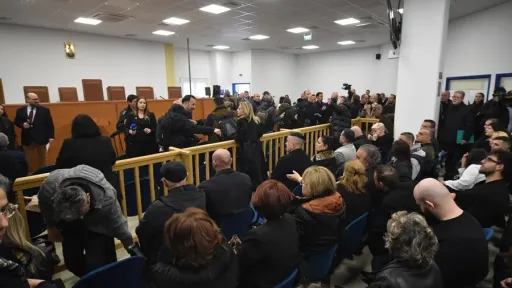
The hearing lasted only a few hours, halted after relatives and lawyers raised concerns over overcrowding, safety hazards, and what they described as yet another humiliation in a case that has fueled public outrage across Greece. Thirty-six defendants are on trial, and more than 350 witnesses are expected to testify in a case likely to last for years. Defendants include the station master on duty, railway officials, Transport Ministry personnel, and former Hellenic Train executives, with some facing life imprisonment.
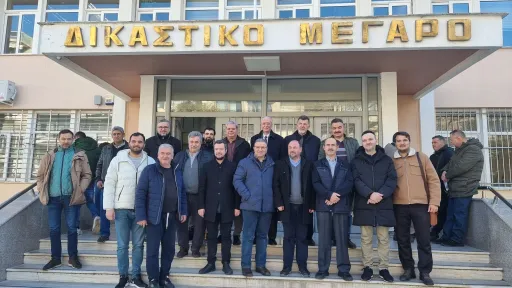
Outside the courthouse, families criticized the trial’s delayed start and lack of answers. Pavlos Aslanidis, head of the Association of Victims’ Families, told reporters: “This trial is starting far too late. We want exemplary punishment for those responsible.” Pediatrician Maria Karystianou, who lost her daughter in the crash, said no investigation has explained how her child “burned alive,” emphasizing that the truth must come out.
Tensions inside the courtroom mirrored the anger outside. Relatives shouted at former OSE president Spyros Pateras, demanding accountability for the freight train’s cargo and the fire that followed the crash.
Courtroom conditions quickly became a focal point. The specially arranged hall measured 283 square meters but had only 120 seats, leaving many standing, including lawyers, journalists, and family members. Complaints about air circulation, visibility, and basic safety led lawyers to request an urgent fire safety inspection.
The trial president initially began reading the names of the accused but was interrupted repeatedly. After four interruptions, the court adjourned the proceedings, scheduling the next session for April 1.
The chaotic opening reinforced families’ longstanding mistrust of the Greek state’s handling of the case. Christos Vlahos, a parent of one of the victims, told AFP: “This trial exposes the corruption of the Greek state—the corruption that killed our children.”
While no senior political figures are directly on trial, the case has fueled public calls for accountability, and two former ministers—including ex-Transport Minister Kostas Karamanlis—face only misdemeanor charges. Families have repeatedly criticized authorities for shielding officials, mishandling evidence, and leaving critical questions unanswered.
Government spokesperson Pavlos Marinakis insisted the courtroom met planning requirements with 460 seats, but families and lawyers said the reality was far from adequate, adding further indignity to an already traumatic process.
The trial will resume on April 1, with the first day leaving unresolved questions about whether justice can deliver the clarity and accountability families seek.