Plans for riverbed expansion and restoration move ahead under EU climate initiative

Efforts to mitigate flooding and improve water quality in the Xanthi region are moving forward, as regional authorities take steps to restore and expand the riverbeds of the Kosynthos and Laspias rivers.
The initiative is part of the European Union-funded RESIST project, which aims to enhance climate resilience across vulnerable areas of the EU.
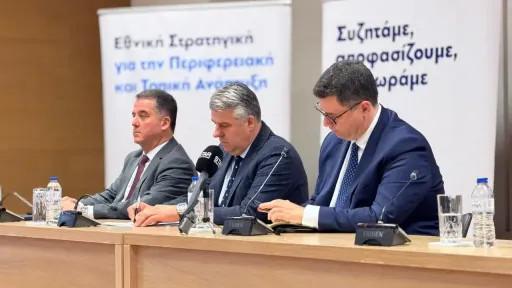
A working meeting was recently held in Komotini, hosted by the Region of Eastern Macedonia and Thrace, and attended by Regional Governor Hristodoulos Topsidis.
The event marked the completion of the first phase of the RESIST (Regions for climate change/Resilience through Innovation, Science and Technology) project, which is supported by the Horizon Europe programme.
The five-year project focuses on developing nature-based solutions to tackle five key climate challenges: heatwaves, floods, droughts, biodiversity loss, and air pollution.
Advanced technologies such as digital twins—virtual simulations of real environments—are being used to evaluate the effectiveness of interventions.
For the region, the main concerns being addressed are flooding and water quality. During the meeting, stakeholders presented a series of proposed measures for the rivers Kosynthos and Laspias, including:
Widening and restoring riverbeds
Low-cost bypasses and diversions
Watershed restoration
Earthworks to create small retention basins
Installation of sediment barriers
Governor Topsidis expressed strong support for the project, noting that “the Region of Eastern Macedonia and Thrace is recognized as a leader in implementing such innovative initiatives.” The project has already received positive feedback from the European Commission.
Participants in the meeting included university professors, researchers, and technical advisors, among them Felina Kazakou, Antonis Gasteratos, Hristos Akratos, Yorgos Koutalieris, Symeon Symeonidis, Vasilis Perifanis and Artemis Tsolakis, who serves as the project coordinator.
ERT