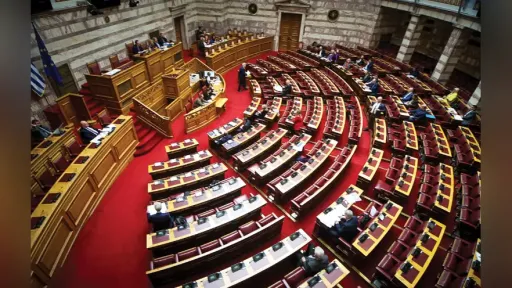
Greece unveils Major Local Government Reform: New unified code transforms municipal and regional governance

The Greek government has presented a sweeping reform package introducing a new Unified Local Government Code, aimed at reshaping the structure and operation of municipalities and regions across the country, including the Region of Eastern Macedonia and Thrace.
The draft law, currently open for public consultation until June 4, 2026, is expected to be submitted to Parliament within June and marks one of the most significant overhauls of local administration in decades.
A Unified Framework for Local Governance
According to the Ministry of Interior, the new Code consolidates decades of fragmented legislation into a single, unified legal framework. The reform seeks to eliminate legal complexity, ensure consistent interpretation of rules, and improve administrative efficiency at both municipal and regional levels.
Officials describe the initiative as a “turning point” for local governance, emphasizing transparency, digital transformation, and stronger citizen participation.
Key Structural Changes
The reform introduces a wide range of changes, including:
- Consolidation of all core local government legislation into a single code
- Abolition or integration of outdated and scattered legal provisions
- Strengthening transparency and accountability mechanisms
- Expansion of digital governance tools and services
- Reorganization of responsibilities between state, municipalities, and regions
- A major objective is to improve service delivery and reduce bureaucratic overlap that has long affected local administration.
Ten Major Reforms Introduced
Among the most notable changes:
- Unified legal framework for municipalities and regions to eliminate overlapping regulations
- Citizen participation tools, including advisory referendums via electronic voting
- Greater transparency and accountability for elected officials
- Reorganization of governance structures to clarify responsibilities
- Stronger financial management systems for local authorities
- Independent legality control system over local government decisions
- Updated status of elected officials, including compensation and duties
- Clear division of responsibilities under a multi-level governance model
- Changes in local elections, including abolition of the second round and potential electronic voting options
- Digital transformation of local government services and citizen interaction
Electoral System Changes Draw Attention
One of the most debated provisions is the reform of local elections, including the abolition of the second round of voting and the introduction of electronic voting in designated polling stations under judicial supervision.
Officials argue that the changes aim to enhance participation and strengthen the legitimacy of elected local authorities.
Digitalization at the Core of Reform
The new Code places strong emphasis on digital governance, introducing interoperable systems and online platforms designed to improve citizen access, participation, and administrative efficiency.
Long-Term Vision for Local Government
The reform also restructures the legal architecture of local governance into six comprehensive sections covering institutional organization, financial management, administrative responsibilities, oversight mechanisms, and operational standards.
The Ministry of Interior states that the Code also aligns Greece’s local governance system with the European Charter of Local Self-Government.
Conclusion
The proposed reform represents a foundational shift in how municipalities and regions operate, with a focus on efficiency, transparency, and modernization. If adopted, it will redefine the relationship between citizens and local authorities across Greece.