Iran expands retaliation as missiles, drones target Gulf; US renews travel warning

Iran said it launched a new wave of retaliatory drone strikes targeting US military facilities in Jordan, Kuwait and Bahrain as part of the 14th phase of its "Thunder" operation, claiming attacks hit ammunition depots, fuel storage facilities and communications infrastructure.
According to Iranian state-linked media, explosions were also reported near the headquarters of the US Fifth Fleet in Bahrain. Tehran also claimed earlier strikes targeted US military assets in Oman, Syria, Jordan and Bahrain, including air bases, radar systems, weapons depots and military aircraft.
Gulf states intercept missiles and drones
Kuwait said its air defense forces intercepted Iranian missiles and drones targeting the country, stressing that explosions heard by residents were caused by interception operations.
The Kuwaiti military urged the public to follow official security instructions as tensions continued to escalate across the Gulf.
Jordan's armed forces also announced that air defense units intercepted 10 Iranian missiles heading toward the kingdom during the early hours of Saturday.
Military officials said there were no casualties or property damage, while engineering teams were deployed to collect missile debris that fell in several locations.
Bahrain also reported intercepting Iranian missiles and drones, while Qatar said its air defenses thwarted several aerial attacks. One child was reportedly injured by falling shrapnel during interception operations.
US completes seventh straight night of strikes
The US military said it concluded its seventh consecutive night of strikes against Iran, targeting surveillance facilities, military logistics infrastructure, underground weapons storage sites and maritime capabilities.
US Central Command said fighter aircraft, drones, warships and other military assets took part in the operation, adding that more than 50,000 American troops remain deployed across the Middle East.
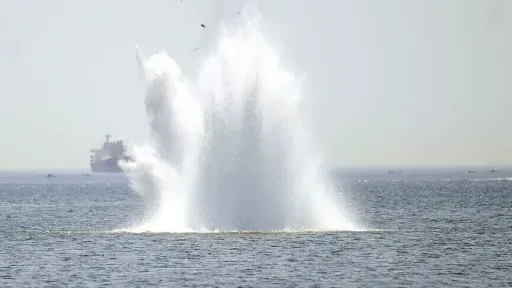
Washington also said it continues enforcing a naval blockade on vessels traveling to and from Iranian ports.
Washington issues fresh travel advisory
Amid the rapidly deteriorating security situation, the US State Department renewed its travel warning for the Middle East, urging Americans to exercise increased caution.
The department warned that the regional security environment remains highly volatile and advised US citizens to monitor developments closely, confirm flight schedules with airlines and review country-specific travel advisories before traveling.
Strait of Hormuz tensions threaten fragile peace
The latest escalation comes despite a Pakistan-mediated memorandum of understanding signed last month aimed at ending hostilities between the US and Iran.
Tensions have intensified again in recent days around the Strait of Hormuz, with both sides exchanging military strikes, raising fears of a broader regional conflict involving countries hosting US military assets.
Source:AA