Özgür Ferhattax calls for fuel tax cuts instead of “Fuel Pass” subsidies

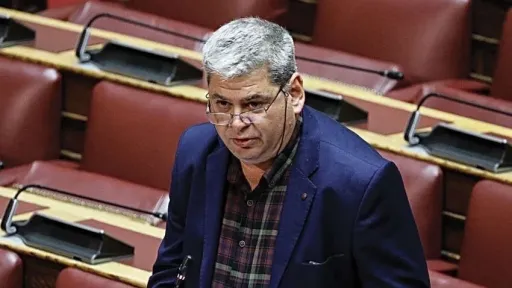
Özgür Ferhat, a lawmaker from the New Left Party, has urged the Greek government to cut fuel taxes instead of continuing temporary subsidy schemes such as the “Fuel Pass,” arguing that households and businesses need long-term structural relief from rising energy costs.
The proposal was submitted to the Greek Ministry of Economy and Finance as a parliamentary question, co-signed by nine MPs, highlighting mounting pressure on consumers due to persistent increases in fuel prices.
Rising Costs Strain Households and Businesses
According to the motion, soaring fuel prices are placing a heavy burden on families, the transport sector, small and medium-sized enterprises (SMEs), and producers across Greece. The lawmakers stressed that rising energy costs are driving up the overall cost of living, undermining economic stability and triggering price increases across supply chains.
The statement noted that higher fuel costs have a cascading effect, pushing up the prices of essential goods and services, thereby intensifying inflationary pressures nationwide.
Tax Burden Under Scrutiny
The MPs also criticized Greece’s fuel taxation system, arguing it imposes a disproportionate burden on consumers. In addition to excise duties, Value Added Tax (VAT) is applied on the total price, further inflating final costs at the pump.
Citing data from the Hellenic Competition Commission, the proposal pointed out that taxes on unleaded gasoline exceed €1 per liter, underlining the scale of the fiscal burden.
Geopolitics Driving Energy Prices
The parliamentary question also referenced global geopolitical tensions, particularly instability in the Middle East, as a key factor pushing energy prices upward. These developments, it argued, are increasing production, transportation, and distribution costs, leading to new waves of price hikes.
“Temporary Aid Is Not a Solution”
Ferhat and his colleagues argued that programs like the Fuel Pass provide only short-term relief and fail to address the root causes of rising living costs.
Instead, they called for permanent, structural measures, particularly reductions in fuel taxes, noting that several European countries have already adopted similar policies to shield consumers from energy shocks.
Key Questions to the Government
The MPs formally requested responses from the finance minister on the following:
- What long-term and effective measures are planned to protect households, businesses, and producers from rising fuel prices?
- Is the government considering reducing excise duties and VAT to achieve a direct and lasting decrease in fuel costs?
- Why are temporary subsidies like Fuel Pass preferred over reducing indirect taxes?
Call for Sustainable Economic Policies - Ferhat emphasized that tackling the cost-of-living crisis requires realistic and sustainable policies that continuously support households and the real economy, rather than short-lived financial aid programs.