EU allocates €277 million for Dedeağaç–Pythio Rail and Road Corridor
The European Commission has allocated €277 million in infrastructure funding for the launch of the Dedeağaç–Pythio rail and road corridor project, a major strategic transport initiative aimed at strengthening connectivity across Southeastern Europe.
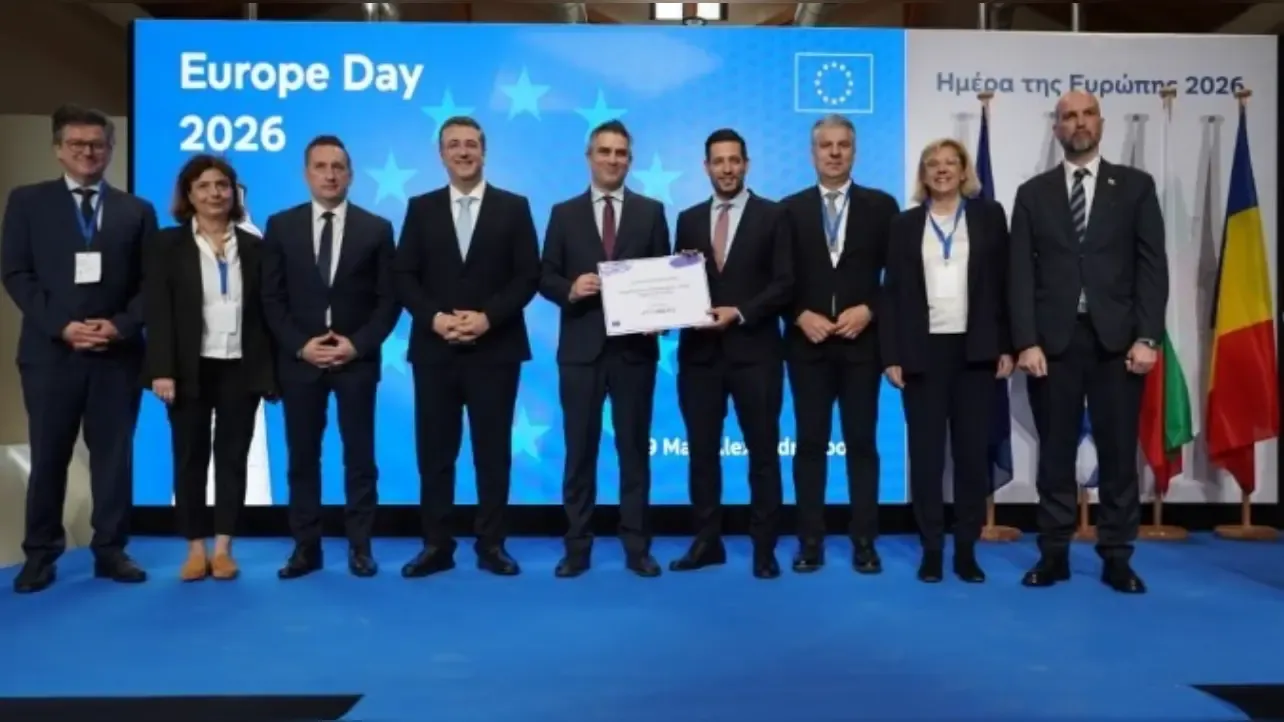
The funding package, provided through the EU’s Connecting Europe Facility (CEF), was officially presented by Apostolos Tzitzikostas to Greek Infrastructure and Transport Minister Christos Dimas during Europe Day events held at the Port of Dedeağaç.
The project covers a 68.3-kilometer transport corridor linking Dedeağaç with Pythio near the Turkish border and is considered one of the largest transport and infrastructure investments planned in Greece in the coming years.
Strategic Corridor Linking the Aegean and Black Sea
Speaking at the event, Commissioner Tzitzikostas described the project as a top strategic priority for both himself and the European Commission.
He emphasized that the new rail and road axis would form part of a broader European transport corridor connecting the Aegean Sea with the Black Sea, linking Selanik and Dedeağaç with Bucharest through Bulgaria and Romania.
According to EU officials, the corridor is expected to:
- Reduce transportation times
- Improve freight and passenger safety
- Strengthen supply chains and exports
- Enhance port connectivity in Northern Greece
- Boost tourism and regional economic development
- Bypassing the Turkish Straits
Tzitzikostas also highlighted the corridor’s geopolitical significance, noting that it would help establish an alternative transport route bypassing the Turkish Straits while connecting Northern Greek ports with Burgas, Varna, and Constanta.
The project was presented as a key element in strengthening:
- Military mobility within the EU and NATO
- Trade competitiveness and export capacity
- Tourism infrastructure and accessibility
- Thrace Positioned on Europe’s Strategic Map
The commissioner stated that the investment would significantly upgrade Thrace and Northern Greece while reinforcing the broader Eastern flank of the European Union.
He described the initiative as part of a wider European strategy responding to geopolitical instability, supply chain vulnerabilities, migration pressures, and the war in Ukraine.
Tzitzikostas stressed that Dedeağaç and Thrace are increasingly becoming strategic hubs in Europe’s transportation, energy, security, and defense architecture.
The Europe Day event also featured participation from Greek government officials, regional authorities, and diplomatic representatives from Romania and Bulgaria.