Talk in İskeçe examines Greece–Türkiye relations and regional geopolitics

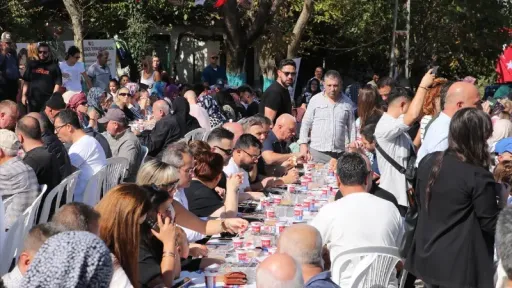
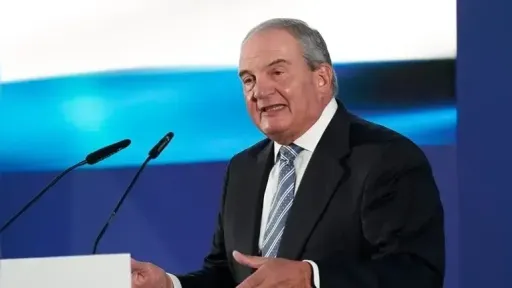
The Thrace Art and Tradition Foundation (ΙΘΤΠ) hosted a discussion on the dynamics of Greece–Türkiye relations on Saturday, 15 November, featuring former Deputy Minister, New Democracy MP, and academic Angelos Sirigos, alongside international relations expert Konstantinos Filis.
Angelos Sirigos: Strategic Importance of the Region
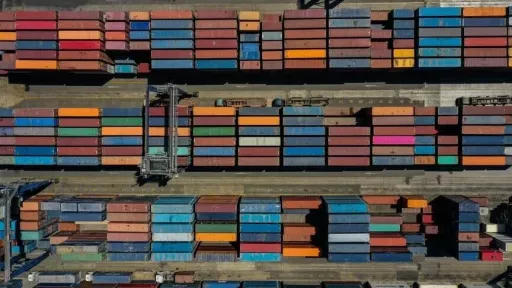
Sirigos opened the discussion by emphasizing the growing geopolitical significance of the region, highlighting the strategic role of energy and transport projects. He referenced the Burgas–Dedeağaç pipeline initiative of the 1990s and the currently debated Dedeağaç–Odessa railway, noting that the latter could reduce transit times between Odessa and Alexandroupoli from several days to 10–15 hours, representing a “geopolitical breakthrough.”
Drawing a comparison to the EU’s Rail Baltica project, Sirigos stressed the need for similar strategic infrastructure in the Balkans, reshaping Aegean–Black Sea connectivity.
Regarding U.S. presence in the region, he stated that Washington no longer views Greece and Türkiye as adversaries, focusing instead on uninterrupted trade routes and strategic flows. Nevertheless, he argued that current developments enhance Greece’s geopolitical weight.
Sirigos underlined that Greece aims to become an indispensable regional actor, achievable through energy transport, hydrocarbon exploration, electricity transmission projects, and integration into international transport networks. He highlighted the India–Middle East–Europe corridor as particularly significant.
Commenting on Chevron’s permit application for two offshore blocks south of Crete, Sirigos argued that the request, despite claims by Libya and Türkiye, indicates that Athens’ position aligns with international law. He noted that tensions in Greek–Turkish relations cannot be explained solely by historical factors, but are fueled by broader geopolitical dynamics.
Konstantinos Filis: Strategic and Geopolitical Factors
Filis addressed the sources of Greek–Turkish tensions, arguing they stem from recent strategic differences as much as historical legacies. While acknowledging historical biases and educational narratives shaping perceptions, he stressed that contemporary disputes are embedded in a broader geopolitical framework.
Filis criticized Greece’s public diplomacy efforts as insufficient and described Türkiye’s regional policy as “directly revisionist.” He said Ankara seeks to bifurcate sovereignty in the Aegean in ways inconsistent with international law and geography, describing the Türkiye–Libya maritime agreement as “borderline reckless.”
He highlighted that Türkiye’s claims—limiting islands to six nautical miles, without continental shelf or exclusive economic zone rights—are unprecedented globally. Filis also noted that Türkiye perceives Greece as a “revisionist” state that has quintupled its territory and population since 1830, while Türkiye lacks the institutional EU ties Greece enjoys.
Filis emphasized Türkiye’s young population, defense capabilities, and broad geopolitical influence as factors shaping regional balances and creating a sense of “strategic constraint” regarding Aegean islands. Both countries, he reminded, have been NATO allies since 1952, yet diverging historical and geopolitical trajectories continue to strain relations.
Sirigos on Maritime Jurisdiction
In a second turn, Sirigos focused on maritime law, asserting that the 12-nautical-mile limit is a fundamental international norm and that Türkiye’s stance is inconsistent with international law. He traced the historical evolution of territorial seas, from artillery range measurements to the 1982 UN Convention on the Law of the Sea (UNCLOS), noting that while Türkiye has not ratified the treaty, the 12-mile limit has become universally binding custom.
He stated that as of 2020, 149 of 153 coastal states have extended their territorial waters to 12 miles. Only Bosnia-Herzegovina, Singapore, and Jordan are exceptions for geographical reasons. Sirigos noted that Greece itself only extended its waters to 12 miles in the Ionian Sea in 2021, and cannot yet do so in the Aegean due to perceived military threats from Türkiye.
The expansion of territorial waters, Sirigos argued, is not just a political issue but a practical necessity, requiring military readiness and diplomatic coordination with major powers. He also pointed to mismatches between Greece’s 10-mile airspace and 6-mile territorial waters as creating legal vulnerabilities that could only be resolved by extending the latter.
U.S. and Russia Positions
Sirigos remarked that although the U.S. and Russia previously opposed the 12-mile extension, the transit passage mechanism now ensures uninterrupted maritime traffic, eliminating objections from major powers.
He criticized Türkiye’s claims denying islands any maritime rights, referencing over 30 international court decisions that grant islands territorial seas, continental shelf, and exclusive economic zones. He concluded that while partial exceptions may exist, Türkiye’s zero-rights stance is unprecedented.
Finally, Sirigos highlighted the importance of Greece’s alignment with emerging EU defense initiatives, noting that its choice of partners will be decisive in shaping the European defense architecture.