Development Conference in Gümülcine kicks off with low attendance

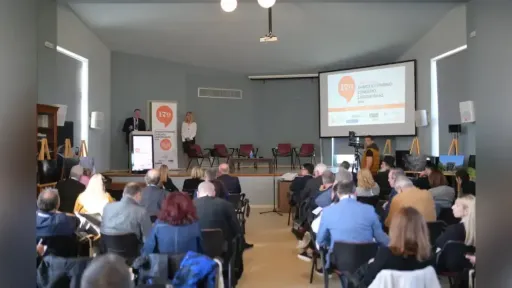
Taking place at the main amphitheater adjacent to the student dormitories of Thrace University, the two-day event features 25 sessions and more than 60 speakers discussing the development and growth of the region.
Notably absent from the speaker lineup are representatives from the local Turkish minority, which constitutes a significant portion of the region's population. The only Turkish speaker at the conference was Şaban Konte, a farmer from Kozluca village in İskeçe, who discussed the challenges faced in the Balkan tea production industry during his session titled "The Development of the Primary Sector and Thrace's Role in International Trade and Logistics."
The conference, organized by Hronos newspaper, Peloponnisos (Mora) newspaper, and the Regional Policies Observatory in collaboration with Thrace University, began with opening remarks and greetings.
Stavros Fanfanis, the owner of Hronos newspaper, delivered the opening speech, emphasizing the importance of Eastern Macedonia and Thrace for national interests and outlining the conference's goal of providing a visionary approach to the region's development.
Theodoros Luludis, president of the Regional Policies Observatory, also addressed the audience, highlighting the region's significance while noting its status as the poorest area in the country regarding development and investment. He stressed the need for equal rights among all citizens of the country, pointing out that residents of Eastern Macedonia and Thrace do not share the same rights as those in other regions.
Gümülcine Mayor Yannis Garanis welcomed attendees, underscoring the region's economic challenges and the municipality's commitment to supporting events focused on economic development. He remarked on the strategic location of the area, which remains disconnected from major urban centers and lacks railway connections. Garanis expressed concern over the declining population, particularly among the youth, due to economic hardships.
A representative from the rector of Thrace University, Fotios Maris, spoke about transforming the region's geographical and socioeconomic challenges into opportunities, calling it a gateway to Eastern Europe and thus granting it strategic importance.
In his remarks, the representative of Maronia-Gümülcine Metropolitan Panteleimon addressed the demographic crisis in the region, mentioning the depopulation of villages and the need for local residents to sell their properties, often to foreign buyers, which poses a threat to the Greek identity of the area.
The conference included a video message from Family Minister Sofia Zaharaki, who could not attend. She noted that the population of Eastern Macedonia and Thrace has decreased by 7.6% since the last census, while reiterating the government's commitment to economically supporting the region, which she described as having numerous advantages.
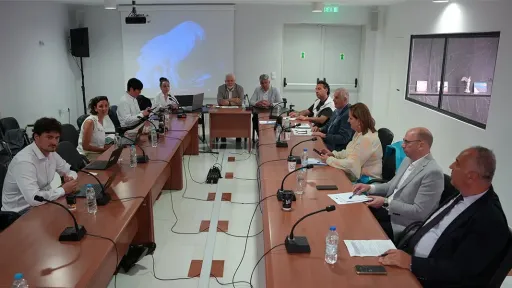
In a session moderated by ERT journalist Yannis Papathanasiu, Evripidis Stilyanidis, a New Democracy party MP and former minister, outlined five key areas for the region's development. He emphasized the importance of recognizing Thrace as a productive region, rich in natural resources and cultural diversity, including various religious and ethnic communities.
Stilyanidis stated, "We must consider how to evaluate this area effectively. By making significant strategic investments, we can reshape our approach. The first step involves enhancing our transport links via Egnatia Road, three ports, and two fully equipped airports."
He also called for fostering local businesses and creating employment opportunities, stressing the need for major companies to contribute to the local economy and sponsor events to promote the region.
Despite the agenda, the conference faced criticism for the low turnout, particularly among the Turkish minority community. Observers noted that the sessions attracted only a handful of attendees, raising concerns about the conference's representation and effectiveness.