Kavala hosts international conference on crisis governance, civil protection and resilience
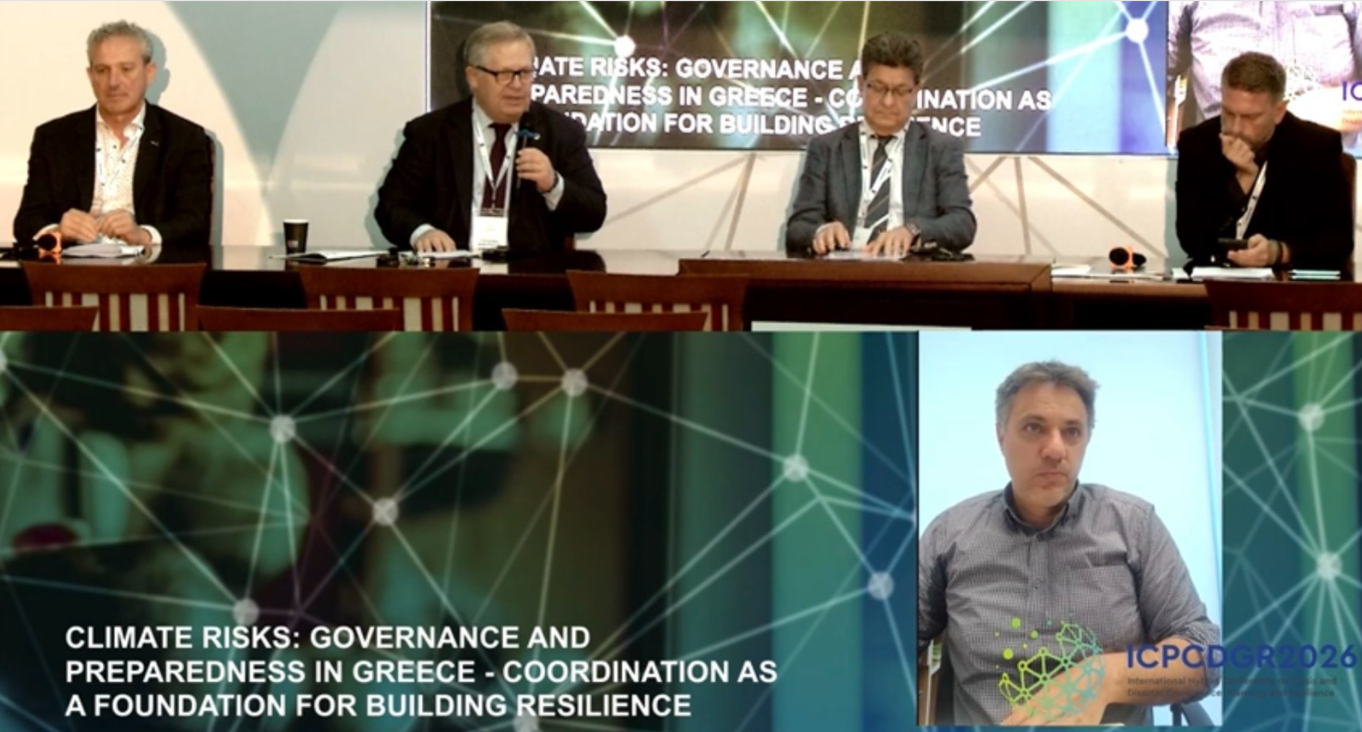
The city of Kavala became an international hub for discussions on crisis governance, disaster management, civil protection, and societal resilience during the “International Hybrid Conference on Crisis and Disaster Governance, Planning and Resilience” (ICPCDGR 2026), held from May 6 to May 9, 2026.
The conference was organized by Democritus University of Thrace in collaboration with York University and attracted more than 400 participants from 16 countries through both in-person and online attendance.
Focus on Crisis Management and Global Resilience
The international conference centered on modern scientific, institutional, and operational approaches to:
- Crisis and disaster governance
- Risk management and planning
- Civil protection
- Cybersecurity
- Infrastructure security
- Climate resilience
- Public safety and preparedness
Organizers emphasized the growing importance of interdisciplinary cooperation and international academic partnerships in addressing increasingly complex global threats, including climate-related disasters, hybrid threats, cyber risks, and public health emergencies.
Regional Officials Highlight Strategic Importance
The opening ceremony featured remarks by Theodoros A. Markopoulos, Deputy Regional Governor of Kavala and Acting Regional Governor of Eastern Macedonia and Thrace, representing Regional Governor Christodoulos Topsidis as well as the President of the Union of Greek Regions, Giorgos Hatzimarkos.
Markopoulos welcomed participants to Kavala and the region of Eastern Macedonia and Thrace, describing the hosting of such a major international event as an important distinction for the area.
He also underlined the strategic role of Democritus University of Thrace as a key academic and developmental institution for the wider region, including its university departments based in Kavala.
Climate Crisis and Security Challenges in Focus
During his address, Markopoulos stressed that modern societies face mounting challenges from climate change, natural disasters, hybrid warfare, cybersecurity threats, critical infrastructure vulnerabilities, and health crises.
He highlighted the essential role of regional administrations in crisis response, environmental protection, and safeguarding citizens’ quality of life.
According to conference discussions, effective crisis governance increasingly depends on:
- Institutional cooperation
- Scientific expertise
- Technological innovation
- Preventive planning
- Coordinated emergency response systems
- Eastern Macedonia and Thrace’s Strategic Position
Markopoulos also referred to the geostrategic significance of the Eastern Macedonia and Thrace region, located on the eastern border of the European Union.
He noted the region’s:
- Natural beauty
- Economic and energy significance
- Historical and cultural heritage
- Religious diversity
As a member of the European Committee of the Regions, he reaffirmed the region’s commitment to European principles and values.
The conference additionally included roundtable discussions where regional officials presented ongoing initiatives related to civil protection and emergency management policies in Eastern Macedonia and Thrace.