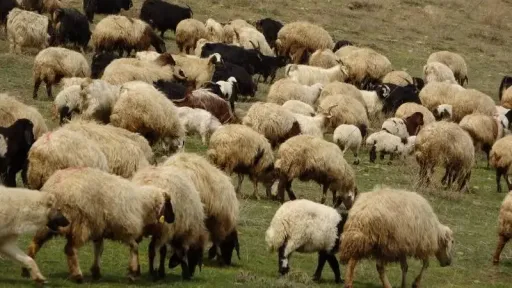
Discrepancies in Greece’s livestock data raise concerns

Administration and Control System (IACS) declarations, used by EU member states to manage and control payments to farmers. Yet, serious inconsistencies emerge when comparing these figures to actual milk production data.
While 48% of the animals are declared in Crete, the island contributed only 9.5% of sheep milk and 5.2% of goat milk to national deliveries in 2024. In contrast, Thessaly and western Greece, with far fewer animals, produced significantly more milk.
The data suggest extremely low average yields in areas like Rethymno, where milk output per animal is far below expected norms.
According to Nikos Kallinis, program manager for the Greek Common Agriculture Policy Strategic Plan (2023-2027) at the European Commission’s Directorate-General, Greek data is unreliable. “You cannot apply agricultural policy without accurate figures,” he said, pointing out Greece’s average milk yield per sheep is just 70 liters, while European averages range from 250 to 550 liters.
The inconsistencies extend to cattle. Despite 260,000 births in 2023, only 70,000 slaughters were recorded, raising questions about herd tracking.
Meanwhile, many farmers are withdrawing from organic subsidy programs after the Ministry of Rural Development announced payments will be made only after inspections.
Applications for organic beekeeping alone jumped from a budgeted €18 million to €166 million in requests, prompting scrutiny amid ongoing investigations into alleged misuse of EU agricultural subsidies distributed through Greece’s OPEKEPE agency.
Kathimerini