Kashmir: Calls grow for justice and self-determination

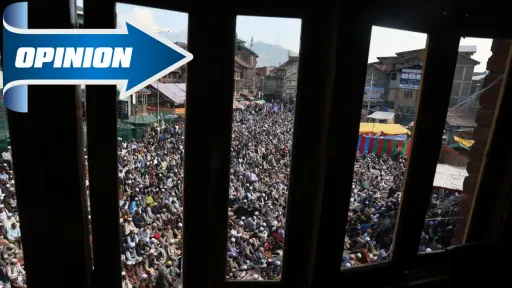
The people of Indian Illegally Occupied Jammu and Kashmir (IIOJK) continue to face widespread human rights violations and denial of their right to self-determination, highlighting what critics describe as a failure of the international community to uphold its own legal commitments.
In his article published in Daily Sabah, Yousaf Junaid notes that basic freedoms such as movement, expression and personal security have become increasingly restricted under heavy militarization in the region. Kashmir remains one of the world’s most militarized areas, with nearly 900,000 Indian troops deployed.
The dispute, rooted in the 1947 partition of British India, remains unresolved despite clear United Nations Security Council resolutions calling for a plebiscite to determine the will of the Kashmiri people. The revocation of Article 370 in August 2019 is described as a major setback, raising concerns over demographic change and violations of international law.
International organizations including the U.N. Office of the High Commissioner for Human Rights, Amnesty International and Human Rights Watch have documented persistent abuses, yet accountability remains absent. Junaid argues that selective global responses to human rights violations undermine the credibility of international institutions.
The article concludes that lasting peace in South Asia is unlikely without addressing the Kashmir issue and stresses that justice, accountability and respect for international law are long overdue for the Kashmiri people.