Decades on, Kashmir’s quest for freedom continues

October arrives with the gentle touch of autumn as leaves turn golden and the air grows cool, signaling the quiet passage of seasons. Nature reminds us that after every winter comes spring, a season of renewal, warmth and hope. Yet for the people of Jammu and Kashmir, that spring has remained heartbreakingly distant. For over 78 years, they have endured the long winter of uncertainty and oppression, waiting for justice, freedom and the fulfillment of promises once solemnly made by the United Nations and most importantly by India itself: the right to self-determination
On this day, 1947, Indian troops landed in Srinagar, beginning one of the most prolonged and painful occupations in modern history.
For millions of the Kashmiri people, Oct. 27 is not just a date; it is a living reminder of a promise broken, a future denied and a freedom yet to be realized. It symbolizes a struggle that has outlasted decades – a struggle for dignity, for recognition and for the simple right to determine one’s own destiny.
The dispute over Jammu and Kashmir stems from the very partition of British India in 1947. The partition plan envisioned that Muslim-majority areas would accede to Pakistan and Hindu-majority areas to India, with geographical contiguity being a key factor. Jammu and Kashmir, a Muslim-majority princely state bordering Pakistan, was to join Pakistan. However, under controversial and coercive circumstances, the then-Maharaja, Hari Singh, an unelected Hindu ruler, allowed Indian forces to enter the region. This illegitimate act, conducted without the consent of the Kashmiri people, laid the groundwork for decades of occupation and turmoil.
In January 1948, India itself took the matter to the U.N. Security Council. The U.N. responded with a series of resolutions affirming the right of the Kashmiri people to determine their own future through a free and impartial plebiscite conducted under U.N. supervision. Both India and Pakistan accepted this framework. But in the decades since, India has systematically avoided implementing the U.N. resolutions, fearing the likely outcome, which is a vote for accession to Pakistan. Instead, successive Indian governments have relied on legal, political and military measures to consolidate their hold over the territory, stifling the Kashmiri demand for self-determination through repression and demographic engineering.
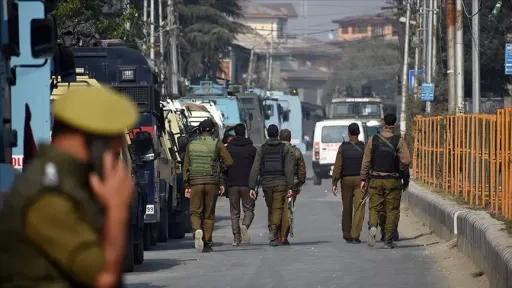
Today, Indian Illegally Occupied Jammu and Kashmir (IIOJK) is among the most militarized regions in the world, with over 900,000 Indian troops stationed across the territory. These forces have been involved in widespread human rights abuses, including arbitrary detentions, torture, enforced disappearances and extrajudicial killings – all shielded by draconian laws that grant security forces sweeping impunity.
The situation in IIOJK has deteriorated further following India’s revocation of Article 370 on Aug. 5, 2019, which stripped the region of its limited autonomy. Since then, a series of legal and administrative measures have been introduced to alter the demography and political landscape of Kashmir, from issuing domiciles to non-residents, amending land ownership laws, to redrawing electoral boundaries in a bid to disempower and disenfranchise Kashmiris and alter the Muslim identity of the region. These steps violate not only India’s own constitutional promises to the region, relevant UNSC resolutions and international law, especially the 4th Geneva Convention, which prohibit unilateral actions that alter the disputed territory’s status.
Despite decades of struggle, the resilience of the Kashmiri people remains unbroken. Pakistan has consistently upheld its commitment to the Kashmir cause and continues to call on the international community to fulfill its moral and legal obligations. The Jammu and Kashmir dispute has remained on the U.N.’s agenda for over seven and a half decades. Continued silence and inaction from the international community only embolden those who flout international norms and human rights standards.
The Kashmir dispute has been the cause of numerous conflicts in the region, and continues to jeopardize the prospects for regional peace, stability and prosperity. The region recently witnessed another act of violation of the principles of the U.N. Charter in the form of unprovoked and unjustified military aggression by India against Pakistan, under the false pretext of the Pahalgam incident.
In response, Pakistan had no choice but to exercise its right to self-defense. Thankfully, Pakistan not only repulsed the outrageous Indian attack, downed six of their fighter aircraft and inflicted heavy damage to several of India’s military installations. But these disturbing developments of Indian belligerent behavior are a reminder that the unresolved Jammu and Kashmir dispute remains the primary source of conflict in South Asia. There is an urgent need for renewed and concerted efforts under the U.N. auspices to secure a just, lasting and peaceful resolution of the dispute.
Kashmir is not merely a bilateral issue between India and Pakistan; it is a global test of justice and accountability. Alongside Palestine, Kashmir represents one of the last vestiges of unresolved colonial legacies where the promise of freedom has been delayed for generations. Oct. 27 should not be just a historical marker, but a call to conscience. It is time for the U.N., international community and human rights organizations to ensure the right to self-determination for the Kashmiris. The people of Jammu and Kashmir deserve what was pledged to them: the right to choose their own destiny, freely and fairly.
About the author
Ambassador of Pakistan to Türkiye
The views and opinions expressed in this article are solely those of the author. They do not necessarily reflect the editorial stance, values or position of Daily Sabah. The newspaper provides space for diverse perspectives as part of its commitment to open and informed public discussion.