Zeybek questions legal basis for blocking two children from minority school enrollment

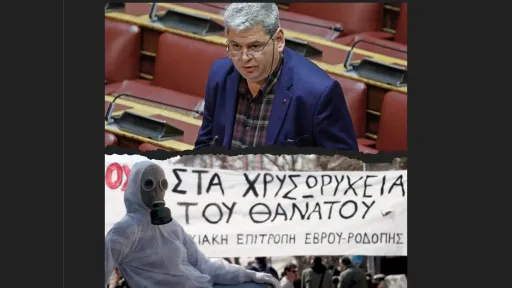
Xanthi (İskeçe) MP Hüseyin Zeybek has criticized the Greek Education Ministry’s response to his parliamentary question concerning the refusal to enroll two Greek citizens at the İskeçe Minority Primary School, arguing that the authorities have still not clearly identified the legal basis for the decision.
The case concerns two children living in İskeçe whose parents include one member of the Western Thrace Muslim minority and one foreign national. Zeybek raised the issue in Parliament in June after receiving complaints that the children had been denied first-grade enrollment at the school because one of their parents was not a Greek citizen.
Zeybek has asked the Education Ministry to specify which provision of the Treaty of Lausanne, Greek law or another official regulation was used to justify the refusal.
According to Zeybek, the ministry's response did not directly answer that question. He said the authorities instead referred to a July statement by Marigoula Kosmidou, acting Regional Director of Education for Eastern Macedonia and Thrace, concerning the broader operation and suspension of minority schools.
ZEYBEK: “WHICH PROVISION OF LAUSANNE?”
Zeybek said his parliamentary question concerned the legal grounds for a specific administrative decision rather than the wider issue of the operation of minority schools.
“If the refusal is based on the Treaty of Lausanne, this should be clearly stated,” Zeybek said, questioning where the treaty requires both parents of a child attending a minority school to be members of the minority or Greek citizens.
He also questioned whether similar cases could arise again in future and called on the ministry to provide a clear and binding explanation of the applicable rules.
GREEK AUTHORITIES CITE DOCUMENTS AND REGISTRATION REQUIREMENTS
In its July statement, the Regional Directorate of Education said minority schools were not being specifically targeted and attributed the reduction in their numbers primarily to demographic changes and declining student populations. It said eight minority schools had their operation suspended in the wider region, compared with 39 public schools. In İskeçe, the figures were two minority schools and 10 public schools.
The regional education authority also stated that the minimum student threshold for suspending a minority primary school's operation was nine students, compared with 15 for public primary schools. It said minority schools also receive two teachers for nine students, compared with one teacher for 15 students in public schools.
Regarding the two children whose enrollment was not approved at the İskeçe Minority Primary School, the Greek education authorities said the documents submitted during the initial enrollment process were found, following an examination by the competent authorities, to be inconsistent with legal requirements. The authority further stated that the parents who submitted the documents acknowledged this finding.
The Greek side also pointed to the reopening of the Kehros (Mehrikoz) Minority Primary School after the required number of students was reached and the enrollment applications were found to comply with the applicable requirements. It contrasted this with the Paleo Zigos (Mizanlı) Minority School, whose reopening was not approved after authorities said enrollment documents submitted for the school had been found to be unlawful.
The regional authority has said that its primary criterion in such decisions is the best interests of students.
DISPUTE OVER THE INTERPRETATION OF MINORITY EDUCATION RULES
The disagreement therefore centers on two different questions: Zeybek is seeking a specific legal explanation for the refusal to enroll the two children, while the education authorities have emphasized the legality of the submitted enrollment documents and the broader regulatory framework governing minority schools.
The Greek authorities also reiterated their position that the Muslim minority in Western Thrace is the minority recognized under the Treaty of Lausanne and said Greece fulfills its educational obligations under the treaty. These are the Greek authorities' stated positions and remain contested by representatives of the minority community and Turkish officials.
The latest exchange comes amid continuing debate over the operation of minority schools in Western Thrace and the legal framework governing minority education.