Trump links Iran war to midterms

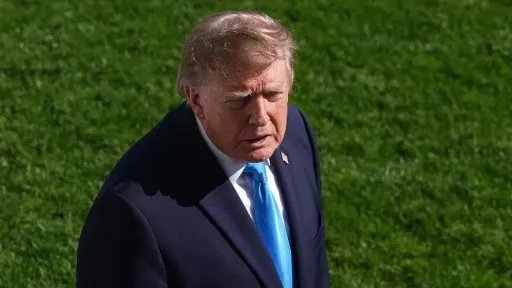
US President Donald Trump said the United States is not attacking Iran “in full” because of the November 3 midterm elections, predicting that the war could end shortly after the vote or possibly before it.
In an interview with Fox News on Thursday, Trump was asked about calls for Washington to escalate its military campaign against Iran.
“Well, maybe I don't do that because of the election,” Trump said, while reiterating his expectation that the conflict would end soon after the midterms.
Trump said Iran remained capable of launching missiles despite what he described as extensive damage to its military capabilities.
“They have missiles. They'll always have some missiles,” he said.
The president also rejected any suggestion that he regretted his handling of the conflict.
“If I had to do it again, I would do exactly as I did,” Trump said, arguing that the US had eliminated Iran’s nuclear capability and prevented a potentially wider threat to Israel, the Middle East and the United States.
Later Thursday, Trump rejected a Wall Street Journal report suggesting the war could continue until the end of his presidential term.
“There's not even a chance,” he told reporters while returning from a Republican midterm convention in Dallas, Texas.
Trump also linked the conflict to rising oil prices, saying prices would return to previous levels once the war ends.
Vance seeks unfiltered military assessments
Behind the scenes, Vice President JD Vance has reportedly been seeking assessments of the conflict that go beyond the administration’s public messaging.
According to The New York Times, Vance contacted US military commanders in the Middle East, Europe and Asia throughout the spring and summer, asking for their individual judgments on the war’s objectives, tactics, casualties and the strength of Iranian forces.
The discussions also examined Iran’s activities in the Strait of Hormuz and the condition of US weapons stockpiles.
Some commanders reportedly warned that supplies of critical munitions, including Patriot interceptor missiles, had fallen to exceptionally low levels. They also raised concerns about how moving additional weapons to the Middle East could affect US deterrence efforts involving China, Russia and North Korea.
The private assessments were reportedly at times significantly different from the more optimistic picture presented publicly by Trump and other senior administration officials.
The White House and Pentagon were aware of Vance’s efforts. Pentagon spokesman Sean Parnell said the defense secretary had facilitated direct access to combatant commanders so senior White House officials could receive “all available data points” on ongoing operations.
Vance also reportedly sought raw intelligence directly from CIA analysts, while the Office of Naval Intelligence prepared daily reports for him on shipping through the Strait of Hormuz.
Pakistan presses for return to talks
As military and strategic concerns persist, Pakistan is urging Washington and Tehran to return to negotiations under an agreement brokered by Islamabad.
Pakistan’s ambassador to the United Nations, Asim Iftikhar Ahmad, said Thursday that mistrust between the two sides and a “slight lack of willingness” to implement the Islamabad Memorandum had stalled the process.
The memorandum, signed in June after mediation by Pakistan and Qatar, called for an end to hostilities, a 60-day period for negotiations on a permanent settlement and arrangements to reopen the Strait of Hormuz to commercial shipping.
Iran has accused the United States of failing to implement provisions involving sanctions and the naval blockade, while Washington and Gulf states have demanded freedom of navigation through the strategic waterway.
Ahmad said Pakistan continues to maintain high-level communication with both Washington and Tehran and believes renewed negotiations remain the most sustainable way to end the confrontation.
“We believe that the best way to resolve the situation and to conclude a comprehensive and conclusive deal is to return to the negotiations table,” he said.
He acknowledged that mistrust remains on both sides but argued that Pakistan had previously succeeded in bringing the two countries toward a ceasefire and agreement despite intense fighting.
“There is no reason that we cannot again bring them back to the table,” Ahmad said.
Pakistani envoy warns over Gaza
Ahmad also criticized the implementation of the Gaza ceasefire, saying continuing violations were undermining prospects for a lasting political settlement.
He warned that Israeli policies in the occupied West Bank were threatening the possibility of a future Palestinian state and called for stronger international action.
“The Gaza plan is not being implemented in full,” Ahmad said, adding that hundreds of people had been killed since the ceasefire was announced.
Ahmad was also appointed Pakistan’s 34th foreign secretary on Thursday, succeeding Amna Baloch.
Source:AA