Israel tightens grip on Hebron, advances settlement plans in West Bank

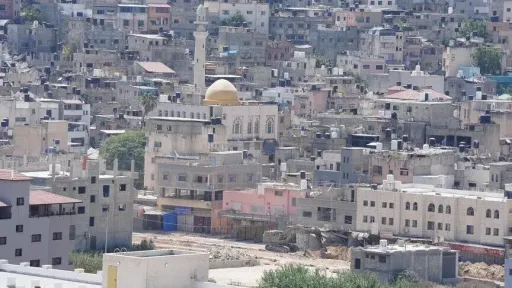
Israeli authorities have tightened restrictions across the occupied West Bank, sealing entrances to Hebron, advancing measures to take control of the Ibrahimi Mosque and approving a new Jewish religious school in the city, according to Palestinian officials and Israeli media reports.
Israeli Prime Minister Benjamin Netanyahu on Friday ordered the immediate closure of Hebron and instructed security forces to prepare for a comprehensive lockdown across the occupied West Bank, following a shooting that wounded five Israelis and the killing of two Palestinians by Israeli army fire near Halhul, in the Hebron district.
Israeli forces subsequently closed Hebron’s entrances with iron gates, placing the city under siege, eyewitnesses told Anadolu. Military checkpoints and earth mounds were also used to block roads leading to surrounding towns and residential communities, restricting movement across the area.
Hebron Governor Khaled Dodin said Israeli authorities had sealed the governorate with 106 iron gates and blocked 16 roads and entrances with earth mounds.
Palestinian officials warn of changes at Ibrahimi Mosque
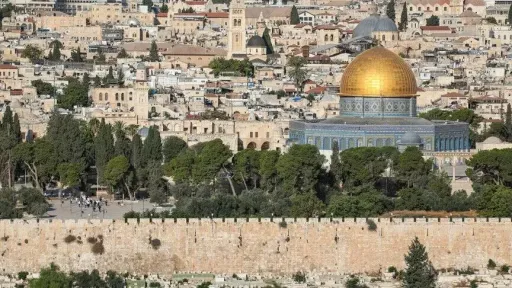
Dodin accused Israel of seeking to impose full control over the Ibrahimi Mosque in Hebron through successive measures, including construction work on its roof and control over electricity panels and water facilities.
He said construction work had continued for a second consecutive day and that the call to prayer had been prohibited at the mosque for 10 days.
The governor described the measures as an attempt to establish a new reality at the religious site. He said local authorities, in coordination with Palestinian institutions, had prepared a plan to strengthen the Palestinian presence inside the mosque and its courtyards while seeking international pressure to halt the actions.
The developments follow an Israeli decision to strip Hebron Municipality of powers over certain building and planning activities at the mosque, transferring those responsibilities to the nearby settlement of Kiryat Arba.
Palestinian authorities have rejected the move, arguing that it undermines the mosque’s historical and legal status.
Israel approves religious school and settlement expansion

In a separate development, Israeli authorities approved the construction of a new building for the Shavei Hebron Jewish religious school near Beit Romano in Hebron, according to Israel’s Channel 7.
The proposed building will cover approximately 1,000 square metres and was approved without requiring authorization from the Palestinian municipality, the report said.
The decision marks the first implementation of the transfer of planning powers announced by Israeli Finance Minister Bezalel Smotrich, who also holds a ministerial role in the Defense Ministry.
The Higher Planning Committee in Israel’s Civil Administration also approved plans for 576 housing units in settlements across the occupied West Bank, according to the report.
Hebron Mayor Youssef al-Jabari rejected the removal of the municipality’s authority, calling on the United States to uphold its responsibilities as a sponsor of agreements governing the city and to prevent unilateral changes.
Israeli operations extend to Jenin
Meanwhile, Israeli forces continued bulldozing and excavation work in the Al-Jabariyat neighbourhood of Jenin in the northern occupied West Bank, where they are preparing to establish a military camp, local sources told Anadolu.
The operation began on Tuesday evening on a seven-dunum agricultural plot, equivalent to approximately 7,000 square metres. The land was seized from its Palestinian owners despite being located in Area A, which falls under Palestinian Authority control under the 1995 Oslo II agreement.
Jenin Municipality Director-General Mamdouh Assaf described the move as a dangerous precedent, warning that establishing a military position in the area could have serious consequences for residents and their freedom of movement.
The site overlooks Jenin refugee camp and nearby residential neighbourhoods, giving it strategic importance for surveillance, he said.
Israeli forces have conducted an expanded military offensive in the northern West Bank since January 21, 2025, beginning in Jenin refugee camp before extending operations to the Tulkarm and Nur Shams refugee camps.
The operations have resulted in Palestinian deaths and injuries, extensive destruction of homes and infrastructure, and the displacement of tens of thousands of people, according to official Palestinian figures.
Rising violence and restrictions across the occupied West Bank
Dodin said Palestinian authorities had documented 763 attacks by Israeli settlers against Palestinians in the Hebron governorate and reported the establishment of more than 20 new settlement outposts in the area.
He placed the measures targeting the Ibrahimi Mosque within a broader pattern of violence and restrictions, including killings, arrests, displacement, home demolitions, land seizures and settlement expansion.
Located in Hebron’s Old City, the Ibrahimi Mosque is a major religious site that has been divided between Muslim and Jewish worshippers since the 1994 massacre, when an Israeli settler killed 29 Palestinian worshippers. Under the subsequent arrangement, 63% of the site was allocated to Jewish worshippers and 37% to Muslims.
The occupied West Bank, including East Jerusalem, has experienced escalating Israeli military operations and settler violence since the outbreak of the Gaza war in October 2023.
According to official Palestinian figures, Israeli military operations and settler attacks have killed 1,173 Palestinians, wounded 12,666, led to approximately 23,000 arrests and displaced 33,000 people in the West Bank since October 8, 2023.
Palestinians warn that expanding settlements, land seizures and restrictions on movement could accelerate efforts to annex occupied territory and further undermine the prospects for an independent Palestinian state.
Source:AA