Turkish visitors spend up to €600 on shopping during three-day stays in Dedeağaç

According to figures cited by local tourism officials, much of this spending goes not to small local businesses but to major clothing and toy chains, department stores and supermarkets.
The 2025 Alexandroupoli Tourism Barometer, conducted by Palmos Analysis among 492 visitors, found that visitors from Türkiye accounted for 50% of the sample, while 59% had previously visited the city. Their average total expenditure per visit reached €1,490, with approximately 40% of that spending going toward shopping.
Turkish families are a major source of tourism spending
Panagiotis Archontis, Deputy Regional Governor for Tourism of Eastern Macedonia and Thrace, gave a typical example of the spending power of visitors from Türkiye.
Speaking to Makedonika Nea, Archontis said a Turkish family staying in Alexandroupoli for three days could spend around €600 in the local market, excluding accommodation and dining expenses.
“This includes clothing, toys and supermarkets,” he said.
Archontis stressed that the success of tourism should not be measured simply by visitor numbers, but also by the economic contribution visitors make to their destination.
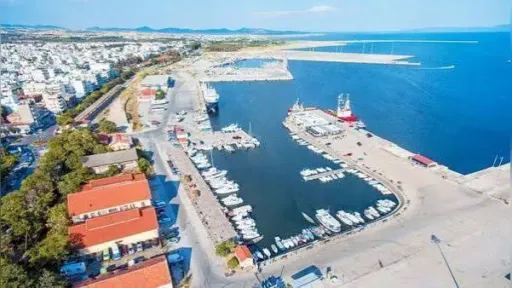
For the Turkish market, Dedeağaç remains by far the leading destination in Eastern Macedonia and Thrace. Archontis described the city as the region’s number-one destination for visitors from Türkiye and its leading city-break destination, noting that tourist traffic now extends throughout the year.
Dedeağaç leads the Turkish market
The regional tourism strategy is increasingly looking beyond Dedeağaç, with officials seeking to attract visitors from Türkiye to a wider range of destinations across Eastern Macedonia and Thrace.
Turkish visitors have already reached Thassos, where Archontis said their presence appears to have increased compared with last year. İskeçe and Gümülcine are also considered to have significant potential, particularly because of their multicultural character.
The growth comes amid strong overall tourism figures for the region. In 2025, Eastern Macedonia and Thrace recorded approximately 2.2 million visits, up from 1.4 million in 2024. Overnight stays reached 7.5 million, while tourism receipts totaled €528 million.
Region seeks more organized Turkish tourism
The regional authorities are now seeking to transform the strong road traffic from Türkiye into a more organized and geographically diversified tourism flow.
Cooperation with TÜRSAB, the Association of Turkish Travel Agencies, is a key part of the strategy. In April 2026, the region held its third consecutive B2B tourism event in Istanbul, where its delegation met with more than 80 Turkish travel agents. Representatives from the Municipality of Samothrace also participated to promote the island.
A recent visit by representatives of TÜRSAB’s Edirne branch to Eastern Macedonia and Thrace also brought potential future initiatives onto the agenda.
Archontis said there was potential to attract even more visitors from Türkiye. The region plans to organize familiarization trips for Turkish travel agents, allowing them to explore destinations in the region and potentially develop new tourism partnerships.
Possible Ainos-Samothrace ferry link under discussion
Another proposal being discussed is a possible maritime connection between Ainos in Türkiye and Samothrace.
Archontis said the regional authorities intend to visit Ainos to examine its port and assess whether the planned infrastructure could facilitate a future connection with Samothrace.
The proposal remains at an early stage. No specific ferry operator, route or timetable has yet been announced.
The development of a maritime customs crossing at Ainos has previously been presented by the Edirne provincial authorities as a project aimed at strengthening international tourism and trade. The plans include a new 135-meter port facility.
The potential connection could extend beyond Samothrace. Turkish reports concerning the Ainos customs port have also referred to a possible future connection with Thassos, although both routes remain in the planning stage and have no announced operating schedule.
For Eastern Macedonia and Thrace, the Turkish market is increasingly becoming a central component of regional tourism strategy. The next stage is focused on attracting more organized visitors, expanding the range of destinations, encouraging longer stays and increasing tourism expenditure within the local economy.
With Türkiye geographically so close to the region, officials see continued potential to capture a larger share of the neighboring country’s outbound tourism market.