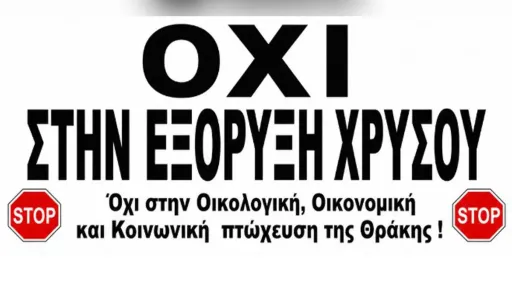
Thrace Committee slams gold mining project, calls environmental study a “state secret”

A regional civic committee in northern Greece has strongly criticized a new environmental impact assessment submitted by the mining company operating in Thrace, accusing authorities and the company of keeping the document hidden from the public.
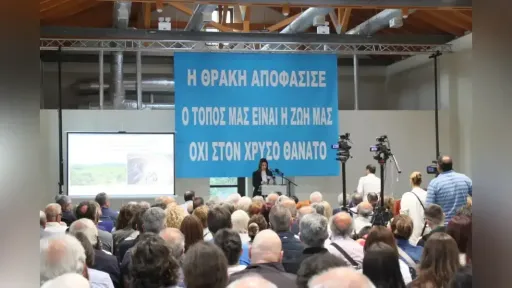
The Inter-Prefectural Committee of Rhodope and Evros against gold mining issued a statement condemning what it described as the lack of transparency surrounding the new Environmental Impact Assessment (EIA) filed by Thracean Mines S.A., also known as Thrace Gold Mines.
According to the committee, the study submitted to the Greek Ministry of Environment remains inaccessible to the public and relevant scientific bodies, raising serious concerns about transparency and public accountability.
Environmental Study Still Unavailable
In its statement, the committee noted that despite repeated calls from the Technical Chamber of Thrace for the study to be shared with its scientific review committee, no response has been provided so far.
The group argued that the document has effectively been treated as a “sealed secret,” preventing experts and local communities from examining the potential environmental and economic consequences of the project.
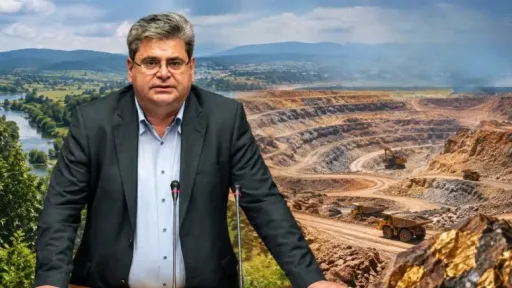
The controversy centers on the proposed gold mining operation in the area of Perama, Evros, where residents and environmental groups have long opposed extraction activities.
Environmental Concerns Raised
The committee raised a series of critical questions regarding the environmental impact of the project, including whether the new study addresses:
- Large-scale rock excavation that could permanently alter the natural landscape of the Perama area
The continued use of chemical reagents in metallurgical processing - Possible replacement of cyanide with alternative chemicals such as glycine, which critics say lack industrial-scale testing
- The storage of millions of tons of mining waste in tailing ponds near the Spaltzak stream
- The risk of toxic contamination in the event of tailing dam failure
- Long-term environmental degradation affecting water systems and ecosystems
The committee warned that the proposed mining activity could damage key local economic sectors such as tourism, agriculture, livestock farming, beekeeping and fisheries.
Support for Dedeağaç Mayor
The group also praised Giannis Zampoukis, mayor of Dedeağaç, for publicly opposing gold mining during a recent meeting with Greek Prime Minister Kyriakos Mitsotakis.
In its closing remarks, the committee questioned when the will of local communities would finally be respected by the government.
“Mr. Prime Minister, when will society’s will finally be accepted so that our nightmare can end?” the statement said.
The committee also addressed a direct message to the Canadian-backed mining interests behind the project, declaring: “Eldorado, go home.”
Long-Running Controversy
Gold mining projects in Thrace have been a source of intense political and environmental debate for years, particularly due to concerns about toxic waste, water contamination and potential impacts on local economies.
Environmental groups and many local residents argue that the risks outweigh the potential economic benefits, while supporters of the project emphasize investment and job creation.