Rhodope livestock farmers face risk of losing basic agricultural support

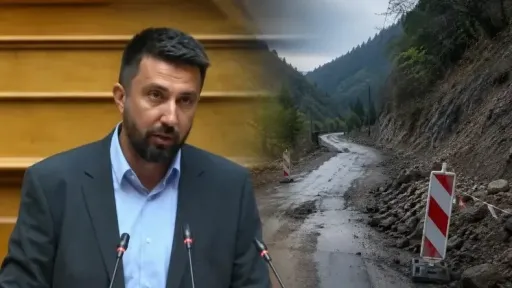
Livestock farmers in Rhodope and across Eastern Macedonia and Thrace who were affected by the first wave of sheep pox in August 2024 are at risk of losing access to basic agricultural support payments, according to Dimitris Grigoriadis, president of the Rhodope Livestock Farmers’ Association.
Under the relevant legislation, producers who stop submitting production declarations may lose their eligibility for support after two years. The issue is particularly concerning for farmers whose livestock were culled by state order following outbreaks of sheep pox.
Farmers call for force majeure recognition
Grigoriadis said livestock farmers affected by the disease are also facing serious problems with payments under coupled support schemes and other assistance programmes.
According to the association, the current support system does not adequately recognise the compulsory culling of animals and the resulting interruption of production as a force majeure situation.
The association has submitted the necessary documentation to the relevant ministry, while regional authorities have also reportedly forwarded the required documents. However, no solution has yet been reached.
Grigoriadis warned that if affected livestock farmers are excluded from the support system, legal action could be pursued across Greece.
He argued that producers should not be held responsible for production being halted against their will and called for both basic agricultural support and coupled support linked to milk production to remain available to affected farmers.
Delayed payments add to uncertainty
The association also raised concerns over delays in compensation and support payments intended to cover income losses caused by the disease.
Grigoriadis said such support should continue throughout 2026 and remain in place for as long as the disease continues to affect the region.
The continued emergence of cases in Rhodope is also delaying the rebuilding of livestock herds. Under the applicable rules, restocking can only begin after six months have passed since the last recorded case nationwide.
As a result, Grigoriadis estimates that the rebuilding of herds in the region may not begin before 2027.
He said around 220 families in Rhodope remain in uncertainty. Based on applications submitted so far, he expects only a small proportion of affected farmers to rebuild their livestock holdings, while many others could leave the sector altogether.
Farmers criticise local authorities
Grigoriadis also criticised local authorities in Rhodope, arguing that livestock farmers have not received sufficient institutional support.
He particularly criticised officials of the Rhodope regional unit, claiming that farmers had received little attention for months, that meetings with producers had not been held and that necessary correspondence to secure support had not been carried out.
The association president also attributed delays in payments made in August to bureaucratic procedures involving the Directorates of Agricultural Economy and Veterinary Medicine (DAOK).
With the sector already facing prolonged losses and uncertainty over when herds can be rebuilt, livestock farmers are calling for their loss of production to be formally recognised as a force majeure event and for the support mechanisms they would otherwise be entitled to remain in place.