Call for reduction of fuel excise duty in Rhodope

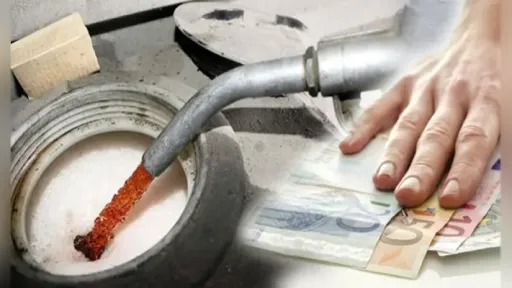
The Federation of Greek Fuel Dealers (POPEK) has raised alarm over the future of filling stations in Greece’s border regions, particularly in the prefecture of Rhodope, warning that many are at risk of closure.
Ahead of the 89th Thessaloniki International Fair, POPEK called on the government to introduce a pilot scheme reducing the Excise Duty on fuel in Rhodope for one year in order to safeguard local businesses.
“No chance of survival”
According to POPEK, the lifting of border controls has worsened the problem, as a growing number of consumers now cross into Bulgaria to purchase cheaper fuel. The price difference—exceeding €0.50 per liter for unleaded petrol—has become a strong deterrent for drivers to fill up within Greece.
As a result, many station owners, most of whom run family businesses, have already abandoned the profession, while those still operating face deep uncertainty. “In the border regions, the profession is on the verge of being abandoned,” the Federation stressed.
Proposal for a special tax regime
POPEK urged the government to consider applying a special tax regime in border areas, citing Article 19 of the European Directive 2003/96/EC, which allows differentiated taxation in regions neighboring countries with lower fuel taxes. Such an adjustment, they argue, would help restore economic balance and ensure the survival of businesses in Rhodope.
Alternative solution: Discount fuel card
As a second option, POPEK proposed issuing discount fuel cards valid for one year exclusively for Rhodope residents. This would provide immediate relief to local businesses while also recovering part of the tax revenue currently lost to Bulgaria.
Urgent appeal for action
POPEK underlined that the remaining businesses are “at the threshold of survival,” urging the government to act swiftly. “Border regions are facing the threat of destruction,” the Federation said, adding that a pilot scheme would clearly demonstrate the impact on both the local economy and state revenues.
Reducing the tax burden or offering targeted incentives is viewed by sector representatives as essential to prevent a mass shutdown of fuel stations.
Source: paratiritis-news.gr