Political communication techniques and identity management implied in society

One of the most important features of World War I was the use of propaganda to form public opinion. During that war, censorship and the press were used as major tools to manipulate European public opinion. In this respect, the French term “La guerre psychologique”—psychological warfare—aptly describes how the press achieved results in shaping public opinion during World War I. The Greek government spent millions on certain Western and U.S. press outlets in order to win support for its national interests and to resolve its internal conflict (between the King and the Prime Minister) during the war.
As with almost every war, manipulation techniques were also employed in World War II. For example, the German state radio declared victory over the Soviet Union while the Red Army had already advanced beyond Berlin.
Today, the manipulation of a targeted mass through political communication is not limited to wartime; even in peacetime, various instruments are used to achieve results. Manipulation, as a technique of governance, now often means using a series of illusionistic methods whereby events and facts are detached from their genuine context and given a different appearance. Social media—which has entered our lives as a more popular and widespread mass‐communication tool than the press—is often used nowadays to manipulate public opinion. For some time now, we’ve witnessed certain press outlets and some social-media accounts working seemingly hand in glove with a “Pomak heroism” narrative. This four-pronged dirty game has surely not escaped many people’s attention.
While the identities of many minorities living in Greece are suppressed and repressed, the state’s attempts to create an imaginary minority have turned into quite a passion — but why? This question has become a genuine matter of curiosity.
Let’s unpack the topic a bit.
Historically in the Balkans, Muslim identity and Turkish identity have overlapped in the public mind. When one says “Muslim,” Turkish comes to mind; when one says “Turk,” one thinks “Muslim.” Western travelers who came to Ottoman lands used the term “Turk” just to designate Muslims. Turkish identity merged with Muslim identity as an encompassing identity. The labels Pomak, Çıtak, Gacal, Torbeş, Tatar, etc., as sub-identities or sub-cultures, were adopted and always respected at the state level. In the Balkans, Islam‐based Turkhood emerged as a higher identity rooted in lasting values. So much so that a non-Muslim who converted to Islam in the Balkans was viewed among his co-faithful as “Turkified” — in Turkish “Türk oldu,” in Bulgarian “Poturçin.”
Just as in the Rumelia region, in the mountainous parts of Western Thrace you can see how intertwined Turkishness and Islam have been. I’ll illustrate this with a personal example: My home village in İskeçe (Mustafçova) holds tradition dearly. In former times, eating food or drinking water while uncovered (i.e., bare-headed) was seen as religiously inappropriate. Later we learned the custom was not religiously grounded. Still, it wasn’t easy to persuade people that this belief was baseless. I remember looking at an elderly neighbour whose face changed the instant she saw me eating with my head uncovered: she challenged me, “What kind of Turk are you! Does one eat like that?” Of course Turkishness and Islam permit eating and drinking with uncovered head—but the point is that turning such an insignificant detail into a marker of identity speaks volumes.
From this perspective, in the Balkans, traditional practices tinted by religion are defined under a higher identity. The “millet” (community) concept wrapped in a religious perspective provides a sense of belonging for Muslims in the region. During the Ottoman era these Muslim communities didn’t merely have a subject-citizen relationship with the Ottoman Turkish state; their sense of national belonging persisted even after the foundation of the Republic of Türkiye. No matter how minor their sub-identities, these communities found refuge in Türkiye in times of greatest hardship, despite difficult infrastructure.
Why do I dwell on historical examples? After the decline of Ottoman rule in the Balkans, many Turkish/Muslim communities in this region could not relocate despite distressing conditions. From the early twentieth century on, the rise of the nation-state model in the Balkans spurred deliberate policies to erode Turkish/Muslim identity — to break the historical bonds of kinship. The aim was the creation of a homogeneous society with a single identity, faith, and national consciousness. Within this logic, minorities in countries such as Bulgaria, the former Yugoslavia and Greece were used as laboratories for assimilation practices. In the latter twentieth century, just as in our country, the Turkish minority in Western Thrace became seen as a threat. Although at one time the Turkish identity was permitted, state institutions never ceased their efforts to divide, fragment and force migration of the minority. Particularly after the 1980s when court rulings banned the Turkish identity, questions like “Are you a Pomak?” became politically charged within the armed forces and other state institutions. I experienced one such event while serving my conscript duty in Larissa (Neapolis district) in Greece: during roll call the company commander ordered, “Christians, Muslims, and Pomaks, form three separate rows.” At that moment I joined the row behind friends from villages near İskeçe and the plain. The commander then shouted “Which village are you from?” When I replied the Greek name of my village he counter-questioned, insinuating I should identify as he dictated. With visible anger he signalled me to step to the side and join the “correct” row.
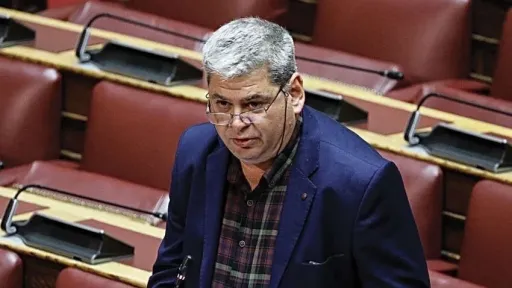
Incidents like this have often been reported. A few years ago the Member of Parliament from İskeçe, Hüseyin Zeybek, raised a question in Parliament about an incident and the matter was dismissed as an “isolated event.”
In our country regrettably, the practices of dividing the minority have often been pursued, especially from the 1980s onward when the Turkish identity was outlawed in courts. While the Turkish identity was suppressed, the Pomak identity enjoyed an unprecedented level of favour under the state. The Socialist (PASOK) government’s Foreign Affairs Minister-Acting, Kapsis, was arguably the most invested at ministerial level in efforts to change the perception of Turkishness in the minority and to promote the Pomak identity. Since then, the state’s stance has virtually remained unchanged.
Let’s move to today. In recent times, besides the Greek press, social media is being flooded with Pomak propagandist messages: There are Facebook accounts referencing early-twentieth-century photos of İskeçe and slogans such as “Pomaks founded İskeçe.” Others post in Bulgarian, “Nie sme Pomatsi, ne drugo” (“We are Pomaks, nothing else”). The stream is growing rapidly. In tourism brochures and social media the mountainous region of Western Thrace has been depicted through “Pomak villages” (Pomakohoria) propaganda, and it shows no sign of stopping. Ask yourself: are those villages truly “Turkish villages” or “Pomak villages”?
Why this heavy emphasis on the mountainous region? Is it merely a romantic infatuation, or are there deeper strategic calculations? The logic being imposed on the regional population is the logic of the company commander: “You’re a Pomak. Nothing else.” Whether there is any cross-border strategic agenda behind this is beyond our knowledge. But one thing is clear: the Bulgarian government does not recognize an identity called “Pomak” within its territory. On that basis, some thirty years ago a Greek-Bulgarian Pomak-to-Greek dictionary project was launched with the backing of the Greek Fourth Corps; the Bulgarian government protested by issuing a note and demanding answers from Greece. Around the same time the Greek Foreign Ministry commissioned a unit chaired by linguist Prof. Symeonides (University of Thessaloniki) to compile international-level Pomak grammar and dictionary books, arguing that such research into the culture of the “Hellenes of Rhodope” would serve strategic aims. Fifty years before that, in 1946, the Greek government sent MP Fehmi Hamdi of İskeçe to Paris and New York with the aim of “uniting all Pomaks under the Kingdom of Greece.”
In Bulgaria or Greece alike, the presence of Turkish minorities in the Balkans remains an unalterable reality — a legacy of the Ottoman rule that lasted over five hundred years. These communities never severed their ties with the country they considered their homeland, Türkiye. That historical relationship, rooted in identity and belonging, was and is being attacked but it cannot be erased.
In conclusion: For a society, a sense of belonging to a community or identity gives an individual the feeling of security. It builds a strong bond among its members. In difficult times it becomes the most important guarantee. The opposite of this is unthinkable. The image of a migrant mother clutching her baby as she flees war, or a father obliged to cross barbed-wire while his child clings to him: such scenes tell us enough about what belonging means — and what it doesn’t.