Who is actually buying property in Greece? A market increasingly driven by investment capital
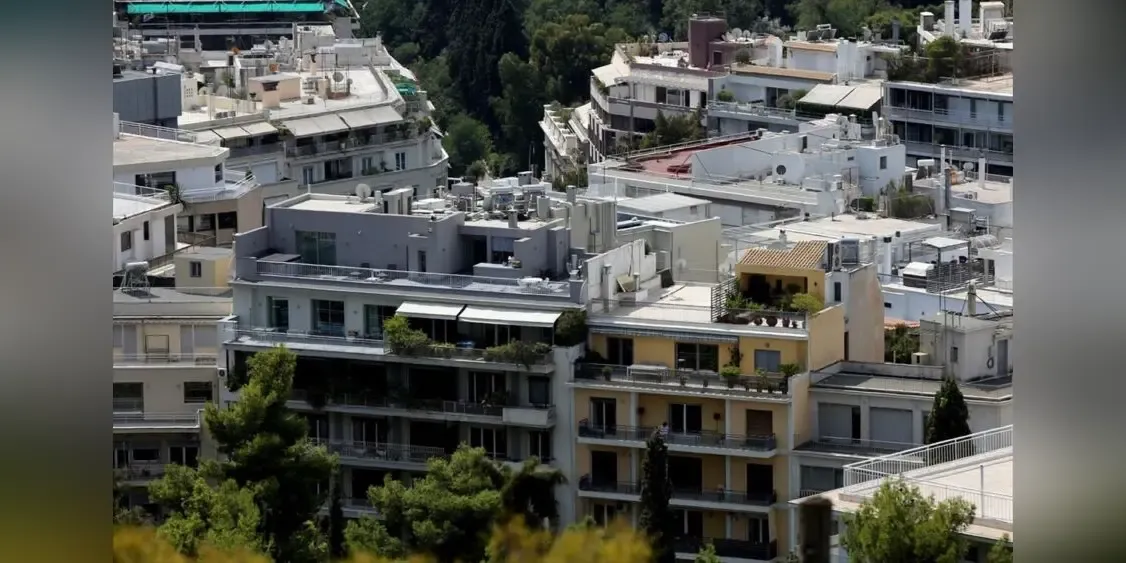
Greece’s real estate market has emerged in recent years as one of the key pillars of the national economy, marked by steadily rising prices, sustained transaction activity, and notable resilience despite higher interest rates and ongoing geopolitical uncertainty.
However, beyond the question of demand itself, a more critical issue is reshaping the sector: who is actually buying property in Greece today.
The composition of demand reveals a multi-speed market, where investment-driven purchases are strengthening, middle-class participation is shrinking, and access to homeownership is becoming increasingly constrained.
Foreign investors and capital inflows
Foreign buyers have played a central role in the growth of the Greek property market between 2018 and 2024, significantly boosting demand and prices. However, 2025 signals a clear phase of stabilization and recalibration.
According to data from the Bank of Greece (Bank of Greece), foreign capital inflows into real estate fell by 17.8% in the first half of 2025 compared with the same period in 2024, while the downward trend continued over the first nine months. Overall, foreign direct investment in the sector declined by 23.9%, ending a five-year upward trajectory.
This shift is attributed to changes in the Golden Visa program, rising property prices, and increased geopolitical uncertainty. Applications for Golden Visa residency also fell by around 12%, indicating a move toward more selective investment criteria.
Notably, only 18% of foreign investors state an intention to occupy the properties they purchase, underscoring the predominantly investment-oriented nature of external demand.
Golden Visa: investment tool rather than housing solution
The Golden Visa scheme remains a key mechanism for attracting foreign capital into Greek real estate, but its practical function differs significantly from addressing housing needs.
Market estimates suggest that only around 6% of Golden Visa holders use their properties as primary residences. The vast majority—approximately 94%—lease their properties, primarily through long-term rental agreements. This reinforces the view that the program operates mainly as a capital investment channel rather than a housing policy instrument.
Institutional investors and funds reshape ownership structure
Institutional investors and investment funds are increasingly shaping the structure of the Greek property market. Their activity is often less visible but structurally significant, focusing on:
- acquisitions through auction processes
- management of non-performing loan portfolios (NPLs)
- purchase of entire residential buildings or complexes
This trend is gradually shifting ownership away from fragmented private households toward consolidated investment portfolios. The result is a structural transformation of the market, where housing stock is increasingly managed as a financial asset class rather than a purely residential good.
Domestic buyers and the shrinking middle class
Greek buyers continue to account for a significant share of transactions, but their effective access to the market is narrowing.
Purchases are increasingly dependent on equity rather than bank financing, as:
- lending remains cautious
- interest rates remain elevated
- rising living costs reduce savings capacity
As a result, the market increasingly favors households with existing liquidity, inheritance-based wealth transfers, or prior asset sales. The traditional middle class—historically the backbone of homeownership in Greece—is gradually being excluded from property acquisition as prices outpace income growth.
A structurally shifting housing market
The overall picture is a clear structural transition: from a broad-based homeownership model toward a capital-driven real estate market dominated by investment flows, institutional actors, and high-liquidity buyers.
This evolution raises broader questions about housing affordability, market accessibility, and the long-term social implications of a property market increasingly defined by investment logic rather than residential demand.