IRIS: What changes from January 15 – New limits and payment rules

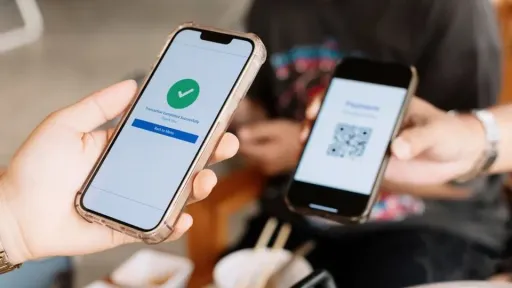
From January 15, 2026, Greece’s IRIS instant payment system enters a new phase, introducing significant changes that affect both peer-to-peer (P2P) money transfers and payments to professionals and businesses (P2B).
Instant electronic payments continue to gain ground in Greece, with IRIS now a core tool for everyday transactions. More than 4.25 million users are already registered with IRIS P2P, carrying out transactions exceeding €300 million per day. By the end of 2025, total activity is expected to reach around 120 million transactions, with a combined value of €11 billion.
New Transaction Limits
Under the new framework, transaction limits are adjusted as follows:
- Daily P2P transfer limit: increased to €1,000
- Daily P2B payment limit (professionals & sole proprietors): €1,000
- Monthly P2P limit: €5,000
- Monthly P2B limit: No cap, ensuring flexibility for professional use
These changes make IRIS even more attractive for everyday payments, transfers between friends and family, and small- to medium-scale professional transactions, often replacing traditional bank transfers and card payments.
What It Means for Users and Businesses
For individual users, the new limits allow:
- Larger instant transfers
- Direct payments to professionals without alternative payment methods
- Fast, mobile-based money management completed in seconds
For businesses and self-employed professionals, higher limits translate into:
- Improved liquidity
- Faster payment collection
- Greater efficiency for low- and mid-value transactions where cards or bank transfers may be impractical
It is worth noting that IRIS usage has been mandatory for all sole proprietorships since last year. Currently, around 582,000 tax IDs (AFM) are registered on the platform, while transaction values since the beginning of the year have already reached €170 million.
Expansion at the European Level
At the same time, IRIS is preparing for cross-border instant payments within the European Union through its integration into the EuroPA / EPI network, starting in 2026. This development positions the Greek platform as a key player in Europe’s digital payments ecosystem.
The European initiative begins with 10 participating countries and approximately 100 million users. With the addition of IRIS’s 4.25 million users, the total user base is expected to exceed 105 million, covering countries such as Italy, Spain, Portugal, Greece, Poland, Norway, Denmark, Finland, Sweden, and Andorra. Greece’s initial participation—focused on P2P transactions—is scheduled for the first half of 2026.
A Unified European Payments Network
DIAS, the operator of IRIS, has made it a strategic priority to interconnect successful account-to-account payment systems across Europe. These include Bizum (Spain), Blik (Poland), and Twint (Switzerland), creating a unified network that leverages local payment habits and expertise. In a later phase, expansion is planned for markets without domestic payment schemes, such as Malta.
As Greece moves rapidly toward the full digitalization of transactions, IRIS remains a central pillar of this transition. With the new limits taking effect in January, payments in commerce, services, and everyday life are shifting even more decisively to the smartphone screen—without cash or cards, and at the speed demanded by the modern era.