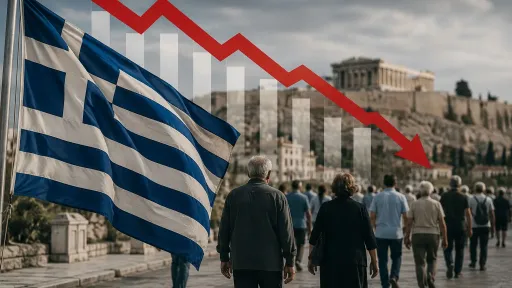
Greece faces sharp population decline and aging crisis

Greece’s population has shrunk by nearly half a million people over the past decade, while the country continues to face one of the lowest fertility rates in the European Union, according to new research by the Laboratory of Demographic and Social Analyses at the University of Thessaly.
The study, titled “Demographics and Low Fertility in Greece Today: Demographic Inertia and Social Challenges”, warns that population decline and demographic aging will persist over the next three decades, with the balance between births and deaths remaining consistently negative.
Births in 2023 fell to just 72,300 — nearly half the annual average recorded between 1951 and 1970. Researchers stressed that the reasons for this decline go beyond demographic trends, pointing also to the broader social challenges Greece has faced in recent decades.
Between 2011 and 2024, Greece recorded continuous negative natural balances, combined with negative migration flows, leading to a population drop of almost 500,000 people.
Currently, nearly 23% of Greece’s population is over the age of 65, making the country one of the most rapidly aging in Europe. In 2023, the number of elderly residents exceeded the child population (0–14 years old) by almost one million. At the same time, rates of childlessness are steadily rising, further deepening the demographic crisis.