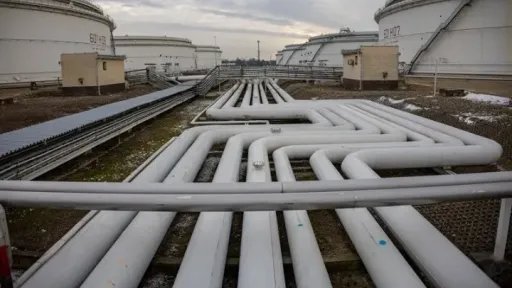
DESFA launches key Karperi–Gümülcine pipeline to strengthen Greece’s Vertical Gas Corridor

The transmission system operator has already taken the Final Investment Decision (FID) for the €321.5 million project. Construction is set to conclude by December 2027, with commercial operations expected to begin in the first quarter of 2028.
The new infrastructure will play a pivotal role in strengthening the Vertical Corridor, enhancing the bidirectional flow of natural gas between northern and southern Greece and reinforcing regional energy security.
Boosting Exports and Supply Diversification
The pipeline is designed to secure firm capacity of up to 3 billion cubic meters per year (bcma) for exports through the Interconnector Greece-Bulgaria (IGB), which has a maximum capacity of 5 bcma.
A critical component supporting this expansion is the recently completed Gümülcine Compressor Station — a €134 million investment delivered during the peak of Europe’s energy crisis. The station enhances system pressure and export capabilities toward Bulgaria and the broader Balkan region.
The project forms part of a broader DESFA investment program in Eastern Macedonia and Thrace exceeding €500 million, positioning the region as a strategic energy hub for Southeast Europe.
Hydrogen-Ready Infrastructure from Day One
Notably, the Karperi–Gümülcine pipeline has been engineered with technical specifications allowing for the future transport of up to 100% hydrogen, or blended natural gas and hydrogen, without requiring additional modifications.
Initially, the pipeline will serve to increase natural gas transmission capacity. However, its hydrogen-ready design aligns with the European Union’s decarbonization strategy and the expansion of renewable and low-carbon gases across the continent.
The Komotini Compressor Station stands as an example of accelerated delivery of critical infrastructure, implemented in cooperation with Greece’s Ministry of Environment and Energy and the national energy regulator.
Technical Specifications
Length: 215 kilometers
Diameter: 30 inches (nominal)
Route: Parallel to the existing gas transmission network
Starting Point: New dispatch station in Karperi (Herakleia Municipality)
End Point: New receiving station near Komotini’s Industrial Area
The pipeline will traverse municipalities across Serres, Kavala, Drama, İskeçe, and Rodope, reinforcing Eastern Macedonia and Thrace as a key transit corridor for natural gas — and eventually renewable gases — toward the Balkans and Central Europe.
A Strategic Link in Europe’s New Energy Map
Amid ongoing concerns over energy security and supply diversification, the Karperi–Gümülcine pipeline emerges as a critical link in Southeast Europe’s evolving energy architecture.
Combined with existing and developing infrastructure, the project strengthens Greece’s geopolitical role as an energy gateway and supports broader European ambitions for resilient, diversified, and low-carbon energy systems.