UN urges Israel to respect Syria’s sovereignty

The United Nations and Türkiye on Monday urged Israel to halt military operations in southern Syria and respect the country’s sovereignty, warning that continued incursions threaten stability and undermine efforts to rebuild the war-torn nation.
Addressing the UN Security Council, Deputy Special Envoy for Syria Claudio Cordone reiterated the secretary-general’s call for an end to violations of the 1974 Disengagement of Forces Agreement and full respect for Syria’s sovereignty and territorial integrity.
“Diplomacy is the only way to reach agreement on security arrangements, consistent with international law,” Cordone said.
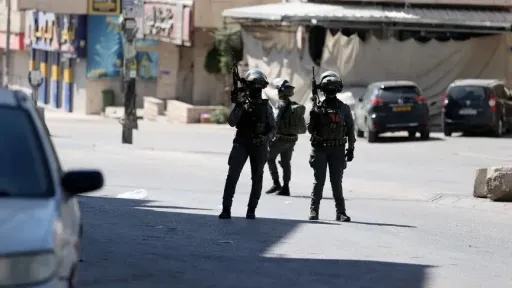
He reported daily Israeli military activity in southern Syria, including construction work, the establishment of checkpoints, searches and detentions. He also cited the fatal shooting of a civilian near an Israeli military position on October 5 and said 49 people reportedly remain in Israeli custody.
Cordone also referred to a September 23 incident in which 14 members of an Israeli settler group crossed the ceasefire line into Syria before Israeli forces returned them.
Türkiye condemns ‘reckless’ actions

Türkiye’s Permanent Representative to the UN, Ahmet Yildiz, called on Israel to end what he described as “reckless acts” and comply with the 1974 agreement and relevant Security Council resolutions, particularly Resolution 497.
“Israel’s continued violations of Syrian sovereignty and territorial integrity undermine these prospects and show disregard for international law,” Yildiz said, referring to Syria’s economic recovery and regional cooperation.
He expressed particular concern over developments in southern Syria, citing continued military incursions and what he described as expansionist actions. He also criticized Israel’s renewed activities along the so-called Sufa 53 line in Quneitra, saying they threatened to undermine the disengagement agreement and impose a new reality on the ground.
Yildiz urged Israel to withdraw from the occupied Syrian Golan and stressed that security and economic recovery must advance together.
A stable, sovereign and unified Syria capable of securing its borders and contributing to regional peace would serve the interests of all countries, including Israel, he said.
Damascus demands Israeli withdrawal
Syria’s UN representative, Ibrahim Olabi, said claims of seeking security were incompatible with killing Syrian citizens inside Syrian territory.
“There is only one path towards security, which is international legitimacy and the resolutions of the Council,” Olabi told the meeting.
He called for international support for economic recovery, investment, job creation and reconstruction, including the rehabilitation of schools, hospitals and water and electricity networks. He also urged assistance in clearing mines and other explosive remnants of war.
Since the fall of Bashar al-Assad’s government on December 8, 2024, Israel has expanded its military presence in southern Syria, deploying troops into the demilitarized buffer zone in the occupied Golan Heights and surrounding positions, citing security concerns.
Damascus has demanded the withdrawal of Israeli forces from occupied areas and reaffirmed its commitment to the 1974 agreement.
Humanitarian needs remain severe
The Security Council meeting also highlighted Syria’s continuing humanitarian and economic challenges.
UN Assistant Secretary-General for Humanitarian Affairs Mohammed Yahya said that although more than 3.8 million refugees and internally displaced people have returned, over 5.5 million Syrians remain displaced. More than 770,000 people live in camps, where women and children account for three-quarters of the population.
Explosive ordnance has caused 2,500 casualties since December 2024, Yahya said, adding that the 2026 humanitarian response plan is only 32% funded.
He stressed that supporting returns must go beyond helping families reach their homes and include assistance to rebuild their lives.
Education remains another major concern. Civil society leader George Batah told the council that 2.7 million children remain out of school and approximately 8,000 educational facilities are non-functional.
Plan International Regional Director Hajir Maalim warned that only 16.5% of the education sector’s $337 million funding requirement had been met, putting an entire generation at risk of being left behind.
Recovery efforts face economic pressures
Cordone said currency depreciation and rising fuel prices continue to weaken Syrians’ purchasing power, despite signs of financial stabilization.
He cited €620 million ($692 million) in European Union support and a $175 million World Bank agricultural initiative as examples of international assistance.
The UN is also coordinating with Damascus to explore an international conference on recovery and reconstruction based on Syria’s priorities.
Yildiz said lasting stability would be essential for Syria to rebuild its economy, attract investment and participate in regional energy and connectivity projects.
He also welcomed progress in integrating the Syrian Democratic Forces (SDF), saying remaining arrangements should be finalized and implemented in ways that strengthen Syria’s sovereignty, unity and social cohesion. He further welcomed Damascus’ cooperation with the international coalition against the Islamic State group, also known as ISIS or Daesh.
On refugees, Yildiz said the number of Syrians under temporary protection in Türkiye had fallen from more than four million to around 2.2 million. He attributed the gradual pace of returns to economic difficulties, security concerns and Israeli incursions.
The United States, meanwhile, welcomed what it described as Syria’s ongoing progress on political, humanitarian and security priorities.
Source:AA