Israel faces mounting pressure at home and abroad

Israel faced mounting political, social and international pressure on Monday as its forces continued operations in the occupied Palestinian territories and Lebanon, while new figures showed declining returns of Israelis from abroad and deepening divisions ahead of October’s general election.
The developments came as Israeli authorities imposed a curfew during a military raid near occupied East Jerusalem, Palestinian rights groups reported a wave of disciplinary action against students criticizing the Gaza war, and Palestinian amputees condemned an Adidas campaign featuring a former Israeli soldier.
Meanwhile, Israeli parliamentary data showed a sharp decline in the number of citizens returning from abroad, while a new opinion poll put former army chief Gadi Eisenkot’s Yashar party ahead of Prime Minister Benjamin Netanyahu’s Likud.
Curfew imposed near East Jerusalem
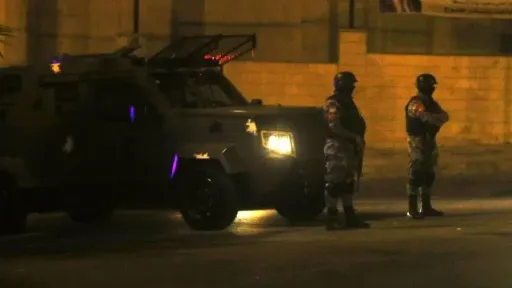
Israeli military vehicles and bulldozers entered Shuafat refugee camp and the nearby town of Anata near occupied East Jerusalem on Monday amid a heavy troop deployment, according to the Jerusalem Governorate.
The army announced a curfew over loudspeakers and later said it had launched what it described as a “focused” operation targeting alleged terrorist activity and infrastructure. It did not provide evidence for the claims or specify how long the operation would last.
Elsewhere in the occupied West Bank, Israeli settlers attacked Palestinians and damaged property in several areas, according to Palestinian officials, local witnesses and WAFA news agency.
In the Ramallah area, settlers entered Burqa and moved through its streets, while others erected a tent on Mount Al-Qarana near Deir Abu Mashal. Settlers also moved timber toward illegal outposts west of Al-Mughayyir.
Near Hebron, a settler attacked a Palestinian woman’s vehicle and smashed its windows, according to Voice of Palestine radio.
South of Yatta, settlers re-established an illegal outpost in Wadi al-Rakhim hours after Israeli forces had dismantled it, local activist Osama Makhamra told Anadolu. Israeli forces also raided Khirbet Imneizil, entered a Palestinian home and damaged property, he said.
In Salfit, Israeli settlers continued clearing Palestinian land northwest of Deir Ballut for an 11th consecutive day.
Palestinian authorities say Israeli settlers carried out 3,488 attacks across the occupied West Bank during the first half of 2026.
Gaza amputees condemn Adidas campaign
In Gaza, Palestinians who lost limbs during Israeli attacks have criticized Adidas over a local campaign featuring former Israeli soldier Shalev Biton, who lost a leg and appeared in a promotion for the company’s Single Shoe service.
The service provides footwear options for people who need only one shoe, including some amputees.
Palestinian amputees said the campaign highlighted a stark disparity between access to prosthetics in Israel and the conditions facing patients in Gaza, where medical supplies, equipment and raw materials remain severely limited.
Omar Haliwa, 14, who lost his leg in an Israeli strike while collecting water, said Palestinians wounded during the war were struggling to obtain suitable prosthetic limbs.
Other amputees described worn-out or poorly fitting prosthetics, shortages of replacement parts and difficulties obtaining compatible footwear.
Munir al-Barsh, director-general of Gaza’s Health Ministry, said estimates indicate that more than 8,000 Palestinians, including more than 3,000 children, have lost limbs during the war.
Adidas Arabia later apologized for concerns caused by the campaign, saying the promotion was a local initiative and that it had not intended to cause offense.
The controversy nevertheless prompted calls online for a boycott of the company.
Lebanon reports heavy toll among children

Israeli attacks on Lebanon have also taken a heavy toll on children, according to Lebanese officials.
Two children were killed and four others injured in an Israeli airstrike on a house in Kfar Rumman in southern Lebanon over the past 24 hours, while three other children were injured in strikes on Arabsalim and Nabatieh.
Lebanese lawmaker Inaya Ezzeddine said nearly 800 children had been killed during Israeli wars in 2024 and 2026 and that about 360,000 children had been displaced.
She said many children had suffered severe injuries, including amputations and loss of eyesight, and would require years of medical, psychological and social support.
Lebanon’s Health Ministry says 4,362 people have been killed and 12,378 injured in Israeli attacks since March 2, including 259 children among the dead and 1,050 among the injured.
Lebanese President Joseph Aoun has accused Israel of escalating violations despite agreements intended to halt hostilities and facilitate a gradual Israeli withdrawal from Lebanese territory.
Israeli emigration raises concern
At home, Israeli lawmakers have raised concerns over a decline in the number of citizens returning after living abroad.
Figures presented to the Knesset’s Committee for Immigration, Absorption and Diaspora Affairs showed that 4,483 Israelis returned in 2025, down 58% from 10,903 in 2009.
The Knesset Research and Information Center estimates that about 1 million Israelis currently live abroad.
The committee’s chairman, Gilad Kariv, accused the government of failing to implement measures designed to encourage Israelis to return, saying recommendations for a five-year plan had been ignored.
The committee also heard warnings about the departure of medical professionals.
A Tel Aviv University study found that at least 1,370 doctors left Israel between 2023 and 2025. Researchers have described the departure of experienced physicians as particularly concerning amid existing staff shortages.
Another study found that 268,509 Israelis left the country for at least three months between 2023 and 2025, a figure Israeli broadcaster KAN described as a record.
Israeli reports have linked rising emigration to the economic pressures of high living costs, the political crisis and the repercussions of the Gaza war.
Election divisions sharpen
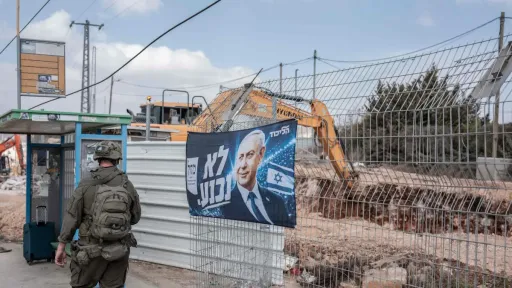
The domestic pressure comes less than two months before Israel’s general election, scheduled for Oct. 27.
Political parties submitted candidate lists ahead of Tuesday’s deadline, with Eisenkot confirming that his Yashar party would contest the election separately from former Prime Minister Naftali Bennett’s Together alliance.
Ofer Winter also submitted an independent list for his People of Israel party, rejecting an expected alignment with the Religious Zionism Party.
The divisions could prove significant in a closely contested election in which neither major bloc is currently projected to secure the 61 seats required for a Knesset majority.
A Channel 12 poll released Monday put Yashar first with 25 seats, four ahead of Netanyahu’s Likud.
Bennett’s Together party was projected to win 13 seats, followed by the Democrats with 11 and Yisrael Beiteinu with eight.
The poll gave the opposition bloc 68 seats and Netanyahu’s bloc 52.
Eisenkot also led Netanyahu by seven percentage points when voters were asked who would be better suited to serve as prime minister, with 42% backing Eisenkot and 35% choosing Netanyahu.
The figures point to a potentially fragmented parliament, with Arab parties likely to play a decisive role in any effort to form a governing coalition.
Student expulsions fuel rights concerns

Israeli universities are also facing scrutiny over their treatment of Palestinian students.
Adalah, a Palestinian-run rights organization in Israel, said about 100 Palestinian students had been temporarily or permanently expelled since the Gaza war began in October 2023 for expressions critical of Israel’s military campaign or supportive of Palestinians.
The organization documented more than 80 cases in which students were temporarily suspended before hearings, while 20 students were permanently expelled or suspended for periods ranging from one to five years.
Adalah said disciplinary proceedings had been triggered in some cases by social media activity such as liking posts, displaying Palestinian symbols, sharing news reports or expressing solidarity with people in Gaza.
The group accused Israeli universities of applying different standards to Palestinian and Jewish students and said the measures had created an atmosphere of intimidation among Palestinian students.
The allegations come amid broader restrictions on Palestinian political expression inside Israel since the Gaza war began.
Taken together, the developments highlight pressures extending beyond Israel’s military campaigns, with the country confronting growing criticism over its treatment of Palestinians and Lebanese civilians, concerns over the departure of citizens and professionals, and an increasingly fragmented political landscape ahead of the October election.
Source:AA