Iran demands sanctions relief before US talks

Iranian President Masoud Pezeshkian has insisted that Washington must lift sanctions and end pressure and threats before negotiations can resume, as Pakistan’s army chief arrived in Tehran amid stalled diplomacy, rising military tensions and renewed threats over the Strait of Hormuz.
Tehran sets conditions for negotiations
“Before any negotiations, they must first end the pressure and threats and lift sanctions,” Pezeshkian said Tuesday, according to Iran’s state broadcaster IRIB, during a meeting with Pakistan’s army chief, Field Marshal Asim Munir.
Pezeshkian blamed what he described as US warmongering for regional tensions and disruptions in the Strait of Hormuz, a strategic waterway through which a significant share of the world’s oil shipments passes.
“The Americans must explain why they started the war and embroiled themselves and the world in it,” he said.
Munir arrived in Tehran with a delegation of officials as Islamabad continued its efforts to mediate between Washington and Tehran.
Iranian Foreign Ministry spokesman Esmaeil Baghaei said the visit was primarily intended to strengthen bilateral relations and cooperation, although discussions also touched on issues related to negotiations.
Iran warns of retaliation against US strikes
Tehran has warned that any new US military attack would trigger a response at least equal in force.
“If our response is not stronger, it will certainly be equal in force,” Baghaei told reporters, dismissing claims that Washington had asked Iran not to retaliate against a possible strike on the Pickaxe Mountain site, also known in Persian as Kuh-e Kolang.
The spokesman said Iran could not rule out renewed hostilities despite a pause in US strikes since September.
“We have shown in practice that we leave absolutely no blow unanswered,” he said.
Baghaei identified what he called Washington’s excessive demands as the main obstacle to an agreement, while maintaining that Tehran remained open to diplomacy if it could prevent further escalation.
“We have not entered nuclear negotiations with the American side,” he added, saying Iran had not abandoned its established positions.
Report: Tehran seeks to weaken Trump politically
According to a Reuters report citing three senior Iranian officials and an insider, Tehran has deliberately prolonged negotiations to weaken US President Donald Trump politically ahead of the Nov. 3 midterm elections.
One Iranian official told Reuters that Iran was preparing for renewed US and Israeli attacks rather than seeking an agreement to end the war.
Tehran wants Washington to lift its naval blockade, ease restrictions on Iranian oil exports, release frozen assets and end hostilities on all fronts before substantive negotiations proceed. The United States, meanwhile, wants Iran’s nuclear program included from the outset.
The prolonged standoff is also placing pressure on Iran’s economy. According to figures cited in the report, annual inflation reached 73.6% in September, while the rial lost nearly 35% of its value against the dollar since July. Iran’s seaborne crude oil exports have reportedly been at zero since mid-September.
IRGC claims tanker attacks in Hormuz
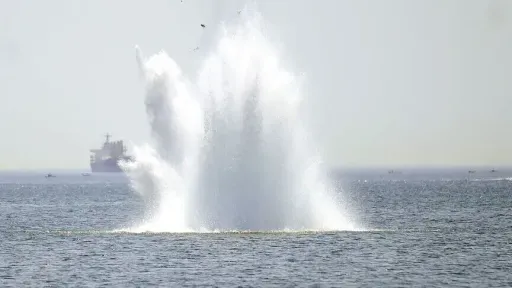
Tensions have also intensified around the Strait of Hormuz, where Iran’s Islamic Revolutionary Guard Corps (IRGC) claimed Tuesday that mines planted by its naval forces had set two oil tankers ablaze and halted their passage through the waterway.
The IRGC also claimed to have shot down a US MQ-9 Reaper drone, following reports of additional tanker incidents in recent days.
The claims could not be independently verified, and the Guard did not identify the vessels involved.
Separately, the United Kingdom Maritime Trade Operations (UKMTO) agency reported that a tanker had been involved in an incident with military forces about 121 nautical miles east of Duqm, Oman, on Monday.
The agency said the vessel had been involved in an interaction linked to ongoing military activity in the region but provided no further details.
Pakistan steps up mediation efforts
Pakistan has played a key mediating role in efforts to ease tensions between Washington and Tehran since the United States and Israel launched their war against Iran on Feb. 28.
Munir’s visit comes as diplomatic efforts remain stalled over sanctions, maritime security and Iran’s nuclear program.
The United States subsequently imposed a naval blockade on Iranian ports, while Tehran effectively closed the Strait of Hormuz in response to the conflict. The two sides reached a memorandum of understanding in June concerning freedom of navigation through the strategic waterway, but implementation has stalled amid disagreements over security arrangements.
Baghaei said Iran remained willing to pursue diplomacy if it offered a genuine opportunity to prevent further escalation, while insisting that Tehran would not accept what it considers excessive US demands.
Source:turkiyetoday