Gulf crude exports recover despite Hormuz disruption

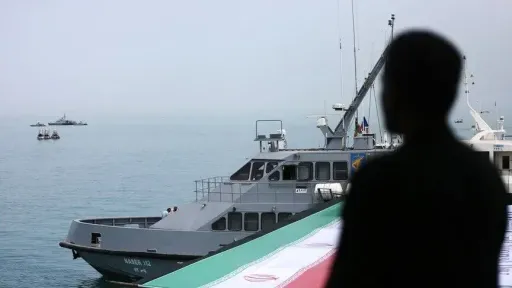
Crude exports from Gulf countries excluding Iran returned to pre-war levels in September despite major disruptions to the Strait of Hormuz, as producers redirected shipments through pipelines, alternative ports and offshore tanker transfers, according to maritime tracking firm Kpler.
At least 16.5 million barrels per day of crude left the region between Sept. 1 and 28, matching the pre-war average excluding Iran and exceeding March’s average by 10.5 million barrels per day.
The recovery highlights how Gulf producers have rapidly adapted their export networks since the conflict disrupted the region’s traditional shipping routes.
New routes ease pressure on Hormuz
Before the war, about 83% of Gulf crude exports passed through the Strait of Hormuz. In September, that share fell to 60%, with about 9.9 million barrels per day crossing the waterway.
Around 23% was loaded along the Gulf of Oman coast, mainly at Fujairah, while another 17% was shipped through the Red Sea.
A major part of the adjustment involved offshore tanker transfers. More than 70% of crude crossing Hormuz in August was transferred between vessels in the Gulf of Oman before continuing toward international markets.
At least 63 very large crude carriers joined the shuttle trade. A core group of 35 vessels completed at least three round trips each, accounting for roughly three-quarters of shuttle voyages.
Fujairah and Sohar were the main transfer points, handling 54% and 45% of transfers respectively.
The alternative system developed rapidly. In March, 97% of non-Iranian crude leaving the region bypassed Hormuz. By May, 86% of crude crossing the strait was being transferred between tankers in the Gulf of Oman.
Saudi Arabia shifts exports between coasts
Saudi Arabia increased the use of its East-West Pipeline to move crude to Yanbu on the Red Sea after Gulf shipping routes were disrupted.
Saudi Red Sea loadings climbed from about 750,000 barrels per day before the war to 4.3 million barrels per day in June.
The route was disrupted again after an attack on the East-West Pipeline on Sept. 10 halted Yanbu loadings. Saudi exports subsequently shifted back toward the Gulf coast.
Kpler found no tankers at Yanbu on Sept. 13. Seven days later, all six Juaymah offshore loading moorings were occupied. After the pipeline restarted, all seven Yanbu berths were full again by Sept. 27.
Iran remains largely absent
Iran has not participated in the regional export recovery.
Iranian crude shipments through Hormuz fell close to zero after a U.S. naval blockade began on April 13. Although there was a temporary recovery in June, Iranian exports subsequently remained near zero.
Iran had averaged about 1.7 million barrels per day before the war. Its absence explains why September exports reached pre-war levels when Iran is excluded but remained at only 91% of the pre-war regional total when Iranian volumes are included.
Kpler data showed Iranian crude inventories increased by about 20 million barrels between mid-February and late May, reaching roughly 67 million barrels and remaining around that level from mid-August.
Energy prices remain political concern
The changes in crude flows come as U.S. Energy Secretary Chris Wright said President Donald Trump understood that military action against Iran could initially raise energy prices.
Wright told CBS News that Trump was aware of the risks to energy supplies but decided that preventing Iran from becoming a nuclear-armed state outweighed the short-term impact on energy prices.
Higher gasoline and diesel prices have become a political concern for the Trump administration ahead of the Nov. 3 midterm elections.
Wright said he expects fuel prices to decline in the coming weeks, pointing to increased supplies through the Strait of Hormuz, record U.S. gasoline production and weaker demand following the summer driving season.
He also attributed diesel market pressure to disruptions linked to the Russia-Ukraine war and China’s reduction in fuel exports, while criticizing refinery closures and energy policies in California.
Uncertainty remains over future energy flows
Wright said there were no guarantees regarding further attacks on Gulf energy infrastructure, while stressing that the administration was pursuing diplomatic and military options simultaneously.
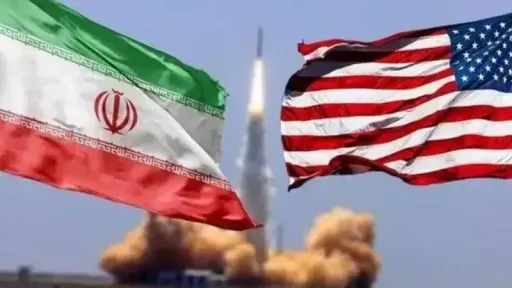
The United States and Israel launched military action against Iran on Feb. 28, triggering Iranian missile and drone attacks across the region and the effective closure of the Strait of Hormuz.
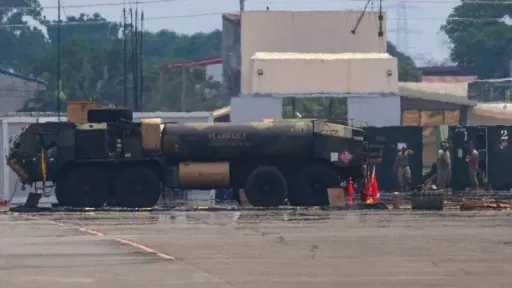
The U.S. military subsequently imposed a naval blockade on Iranian ports.
Diplomatic efforts have continued since a June framework agreement aimed at establishing a broader settlement covering navigation through the strategic waterway and Iran’s nuclear program.
For Gulf producers, the September export recovery demonstrates the flexibility of the region’s oil infrastructure. But Kpler said the network remains fundamentally different from its pre-war structure, with pipelines and offshore tanker transfers now playing a much greater role.
Future disruptions could depend on Iran’s potential return to the oil market, repairs to Saudi Arabia’s Yanbu route and the limited capacity for tanker transfers in the Gulf of Oman.
Source:turkiyetoday