Iran war strains US weapons stocks as Hormuz reopening hangs on US commitments

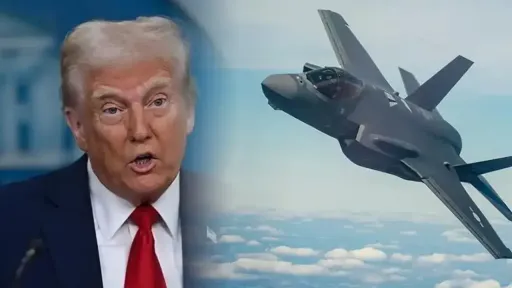
The extensive use of advanced US weaponry in the war against Iran has depleted American military stockpiles and raised concerns about Washington’s ability to respond to other potential conflicts, The Wall Street Journal reported Friday, citing US officials.
Military planners said the depletion had forced US European Command to adjust operational plans, while officials assessed that Washington might not be able to fully implement contingency plans to defend Taiwan in the event of a short-term military crisis.
The reported strain comes as the United States has shifted air defense systems and other weapons from Europe and Asia to the Middle East.
Officials said inventories in Europe of PAC-3 Patriot interceptors and ATACMS missiles had fallen to “beyond critical” levels. THAAD interceptors and counter-drone systems have also been redirected to the Middle East, reducing available supplies elsewhere.
The moves have also limited the ability of Western countries to provide additional air-defense interceptors to Ukraine as Russian missile attacks continue.
The White House and Pentagon have denied that the US faces a shortage of munitions, saying the military has sufficient resources to pursue President Donald Trump’s objectives.
US says Hormuz shipping lanes are open
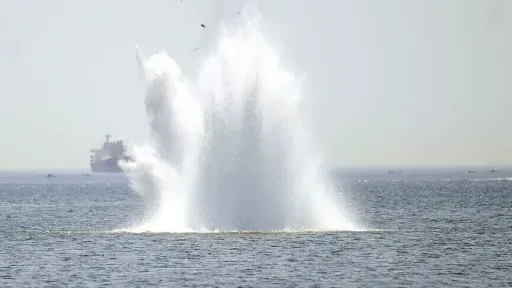
Against the backdrop of the reported military strain, the US Central Command said Thursday that internationally recognized shipping lanes through the Strait of Hormuz had been cleared of sea mines and were open to commercial traffic.
Commander Adm. Brad Cooper said US forces had removed mines allegedly laid by Iran’s Islamic Revolutionary Guard Corps using Navy divers, Navy SEALs and aircraft from the US Army, Navy, Air Force and Marine Corps.
“Internationally recognized transit routes in the Strait are free of Iranian sea mines,” Cooper said.
He said US forces had assisted nearly 1,500 commercial vessels through the waterway in recent months, carrying nearly 750 million barrels of crude oil to global markets.
Cooper also said that since the US resumed its naval blockade in July, no vessels had entered or left Iranian ports without American permission, apart from ships granted humanitarian exemptions.
According to Cooper, US forces had turned back 75 vessels attempting to breach the blockade and disabled three others that failed to comply with instructions.
The Strait of Hormuz is one of the world’s most important energy corridors, linking the Persian Gulf with the Gulf of Oman and the Arabian Sea.
Iran links reopening to sanctions relief
Iranian President Masoud Pezeshkian said Friday that Tehran had agreed with Oman on a route for passage through the Strait of Hormuz and was prepared to reopen the waterway if Washington fulfilled commitments under an agreement signed in June.
“We agreed with Oman on the passage route through Hormuz, and if the US fulfills its commitments under the memorandum of understanding, we will open the strait,” Pezeshkian said, according to Iran’s official IRNA news agency.
He said the proposed route had been communicated to Iran’s supreme leader and that Tehran was following up on the arrangement.
Pezeshkian said Iran expected the United States to lift sanctions and the blockade, release frozen Iranian assets, begin investment and end the war in Lebanon.
He said Iran’s Supreme National Security Council had reached an “exceptional” consensus on the arrangement, with 12 of its 13 members voting in favor.
Tehran cites economic losses from blockade
Pezeshkian said sanctions and the blockade had caused Iran’s imports and exports to fall by between 25% and 35%.
He said banking and petrochemical sanctions had initially been lifted under the memorandum, while Iran exported nearly 90 million barrels of oil during the period in which the agreement was in effect.
According to Pezeshkian, discussions were also held with Qatar and the United Arab Emirates over investment plans worth about $300 billion, but he said those projects could not proceed while the war continued.
Iran and Oman have been discussing arrangements for managing shipping through Hormuz since the Washington-Tehran memorandum collapsed last month.
Under the agreement, the US and Iran had agreed to extend an April ceasefire and gradually restore shipping through the strait to prewar levels while negotiations continued toward a broader settlement.
Pezeshkian said Iran remained willing to restore the waterway to its previous status but accused Washington of failing to honor its commitments.
Iran says it is operating under wartime conditions
Pezeshkian also warned of mounting domestic pressure as the conflict disrupts trade, energy supplies and government revenues.
“We are in a state of war,” he said, adding that blocked routes were preventing goods from entering the country and creating pressure on fuel supplies.
The president said the government had not decided when or by how much gasoline prices might increase. He said the only proposal under consideration involved a third pricing tier for consumption above the regular quota, with a proposed price of about 10,000 tomans, or roughly $0.05.
He rejected reports that the price could rise to 50,000 tomans.
Pezeshkian said any fuel-price measure would require consultations with parliament and the judiciary.
He also called for greater use of public transportation and said the government was considering remote work, stricter vehicle-efficiency standards and wider use of electric taxis and motorcycles to reduce fuel consumption.
He said attacks on power plants and oil and gas infrastructure had reduced energy production, adding to the economic pressure created by the war.
Source:AA