Iran warns of wider war as US talks continue

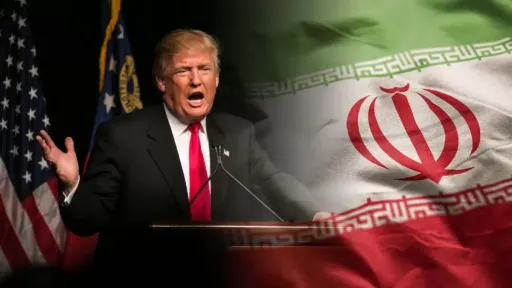
Iran’s Islamic Revolutionary Guard Corps has warned that Tehran would change the “geography of the war” and deploy new military capabilities if the United States launches another attack, as diplomatic contacts between the two countries continue through intermediaries.
IRGC spokesman Hossein Mohibi said Sunday that Iran had identified new targets and was prepared for a prolonged conflict.
“If a new attack takes place, our defense and offensive operations will change significantly,” Mohibi said in a televised interview. “We will change the weapons and the geography of the war.”
He said Iran’s military was more prepared than before and that its potential targets were no longer limited to those previously attacked.
Pezeshkian says Iran will not negotiate under pressure
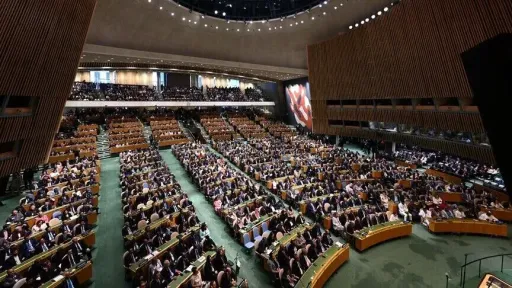
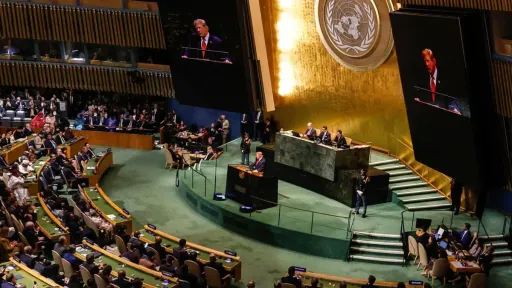
Iranian President Masoud Pezeshkian, meanwhile, told the UN General Assembly that Tehran remains open to dialogue but will not accept negotiations conducted under threats.
“We will never bow our head,” Pezeshkian said, adding that Iran was prepared to negotiate if the process was not accompanied by the “language of force.”
Pezeshkian reiterated Iran’s position that it is not seeking nuclear weapons while insisting that Tehran has an “inherent” right to peaceful nuclear technology.
He also rejected US President Donald Trump’s characterization of Iran as a leading sponsor of terrorism, saying Iran was instead a victim of terrorism.
Pezeshkian accused Israel and the United States of carrying out attacks against Iran and criticized what he described as international double standards over Israel’s nuclear program.
Tehran says message was delivered to Washington
Iranian Foreign Ministry spokesman Esmail Baghaei said Wednesday that Tehran had communicated with US officials in New York through Qatar and conveyed conditions for ending the conflict.
Baghaei said Iran called for an end to the war, the cessation of US military actions and the naval blockade, an end to what Tehran describes as an economic war, and the release of Iranian assets.
Iranian state television said Foreign Minister Abbas Araghchi met with US representatives Steve Witkoff and Jared Kushner following repeated requests from Washington.
Trump said Tuesday that US officials had held talks with Iranian representatives for about three hours and described the discussions as having gone “very well.”
The exchanges represent continued diplomatic contact despite sharply differing positions from Washington and Tehran.
Canada announces new sanctions
The diplomatic tensions were accompanied by new Canadian sanctions against Iranian officials and entities.
Canada announced measures against five individuals and five entities over alleged involvement in digital surveillance, censorship, unlawful violence, arbitrary detention and intimidation.
Global Affairs Canada said the sanctions targeted senior Iranian security and government officials allegedly involved in suppressing dissent and restricting freedom of expression, association and peaceful assembly.
Foreign Minister Anita Anand said Canada was using targeted sanctions in response to what Ottawa described as repression by the Iranian government.
Canada said it has imposed 24 rounds of sanctions against 237 Iranian individuals and 265 entities since October 2022.
Strait of Hormuz remains a major flashpoint
The latest developments come amid continued tensions around the Strait of Hormuz, a critical route for global energy supplies.
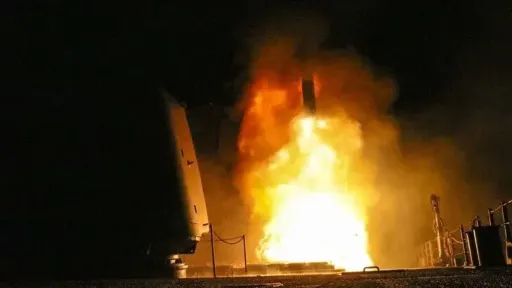
The United States and Israel launched major attacks against Iran on Feb. 28, targeting military and government infrastructure, while Iran responded with missile and drone attacks against Israel and US positions in the region.
A ceasefire was reached in April, followed by a memorandum in June giving the two sides 60 days to pursue a longer-term agreement. The process subsequently broke down, with tensions escalating again.
Iran later closed the Strait of Hormuz, while the United States reimposed a military blockade of Iranian ports, according to Iranian officials.
With military threats continuing alongside indirect diplomatic contacts, Tehran and Washington remain divided over the conditions for ending the conflict.
Source:AA