US war costs against Iran reach $47.1 billion as diplomatic talks continue

The United States' military campaign against Iran has cost American taxpayers an estimated $47.1 billion, according to the latest Pentagon figures submitted to Congress, as Washington continues to weigh diplomatic options alongside military pressure.
The estimate, provided by US Central Command and covering costs through October 16, represents an increase of $3.5 billion from the $43.6 billion reported in early September.
The financial toll comes as President Donald Trump signals that further military action remains possible, while Vice President JD Vance says Washington and Tehran have made progress toward a negotiated settlement.
The conflict, launched by the United States and Israel on February 28, has entered its ninth month, with its economic consequences, military casualties and impact on regional security continuing to fuel debate in Washington.
Munitions account for the largest share of war spending
The largest portion of the estimated $47.1 billion bill, approximately $29 billion, has gone toward replacing ammunition and weapons used during the campaign.
A significant share of the demand involves defensive missile interceptors, including systems used by the Army's Patriot and Terminal High Altitude Area Defense (THAAD) platforms. Individual Patriot interceptors can cost millions of dollars.
The Pentagon estimates that approximately $11.9 billion has been spent on military operations, while another $6 billion is linked to equipment losses.
The Air Force's costs stand at $7.6 billion, while Army spending exceeds $2 billion. Navy costs were listed at $1.45 billion, down from $2.2 billion in the previous estimate.
The Pentagon has not explained the reduction in the Navy's reported costs.
The latest figures also exclude damage to US military installations across the Middle East. Iranian missile and drone attacks have reportedly damaged or destroyed hundreds of buildings and other structures at American bases in Kuwait, Bahrain, Qatar, the United Arab Emirates, Saudi Arabia, Iraq, Oman and Jordan.
According to the Pentagon's official figures, 21 US service members have been killed and 865 wounded during the conflict. Eighteen of the deaths were attributed to Iranian strikes, combat aircraft crashes or the disposal of Iranian drones.
Vance says negotiations show progress

Despite the growing military expenditure, Washington has signalled that a diplomatic settlement remains possible.
Vance said Monday that he had spoken with Trump about the negotiations and that both believed there were prospects for an agreement.
"The president and I both feel pretty good about the prospects for potentially coming to a negotiated settlement," Vance told reporters.
He added that discussions would continue, although he described Iran as unpredictable.
Vance stressed that any agreement would require a firm and verifiable commitment from Tehran not to rebuild its nuclear programme.
He said Washington had not imposed a deadline for Iran to reach an agreement and maintained that the administration retained both military and non-military options.
Iranian Foreign Ministry spokesman Esmaeil Baqaei also confirmed that messages were continuing to pass between the two countries through mediators.
Deputy Foreign Minister Kazem Gharibabadi travelled to Doha to facilitate the exchanges through Qatari mediation.
US carries out strikes on Qeshm Island

Diplomatic contacts have continued alongside military activity.
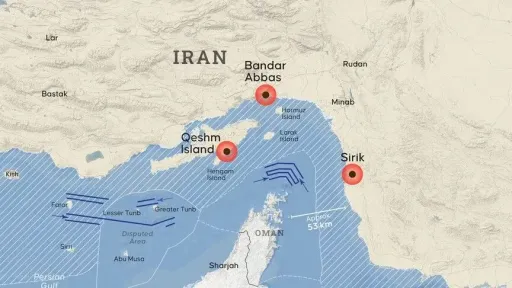
The US military carried out what officials described as defensive strikes against targets on Iran's Qeshm Island on Monday, according to reports by US media.
A US official said the operation was intended to respond to Iranian forces using surface-to-air missiles against American assets.
The Wall Street Journal reported that US forces had continued conducting smaller-scale strikes against Iranian targets for several weeks, despite the absence of large-scale fighting.
Some American officials said the operations were intended to prevent Iran from developing the capability to threaten commercial shipping in the strategically important Strait of Hormuz.
Iran's Islamic Revolutionary Guard Corps (IRGC), meanwhile, claimed that it had downed two US MQM-170 drones south of Qeshm Island using electronic warfare systems.
The semi-official Tasnim news agency reported that the operation prevented the aircraft from completing their missions.
The announcement followed two similar claims last week involving drones of the same type. The US military rejected Iran's account of one earlier incident.
Trump downplays prospect of renewed large-scale war

Trump has sought to play down the possibility of another major military confrontation following Tuesday's midterm elections.
Asked whether he was considering renewed strikes against Iran after the vote, the president responded negatively, saying diplomatic arrangements were progressing.
"We had a war with Iran. We won," Trump told reporters, arguing that there had been little fighting in recent months.
In an interview with Axios, he said he was in no rush to decide whether to resume direct military action.
"One way or the other, we will do something, but there is no rush," he said.
Trump also claimed that US military operations had severely weakened Iran's economy and insisted that Tehran wanted an agreement.
He linked progress in negotiations to falling energy prices, while reiterating that preventing Iran from acquiring nuclear weapons remained a central objective.
However, he warned that further military action against nuclear-related facilities remained an option.
War costs become political issue ahead of midterms
The financial burden of the conflict has become a major issue ahead of the US midterm elections, particularly as higher energy costs affect households and businesses.
A recent AP-NORC poll found that most voters wanted Congress to prioritize ending the war.
The Trump administration is also seeking approval for a proposed $1.5 trillion military budget, alongside a separate $95 billion funding package intended to support the Iran war and other priorities.
Senate Minority Leader Chuck Schumer criticized the administration's handling of the conflict, accusing Trump of entering the war without a clear strategy or exit plan.
Democrats have repeatedly attempted to pass legislation aimed at ending the military campaign, but their efforts have failed in the Republican-controlled Congress.
Military reinforcements and regional tensions persist
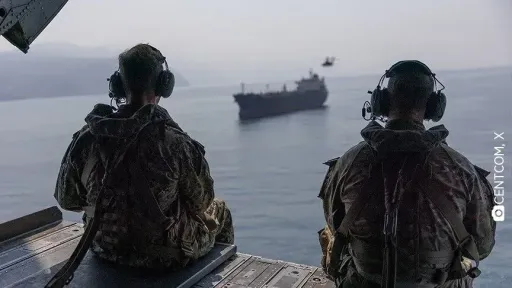
Despite the diplomatic signals, the United States continues to strengthen its military presence in the Middle East.
A third aircraft carrier and thousands of additional troops are being deployed to the region, while the administration has reportedly reduced staffing at some US embassies following intelligence warnings about potential Iranian threats to American personnel.
Tensions have also persisted over security arrangements and freedom of navigation through the Strait of Hormuz, despite a memorandum of understanding signed by Washington and Tehran on June 18.
The agreement's implementation has stalled amid disagreements over security conditions in the strategic waterway.
With military spending continuing to rise, negotiations still unresolved and further deployments under way, the Trump administration faces pressure to clarify whether the conflict is moving toward a lasting diplomatic settlement or another phase of military confrontation.
Source:AA