Democrats’ election victory sends shockwaves across the world

European officials highlight potential shifts in US policy, while others stress continuity in relations with Washington. Ukraine, NATO, trade and foreign policy dominate international reactions.
Europe divided over political implications
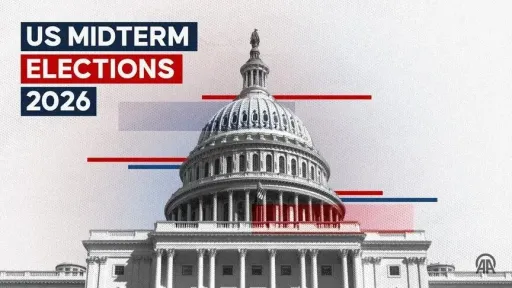
Democrats’ victory in the US midterm elections has drawn mixed reactions from world leaders, with governments assessing the potential consequences for Washington’s domestic and foreign policy.
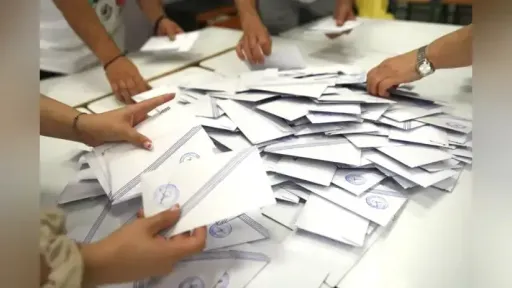
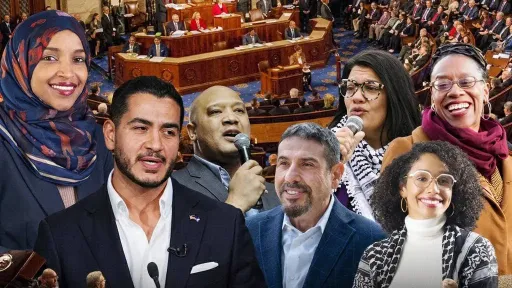
Democrats secured control of both the Senate and the House of Representatives in Tuesday’s elections, dealing a major political setback to President Donald Trump and the Republican Party.
The results have prompted international debate over the future direction of US policy, particularly regarding transatlantic relations, NATO, support for Ukraine and global security.
German Defense Minister Boris Pistorius congratulated Democrats on what he described as a historic victory, while stressing that Europe must take greater responsibility for its own security. He argued that NATO needs to become more European to preserve its transatlantic character.
Alice Weidel, co-leader of Germany’s Alternative for Germany (AfD) party, attributed the Republicans’ losses partly to Trump’s foreign policy, arguing that his failure to honour promises to avoid military intervention abroad had damaged Republican support.
In Spain, Foreign Minister Jose Manuel Albares welcomed the Democrats’ gains, while Prime Minister Pedro Sanchez described the outcome as a rejection of Trump’s policies and a setback for the international far right.
Sanchez said American voters had rejected policies that impoverish citizens, as well as hatred, sexism, climate change denial and privileges enjoyed by political and economic elites. He suggested that similar political developments could emerge in Spain.
French Economy and Finance Minister Roland Lescure described the Democratic gains as undeniable but cautioned that Trump would retain considerable authority over US foreign policy.
He said the president would have to decide whether to adjust his approach, particularly on issues such as gasoline prices and international involvement.
Italy and Britain stress continuity
Italy’s Deputy Prime Minister and Foreign Minister Antonio Tajani said the election results would not change relations between Rome and Washington.
He stressed that Italy respects the choices of the American electorate and maintains strong cooperation with the United States regardless of which party is in power.
British Health Minister James Frith described the outcome as a seismic shift in American domestic politics but insisted that the longstanding relationship between London and Washington would remain unchanged.
Poland welcomes result, Czechia warns of deadlock
Polish Prime Minister Donald Tusk welcomed the Democratic victory as a positive development for American democracy.
“Today democracy has won in America. I love democracy, it's a beautiful thing,” Tusk said, expressing hope that the outcome would also contribute to stability in Poland’s region.
Tusk also advised Trump against using his presidential veto power as a governing tool.
Czech Prime Minister Andrej Babis described the Democratic victory as expected but exceptionally large. He warned that the new balance of power could lead to political paralysis in Washington, with impeachment efforts and presidential vetoes potentially dominating the remainder of Trump’s presidency.
Nevertheless, Babis expressed hope that Trump would continue pursuing efforts to end the war in Ukraine and address the crisis surrounding the Strait of Hormuz.
NATO and Ukraine remain European priorities
Norwegian Prime Minister Jonas Gahr Store said the election results sent a powerful signal that American voters wanted a change in direction.
He noted that political voices more closely aligned with Norway’s positions were gaining ground in the United States, particularly on climate change, environmental protection, foreign policy and development assistance.
Belgian Defense Minister Theo Francken warned that growing political polarization could make governing the United States increasingly difficult.
He said Europe would be watching developments in US trade policy, support for Ukraine and Washington’s position on NATO particularly closely.
European Parliament Vice President Christel Schaldemose expressed cautious optimism that the Democratic victory could benefit Ukraine, the green transition and international cooperation.
However, she stressed that the European Union must continue strengthening its strategic autonomy and reducing its dependence on political developments in Washington.
Greece says strategic partnership will remain strong
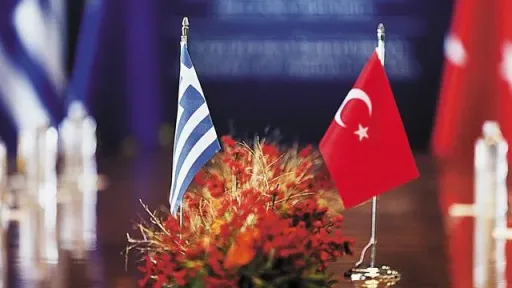
Greek government spokesperson Pavlos Marinakis said the election results would not affect the strategic partnership between Athens and Washington.
“Greek-American relations will remain strong,” Marinakis said, describing the United States as a strategic ally.
He added that major bilateral projects and agreements would remain unaffected by the change in the balance of power in Congress.
Marinakis also noted that individuals maintaining good relations with the Greek government were expected to hold positions on key congressional committees.
Iran and Russia react cautiously
Iranian Parliament Speaker and chief negotiator Mohammad Bagher Qalibaf said the results reflected American opposition to war, whether motivated by moral concerns or rising living costs.
He warned that Washington would face serious consequences if it ignored public opposition to military confrontation.
Iranian Deputy Parliament Speaker Ali Nikzad attributed the Republican setbacks to what he described as the failure of US efforts to pressure Tehran through sanctions and other restrictive measures.
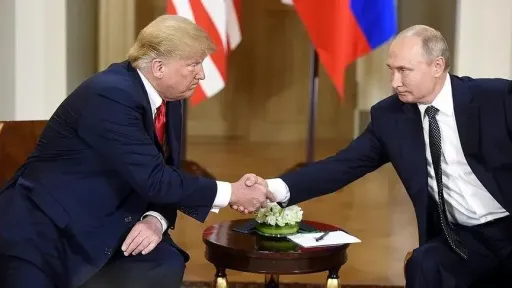
In Moscow, Kremlin spokesman Dmitry Peskov expressed hope that Trump would continue pursuing diplomatic solutions despite the election results.
He said another round of trilateral negotiations was expected in the near future but declined to speculate on whether the new congressional balance would affect diplomatic initiatives.
Russian Deputy Foreign Minister Sergei Ryabkov urged caution until the final results were confirmed, noting that the Democratic Party leadership had traditionally maintained an unfavourable position towards Russia.
He added that Moscow’s approach to the war in Ukraine would not be influenced by political developments in other countries.
China and Taiwan reaffirm positions
Chinese Foreign Ministry spokeswoman Mao Ning described the elections as an internal American matter and reiterated Beijing’s willingness to maintain constructive relations with Washington.
She called for the implementation of agreements reached between the two countries’ leaders, stronger diplomatic communication and greater cooperation based on mutual respect and equality.
Taiwan’s Foreign Ministry said it was closely monitoring developments but stressed that US support for Taiwan remained firmly based on bipartisan consensus.
The ministry reaffirmed its commitment to expanding cooperation with Washington in security, trade, technology and education.
Pakistan’s Foreign Ministry spokesman Sajjad Haider Khan declined to comment on the Republicans’ electoral losses, saying the outcome was a matter for the American people and their political system.
South Africa and Mexico assess implications
South African President Cyril Ramaphosa welcomed the Democratic victories in both chambers of Congress, describing the results as a clear expression of the American electorate’s preferences.
He suggested that the outcome could mark a turning point in international relations and expressed hope for greater mutual understanding between Washington and Pretoria.
Mexican President Claudia Sheinbaum adopted a more cautious approach, saying the results reflected public sentiment in the United States but that their implications for bilateral relations would need to be assessed.
She also welcomed the reported gubernatorial victories of Xavier Becerra in California and Gina Hinojosa in Texas.
The international reactions underline the broad significance of the US midterm elections, with governments across Europe, Asia, the Middle East, Africa and Latin America closely watching their potential impact on Washington’s foreign policy and global partnerships.
While some leaders see opportunities for political change, others have stressed that their strategic relationships with the United States will remain a priority regardless of the balance of power in Congress.
Source:AA