New secretary-general of decentralized administration of Macedonia–Thrace D. Galamatis visits Gümülcine

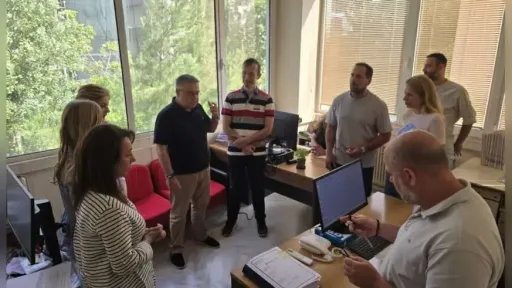
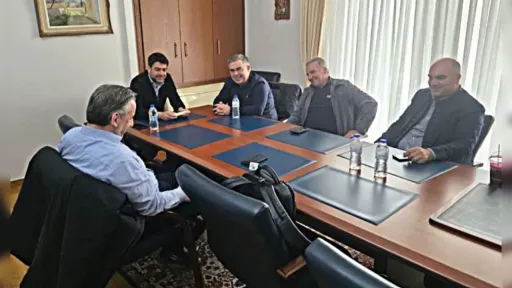
The new Secretary-General of the Decentralized Administration of Macedonia–Thrace, Mr. Dimitrios Galamatis, held his first meeting with mayors and the board of the Regional Union of Municipalities of Eastern Macedonia and Thrace (PED EMT) on Wednesday, August 20, in Komotini.
Mr. Galamatis, who recently assumed office, emphasized the administration’s intention to work closely with local municipalities in order to accelerate procedures and improve public services within the framework of legality.
“We are joining forces with the ultimate goal of delivering results to the citizens,” he said, stressing that cooperation between the central state and local government must be strengthened while respecting the institutional roles of both.
Key issues raised
PED EMT President Savvas Michailidis welcomed Mr. Galamatis, noting that municipalities have always been “part of the solution, not part of the crisis,” yet are often not treated accordingly by central authorities. He highlighted several pressing issues:
- Opposition to compulsory mergers of Municipal Water and Sewerage Companies (DEYA)
- The pending changes to the electoral law
- Waste collection fees and related management challenges in regional municipalities
- The need for municipalities to employ suitable staff for stray animal management
- Concerns over quarry fees and the lack of revenue distribution to local governments
- The functioning of Development Organizations, where contracts have faced delays or obstacles from Decentralized Administration reviews
- Michailidis stressed that municipalities seek legality, not arbitrariness, but decision-making responsibility should lie with those who approve actions.
Galamatis: Training, speed, and structured dialogue
Mr. Galamatis acknowledged that many of the challenges raised by mayors today are the same as those heard as far back as 2011, while new issues have also emerged. He proposed training programs for both municipal staff and Decentralized Administration officials, along with the creation of a procedural guide to streamline approvals.
He underlined that delays in decision-making are a nationwide problem but expressed optimism that with proper measures, processes could become both faster and more efficient.
“Our role is to be a channel for local government issues, presented in a structured way, so that solutions can be achieved. The aim is faster, better, and more effective service to citizens,” Galamatis stated.
The meeting concluded with both sides expressing their commitment to maintaining regular contact and fostering cooperation, ensuring that minor problems do not escalate into major obstacles for local governance.