Greece launches autumn rabies vaccination campaign for wildlife in eastern Macedonia and Thrace
Greece will begin its autumn 2026 rabies vaccination campaign for wild animals in the Region of Eastern Macedonia and Thrace on Monday, October 19, with vaccine baits distributed by aircraft over six to eight flying days, regional veterinary authorities have announced.
The campaign, coordinated by the Region’s Directorate of Veterinary Services, aims to protect wildlife against rabies. The aerial distribution will cover the region, excluding the island of Samothrace, provided operations are not delayed by adverse weather conditions.
The vaccine baits are designed to be consumed by target wild animals, particularly foxes, to help build immunity against the virus.
Where will the rabies vaccine baits be distributed?
According to the regional veterinary authority, the baits will be dropped in areas where target wildlife lives. Distribution will not take place in urban or suburban residential areas, along major road networks or around lakes.
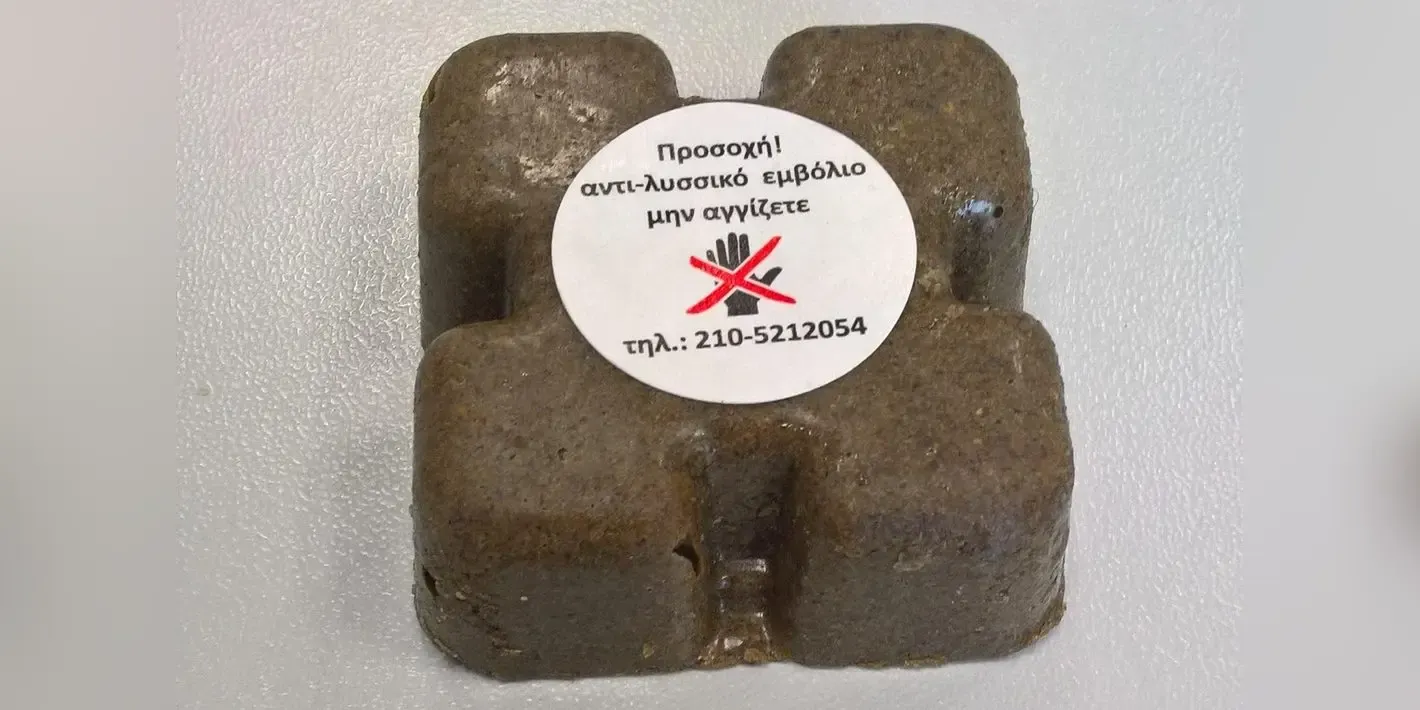
The baits are small, olive-brown cubes with a fish-like smell. Each contains a capsule or sachet holding the oral rabies vaccine, surrounded by material designed to attract foxes. The bait also contains tetracycline, which serves as a marker of vaccine consumption in animals.
The exterior carries a warning label reading “Rabies vaccine — do not touch” and includes a contact telephone number.
What should you do if you find a vaccine bait?
Veterinary authorities have issued precautions for anyone who encounters a bait in a residential area, farmland or another place used by people.
People should avoid touching, crushing or otherwise damaging the bait. If one is found in an area where people or animals may come into contact with it, the local veterinary authorities should be notified promptly.
If the bait must be moved away from an accessible area, the regional guidance advises using disposable plastic gloves or a plastic bag and placing it somewhere inaccessible to people and animals. Direct contact should be avoided.
What if a person comes into contact with the bait?
The regional veterinary notice states that the main risk to humans arises if the liquid vaccine inside the bait’s capsule comes into contact with an open wound, damaged skin, the mouth or the eyes.
If contact occurs, wash the affected skin thoroughly with soap and plenty of water. If the eyes or other mucous membranes are exposed, rinse them generously with water. Anyone who comes into contact with the liquid vaccine should seek medical advice immediately and, if possible, take the bait in a plastic bag for identification by a healthcare professional.
Advice for pet owners and livestock keepers
If a dog, cat or farm animal finds a vaccine bait, people should not attempt to pull it from the animal’s mouth by hand. Instead, they should encourage the animal to release it.
If the bait has been eaten, or consumption is suspected, the regional guidance advises wearing gloves when washing the outside of the animal’s mouth with soap and water. People should avoid handling the animal with bare hands for at least 24 hours.
Pet owners and livestock keepers should contact local veterinary authorities for further advice if they suspect their animals have consumed a bait.
Where to find official information
The Region of Eastern Macedonia and Thrace’s Directorate of Veterinary Services issued the announcement in Komotini on October 17, 2026.
Further information about rabies in humans is available from Greece’s National Public Health Organization (EODY) at https://eody.gov.gr/el/. Guidance on animal diseases transmissible to humans is also available through the Ministry of Rural Development and Food at https://www.minagric.gr/.