HPV vaccination rate stands at 50% in Eastern Macedonia and Thrace
HPV vaccination coverage in Greece's Eastern Macedonia and Thrace region stands at just 50%, well below the 90% target, health professionals warned at an awareness event in Gümülcine (Komotini) highlighting the importance of preventing cervical cancer through vaccination, regular screening and early diagnosis.
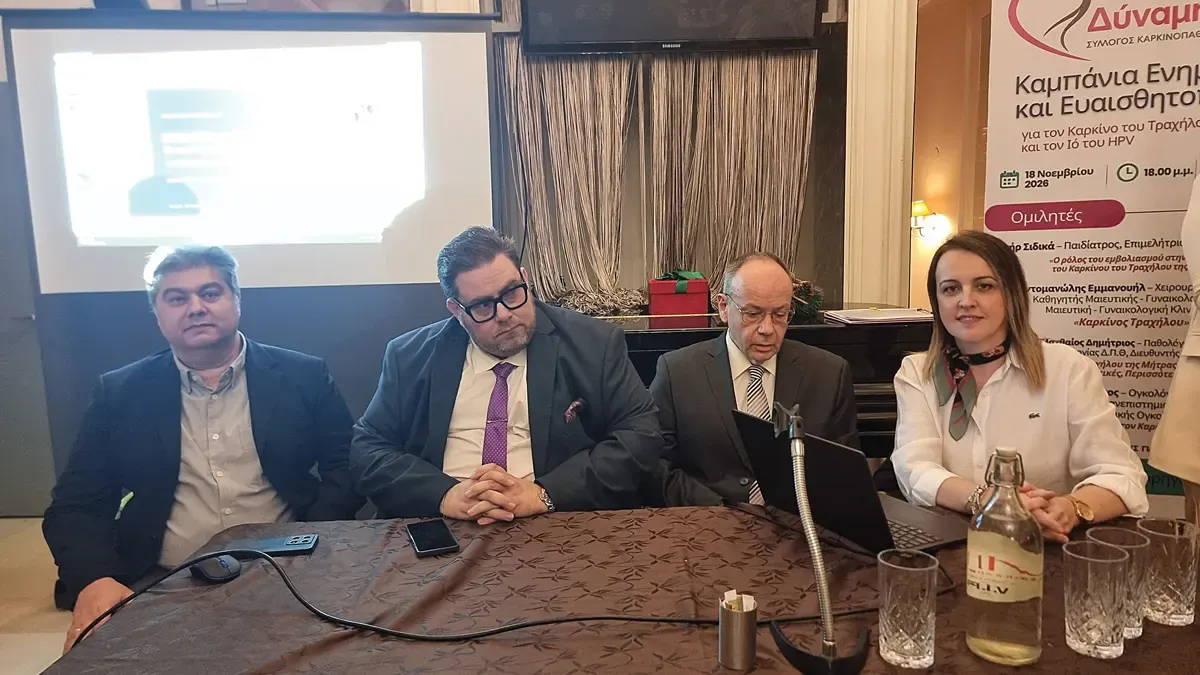
The importance of awareness and prevention in the fight against cervical cancer was highlighted at an event organised by the Rodopi Cancer Patients and Friends Association, “Dynami Psychis” (Strength of the Soul), on Wednesday evening, 18 November, at the Komotini Club in Gümülcine (Komotini).
The event brought together medical professionals who discussed HPV vaccination, cervical cancer screening, early diagnosis and developments in treatment. Speakers also highlighted the need to improve public awareness, particularly given the relatively low vaccination coverage in Eastern Macedonia and Thrace.
Association president Rodoula Kokkinaki said the event had been organised because knowledge and public awareness could save lives.
She stressed that cervical cancer was among the cancers for which effective preventive measures were available, including HPV vaccination, regular Pap smear and HPV testing, and early diagnosis.
However, she noted that some women still lacked sufficient information, neglected routine screening or hesitated to discuss health-related concerns.
Kokkinaki called for greater public awareness, efforts to dispel misconceptions and encouragement for women to undergo vaccination and regular screening.
HPV VACCINATION COVERAGE AT 50%, AGAINST 90% TARGET
Paediatrician Sahir Sidika, a senior doctor at the First Local Health Unit (TOMY) in Gümülcine (Komotini), discussed the role of vaccination in preventing cervical cancer, explaining the importance of HPV immunisation, the relevant age groups and the link between the virus and cancer.
She emphasised that vaccination alone was not sufficient and that regular screening through Pap tests, together with early diagnosis and treatment, remained essential.
According to Sidika, HPV vaccination coverage in the Region of Eastern Macedonia and Thrace stands at approximately 50%, while the target is 90%.
She stressed that broader public information and awareness campaigns were needed to improve vaccination rates.
GREATER AWARENESS NEEDED FOR EARLY DETECTION
Emmanouil Kontomanolis, obstetrician-gynaecologist and professor of obstetrics and gynaecology at Democritus University of Thrace, who works at the University General Hospital of Alexandroupoli, addressed cervical cancer prevention, epidemiology, diagnosis, clinical presentation, Pap testing, treatment and histological types.
He described cervical cancer as a major public health concern and said epidemiological trends remained relatively stable, with a slight upward tendency that he associated with insufficient adherence to medical recommendations.
Kontomanolis called for greater awareness among women and emphasised the importance of taking preventive healthcare more seriously.
NEW TREATMENTS OFFER FURTHER HOPE
Dimitrios Matthaios, an oncologist and associate professor of oncology at Democritus University of Thrace and director of the Oncology Clinic at the University General Hospital of Alexandroupoli, delivered a presentation entitled “Cervical Cancer: New Treatments, New Prospects, More Hope”.
He noted that cervical cancer is the world's fourth most common cancer among women and highlighted recent advances in oncology and the development of new treatment options.
Matthaios said these advances offered grounds for optimism but stressed that Greece needed to invest much more heavily in HPV vaccination.
Given the strong link between HPV and cervical cancer, he said an effective vaccination programme could prevent a substantial proportion of cases. He called on both public authorities and healthcare professionals to promote prevention, optimism and hope.
ADVANCES IN RADIOTHERAPY IMPROVE TREATMENT
Konstantinos Filippatos, a radiation oncologist and senior doctor at the University Clinic of Radiation Oncology at the University General Hospital of Alexandroupoli, discussed the role of radiotherapy in treating cervical cancer.
He said significant technological advances in radiotherapy in recent years had enabled more targeted and precise treatment, with fewer side effects, particularly when combined with systemic therapy.
He explained that treatment is often intended to be curative, with the aim of eliminating the disease.
Filippatos emphasised the importance of regular gynaecological examinations, noting that cervical cancer detected at an early stage has significantly higher chances of successful treatment.
He also urged the public not to neglect HPV vaccination, describing it as an important tool in preventing the disease.
The event concluded with a shared message from the speakers: despite advances in diagnosis and treatment, prevention through HPV vaccination, regular screening and early detection remains essential in reducing the burden of cervical cancer.