Trump rules out renewed Iran war for now as tensions persist

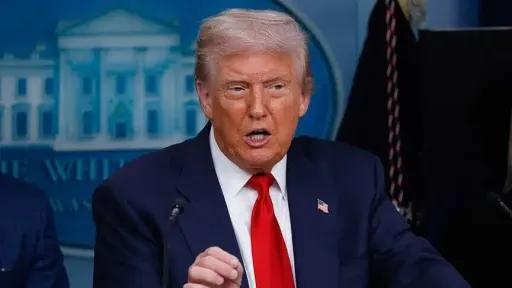
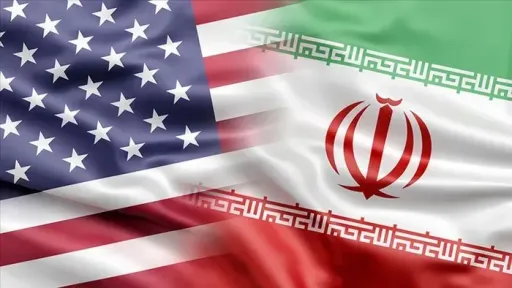
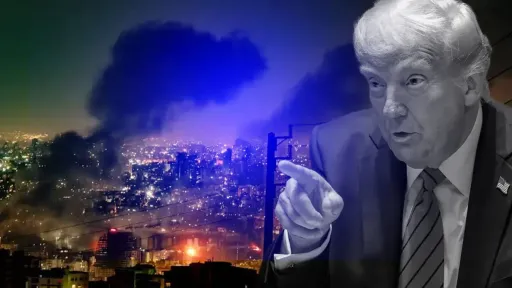
US President Donald Trump does not want to resume military operations against Iran for now, despite continuing tensions and growing uncertainty over the future of the conflict, according to a report by The Washington Post.
Citing a US official, the newspaper reported that Trump has received several intelligence briefings daily since the midterm elections, with the administration currently favoring a strategy of maintaining economic and military pressure rather than launching a new offensive.
The approach has been described as a middle ground of no war, no negotiations and no lasting peace, as the conflict enters its eighth month.
Trump recently said he had stopped trying to reach an agreement with Tehran and instructed Vice President JD Vance to focus on other issues.
"We're just keeping it the status quo," Trump told reporters on Monday.
However, Secretary of State Marco Rubio rejected suggestions that Washington was locked in a stalemate, arguing that economic pressure was significantly weakening the Iranian government.
He said the administration saw little need for major combat operations while sanctions and other economic measures continued to affect Tehran.
Israel explores possibility of renewed strikes
While Washington appears reluctant to restart the war, Israeli Prime Minister Benjamin Netanyahu has reportedly discussed the possibility of renewed attacks against Iran with Gadi Eisenkot, who has been tasked with forming Israel's next government.
According to Israeli Channel 12, Netanyahu met Eisenkot on Thursday and shared intelligence concerning Iran, hoping to influence his position on a possible military operation.
The report also said Eisenkot was unaware that Mossad chief Roman Gofman was visiting Washington to discuss the issue.
The meeting comes during a political transition in Israel, following Netanyahu's bloc losing its parliamentary majority in the October 27 elections. Eisenkot has previously warned against unnecessary military operations before a new government is formed.
Meanwhile, Israel's public broadcaster KAN reported that military Chief of Staff Eyal Zamir supports the possibility of an operation against Iran but considers the current timing unsuitable.
According to the broadcaster, Zamir favors close coordination with Washington and believes any military action should take place under appropriate conditions.
An unnamed security source said the Israeli military sees no immediate Iranian threat requiring a new attack and has warned against becoming involved in a prolonged war of attrition. The source also ruled out a renewed conflict in the coming weeks.
Mossad chief seeks US support
The diplomatic and security discussions have coincided with Gofman's visit to Washington.
According to Haaretz, the Mossad chief met CIA Director John Ratcliffe and was expected to hold discussions with US envoy Steve Witkoff.
Israeli media reported that Gofman intended to present intelligence concerning Iran's nuclear programme and long-range missile development, alongside Israeli allegations that Tehran had violated understandings reached with Washington.
The visit comes amid Israeli concerns that the United States and Iran could reach an agreement that eases pressure on Tehran without adequately addressing its nuclear and missile capabilities.
There has been no official comment from Washington or Jerusalem on the reported details of the meetings.
Iran warns of immediate retaliation

Iran, meanwhile, has warned that any renewed American or Israeli military attack would trigger an immediate and decisive response.
Speaking at a UN Security Council meeting on Friday, Iran's Deputy Permanent Representative Gholamhossein Darzi accused Washington of launching an unlawful war against his country and violating the UN Charter.
"The United States is the aggressor, not the victim," Darzi told the council.
He accused the US of violating Iranian sovereignty, attacking civilian infrastructure and imposing a military and maritime blockade.
Darzi also rejected claims that Tehran had abandoned diplomacy, insisting that Iran remained open to negotiations.
"Iran has never closed the door to diplomacy," he said.
However, he warned that any renewed military action by the United States or Israel would be met with retaliation against the source of the aggression.
The Iranian diplomat also defended his country's right to self-defence under international law, arguing that no Security Council resolution could remove that right.
Washington accuses Tehran of threatening maritime security
At the same Security Council meeting, US envoy Jennifer Locetta accused Iran of undermining regional stability and threatening international maritime security.
She alleged that Tehran had attacked neighboring countries, targeted commercial vessels, supported armed groups and disregarded Security Council decisions.
Locetta specifically highlighted threats to shipping routes through the Strait of Hormuz, Bab al-Mandab and the Red Sea.
"Iran ignores this Council. It ignores the overwhelming opinion of the international community," she said.
The US representative also accused Yemen's Houthi group of escalating attacks against Saudi Arabia, including strikes targeting commercial shipping, airports and energy infrastructure.
She reaffirmed Washington's support for its Gulf partners and called on Security Council members to take stronger action to protect maritime navigation and regional stability.
Uncertain outlook for the conflict
The latest developments highlight the contrasting positions of Washington, Jerusalem and Tehran as the conflict continues without a clear diplomatic settlement.
While Trump appears unwilling to authorize a new military campaign for now, Israel is seeking to maintain US support for possible future operations. Iran, meanwhile, insists it remains open to diplomacy but threatens a forceful response to any renewed attack.
With disagreements over maritime security, sanctions, nuclear activities and regional military influence unresolved, the prospects for a lasting agreement remain uncertain.
Source:AA