Iran warns US bases in Europe could be targeted as diplomatic efforts continue

Iran has warned that US military bases in Europe could become targets in the event of renewed military action against the country, as tensions with Washington persist alongside diplomatic efforts to reach a settlement.
Mohsen Rezaei, secretary of Iran’s Supreme National Security Council, said Wednesday that any military installation involved in an attack on Iran would be considered a legitimate target, regardless of its geographical location.
“No safe distance. No safe haven. No immunity,” Rezaei wrote on X, extending Tehran’s warning from West Asia to Europe.
His remarks followed a warning by Amir Kioumars Heydari, deputy chief of the General Staff of the Iranian Armed Forces, who said Iranian missiles and drones could reach US military bases and interests beyond the region.
Speaking to Iranian state broadcaster IRIB, Heydari said Tehran had prepared a list of potential targets extending beyond locations involved in previous fighting. He warned that countries allowing aircraft to launch attacks against Iran from their territory could also face retaliatory strikes.
Vance reportedly considers direct negotiations with Tehran

Despite the escalating military rhetoric, diplomatic contacts between Washington and Tehran appear to be continuing.
US Vice President JD Vance is reportedly considering face-to-face talks with a senior Iranian security official as the Trump administration explores ways to end the conflict, The Wall Street Journal reported Wednesday, citing US and Middle Eastern officials.
President Donald Trump has reportedly indicated that he is open to Vance taking the lead in renewed negotiations.
The discussions remain at an early stage, with no meeting date established. According to the report, Vance sent a letter in October to Rezaei requesting a meeting, while both sides continue communicating through regional mediators and allies.
A successful agreement could strengthen Vance's political standing, although the report noted that he would also face significant political risks if negotiations failed.
Iran awaits Washington's response to seven conditions
Iranian Parliament Speaker and chief negotiator Mohammad Bagher Qalibaf said Tehran had delivered a clear response to Washington outlining its demands and was awaiting an official decision.
Speaking to Al Jazeera, Qalibaf said the message had been conveyed through Qatari mediation and stressed that Iran was prepared to pursue peace if its conditions were accepted.
He reiterated that Tehran's seven conditions must be fulfilled before the Strait of Hormuz can return to normal operations and substantive negotiations can resume.
The demands include lifting the US naval blockade and oil sanctions, releasing frozen Iranian assets, ending the war on all fronts, formally declaring an end to hostilities rather than a temporary ceasefire, and refraining from interference in Iran's internal affairs.
Qalibaf also said Iran had reached an understanding with Oman on a new transit mechanism for the Strait of Hormuz, in accordance with international law. The proposed arrangements are reportedly part of indirect discussions with Washington.
He identified the lack of trust between the two countries as the main obstacle to an agreement, accusing the United States of making excessive demands and failing to honor previous understandings.
Iran's negotiating team remains unchanged, with Qalibaf continuing to lead the process alongside a six-member committee within the Supreme National Security Council, which includes Foreign Minister Abbas Araghchi.
Tehran raises environmental costs of military campaign

Meanwhile, Iranian President Masoud Pezeshkian has accused the United States and Israel of causing extensive environmental damage during their military campaign against Iran.
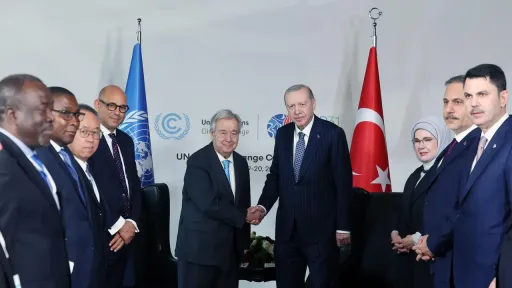
Speaking at the COP31 UN climate summit in Antalya, Türkiye, on Wednesday, Pezeshkian said attacks on fuel facilities had released an estimated 1.5 million tons of carbon dioxide into the atmosphere.
He attributed 500,000 tons of emissions to strikes on gas processing facilities in Asaluyeh on March 18 and another 1 million tons to attacks on fuel storage facilities near Tehran on March 7.
Pezeshkian said the destruction of energy infrastructure, widespread fires and the release of pollutants exposed a contradiction between international climate commitments and the environmental consequences of military operations.
He also called for international organizations to document environmental damage in Iran and Gaza and establish mechanisms to ensure accountability and compensation.
The Iranian president highlighted his country's renewable energy development, saying installed capacity had increased from 1,250 megawatts to more than 6,150 megawatts over the past two years.
Iran generated more than 4.5 billion kilowatt-hours of clean electricity in 2026, preventing an estimated 2.5 million tons of carbon dioxide emissions, he added.
Diplomatic deadlock continues
The confrontation began on February 28, when the United States and Israel launched military operations against Iran. A ceasefire followed in April, while a framework agreement reached in Islamabad on June 18 was intended to pave the way for a broader peace settlement.
However, disagreements over sanctions, the US naval blockade, security guarantees and arrangements governing the Strait of Hormuz have prevented a final agreement.
Regional mediators, including Pakistan, Qatar and Oman, have continued efforts to bring the two sides closer.
With Tehran warning of retaliation against US installations far beyond the Middle East while Washington considers renewed diplomatic engagement, the prospect of a wider confrontation remains a major concern for regional and international security.
Source:AA