İskeçe MP calls for targeted development plan amid economic decline

MP Hüseyin Zeybek has urged the Greek government to introduce a dedicated development programme for Xanthi, citing rising business closures, declining commercial activity and mounting pressure on small businesses. He has also called for transparency over how much of the €941 million allocated under the local development plan has actually been implemented.
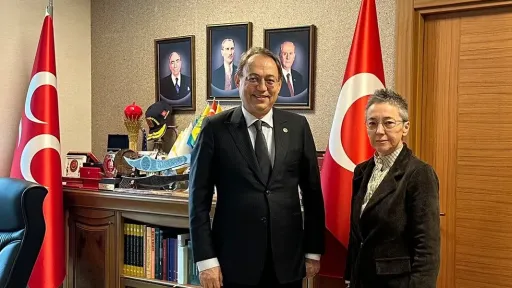
Hüseyin Zeybek, MP for İskeçe (Xanthi), has submitted a parliamentary question to the Ministers of Development and National Economy and Finance, highlighting the economic difficulties facing local businesses and calling for a targeted development strategy for the region.
Zeybek said İskeçe's economy had been experiencing a prolonged period of stagnation, with rising energy and operating costs, declining household purchasing power and limited access to financing making it increasingly difficult for small businesses to remain operational. He warned that these pressures were also undermining employment and the wider local economy.
BUSINESS CLOSURES RISE ACROSS EASTERN MACEDONIA AND THRACE
According to data published by the Hellenic Statistical Authority (ELSTAT) on 29 October 2026, Eastern Macedonia and Thrace had 38,815 active businesses in 2024. During the same year, 2,926 new businesses were established, while 1,860 ceased operations.
The number of business closures increased from 1,697 in 2023 to 1,860 in 2024. Zeybek noted that the region's business closure rate stood at 4.8%, placing it among the three regions with the highest rates nationwide.
Meanwhile, only 261 businesses, equivalent to 0.7%, recorded growth during the same period, according to the figures cited by the MP.
Zeybek stressed that regional statistics alone were insufficient to provide a comprehensive picture of İskeçe's economic situation and called for more detailed data at the prefectural level.
BUSINESS DENSITY BELOW THE NATIONAL AVERAGE
According to the 2025 GEMI Business Report prepared by IEME–KEEE, İskeçe had 64.4 businesses per 1,000 residents, significantly below the national average of 96.3.
Data from the İskeçe Chamber of Commerce and Industry show that the prefecture has 6,922 active businesses. The net increase in business registrations — the difference between new establishments and closures — fell from 112 in 2024 to 77 in 2025.
Zeybek said these figures pointed to mounting difficulties, particularly in the retail sector, and highlighted the need for more effective and accessible support mechanisms for local businesses.
İSKEÇE RANKS LAST IN GDP PER CAPITA
The prefecture's economic challenges are also reflected in regional economic indicators.
According to figures included in the “Starting a Business” (Xekino Epixeirimatika) support programme, published on 30 April 2026, İskeçe recorded an average annual GDP per capita of €9,869.24 over the 2014–2023 period, the lowest figure among the prefectures listed in the relevant table.
In a separate assessment in 2025, the president of the İskeçe Association of Shopkeepers and Traders estimated that approximately 10–15% of commercial businesses in the city centre had closed.
Although this estimate was not based on official statistics, local media reports have also highlighted closures spreading beyond the city centre, with some businesses unable to resume operations.
IMPLEMENTATION OF €941 MILLION DEVELOPMENT PLAN QUESTIONED
On 15 May 2025, the Greek government announced the İskeçe Local Development Plan, envisaging a total budget of €941 million.
Of this amount, €849 million was allocated to completed, ongoing or planned projects, while €92 million was earmarked for business support through the Recovery and Resilience Facility, EU structural funds and the Hellenic Development Bank.
Zeybek argued that the announced allocations did not demonstrate that the funds had actually been disbursed or that small businesses in İskeçe had benefited from them.
He also questioned the absence, in the publicly available information, of a dedicated programme to protect and revitalise the local market, with a clearly defined budget, beneficiaries, implementation timetable and measurable employment targets.
SMALL BUSINESSES STRUGGLE TO ACCESS INCENTIVE SCHEMES
Zeybek also pointed to the limitations of existing investment incentives.
İskeçe was included in the second round of the “Special Support Areas” investment incentive scheme under Greece's Development Law, published in Government Gazette No. 2199 on 17 April 2026.
However, the scheme's minimum investment threshold of €2 million makes it difficult for most small traders and family-run businesses to qualify, according to the MP.
He argued that general financing and investment incentives were insufficient to address the specific needs of small businesses in İskeçe and called for a more accessible programme tailored to local economic conditions.
CALL FOR A DEDICATED SUPPORT PROGRAMME
Zeybek said a targeted development programme should prioritise support for small businesses, encourage new productive investments and promote agriculture and food production, manufacturing and tourism.
He also called for measures to strengthen access to external markets and create local employment opportunities.
The MP stressed that the initiative should be developed in cooperation with the İskeçe Chamber of Commerce and Industry, trade and professional associations, and local authorities.
SIX QUESTIONS SUBMITTED TO GOVERNMENT MINISTERS
In his parliamentary question, Zeybek sought answers from the relevant ministers on six key areas:
- Business openings and closures: How many businesses have opened, closed or gone bankrupt in İskeçe since 2022? He also requested a breakdown by municipality, sector and business size, as well as figures on retail closures and employment losses.
- The €941 million development plan: Which projects have been completed, which remain ongoing and which are still at the planning stage? How much of the €92 million earmarked for businesses has been approved and actually disbursed, and how many businesses have received support?
- A dedicated programme for small businesses: Will the government introduce a specific development programme for retailers and micro-enterprises, including support for working capital, microfinance, energy efficiency and the reopening of vacant commercial premises?
- EU funding and Development Law incentives: How many businesses in İskeçe have benefited from EU structural funds and Development Law incentives since 2021? What amounts have been approved and paid, and how many jobs have been created?
- Access to finance: What measures will be introduced to prevent small businesses from being excluded from support schemes because of high investment thresholds, own-capital requirements and difficulties accessing credit? Will a dedicated financing mechanism for smaller investments be established?
- Cooperation with local institutions: Will the ministries work with the Chamber of Commerce and Industry, trade associations and municipalities to launch concrete initiatives supporting local commerce and encouraging new investment? Will their performance be monitored through publicly available indicators and regular reports?
- Zeybek's parliamentary initiative has brought renewed attention to the economic challenges facing İskeçe, particularly the survival of small businesses and the effectiveness of regional development policies. His central demand is for a targeted programme that translates announced investment commitments into tangible benefits for the local economy.