Eastern Macedonia–Thrace Youth Regional Council holds inaugural session in Gümülcine
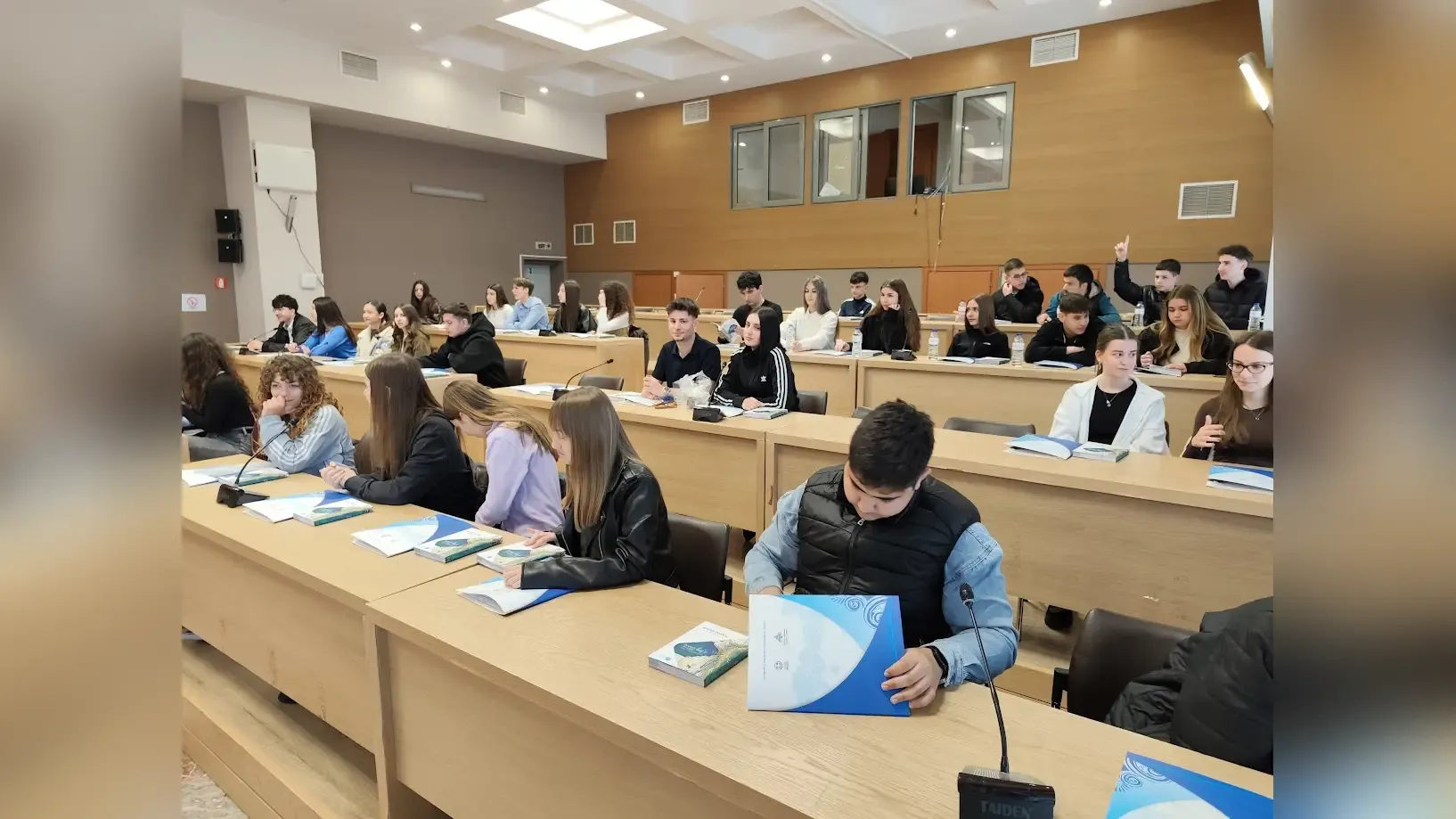
The Eastern Macedonia and Thrace Regional Council has officially launched its Youth Regional Council with its first session held today in Komotini, marking a significant step toward strengthening youth participation in regional governance.
The session took place at the “Georgios Pavlidis” council hall and brought together 45 high school students from across the region, representing the regional units of Meriç, Rhodope, İskeçe, Drama, and Kavala. The council’s composition mirrors that of the official regional council, ensuring balanced representation.
Youth Engagement Takes Center Stage
The opening address was delivered by Stelios Katsogridakis, Deputy Regional Advisor for Education, who underscored the importance of youth engagement in public life. He highlighted ongoing initiatives aimed at students, including first aid and CPR training programs conducted in cooperation with EKAB, which have reached approximately 5,000 students, as well as road safety campaigns involving thousands more.
Strong Institutional Support
Remarks were also delivered by Vasilis Mavridis, Director of the Regional Governor’s Office, and Manolis Tapatzas. Tapatzas emphasized that the Youth Regional Council serves as a vital institution for integrating young voices into decision-making processes, allowing students to express their ideas, concerns, and proposals directly to regional authorities.
Additional greetings came from Regional Director of Education Marigoula Kosmidou and Regional Supervisor of Education Quality Efrosyni Charalampidou, who noted that Eastern Macedonia–Thrace is the second region in Greece, after the Peloponnese, to establish such a council.
Structure and Thematic Committees
During the inaugural session, a five-member presidium was elected, ensuring representation from each regional unit. The youth council also established thematic committees that will guide its work, focusing on key areas such as:
- Environment and climate change
- Social cohesion, inclusion, and volunteering
- Culture and local history
- Education
- Youth affairs
- Digital innovation
- Sports
- Tourism and ecotourism
The initiative is expected to foster active civic engagement among young people and provide a structured platform for their involvement in shaping regional policies.