Nationwide strike to disrupt transport and public services on Wednesday

The strike, organized by the country’s largest unions — the General Confederation of Greek Workers (GSEE) and the Civil Servants’ Confederation (ADEDY) — is expected to cause significant disruptions across key public services and transport networks.
Sectoral unions representing municipal workers, healthcare staff, educators, transport personnel, and port and aviation employees have announced their participation. Local government offices, public hospitals, and schools are expected to operate with minimal staffing or remain closed altogether.
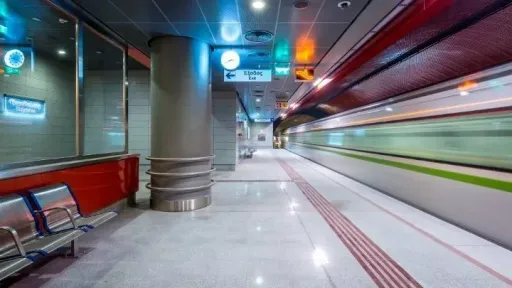
In Athens, public transport services will run on a limited schedule. Buses and trolley buses will operate only between 9 a.m. and 9 p.m., while metro lines 1, 2, and 3 — along with the tram — will function between 9 a.m. and 5 p.m. to allow people to attend planned demonstrations.
The Panhellenic Federation of Railway Workers (POS) and the air traffic controllers’ union have confirmed their participation, leading to widespread cancellations and delays in rail and air travel. Ferry services will also be suspended following a strike announcement by the Panhellenic Seamen’s Federation (PNO), while Attica’s taxi drivers will walk off the job demanding improved working conditions.
Teachers’ unions — including the Greek Primary Teachers’ Federation (DOE), the Federation of Secondary Education State School Teachers (OLME), and the Federation of Private School Teachers (OIELE) — have called on their members to join the strike.
GSEE and ADEDY have scheduled a central rally for 11 a.m. in Klafthmonos Square, while the Communist-affiliated union PAME will stage a separate demonstration at 10:30 a.m. outside the University of Athens. The Piraeus Labor Center will hold its protest at 10 a.m. in Municipal Theatre Square.
Similar demonstrations are expected in cities nationwide as well as in main cities in Western Thrace such as İskeçe (Xanthi), Rodop (Rodopi) and Meriç (Evros).
The labor reform legislation, which passed recently in Parliament, has been met with sharp criticism from unions, who argue that it weakens workers' rights, deregulates working hours, and opens the door to more flexible — and precarious — forms of employment.