Mandatory earthquake drills begin in Greek schools for 2026–2027 academic year

Schools across Greece have begun conducting earthquake preparedness exercises, with the Ministry of Education requiring primary and secondary schools to organise three emergency drills during the academic year to improve students' and staff's readiness for earthquakes and other natural disasters.
Earthquake preparedness drills are under way in schools across Greece for the 2026–2027 academic year, as the Ministry of Education reminds school principals of their obligation to implement safety measures protecting students and teachers against earthquakes and other natural disasters.
Given Greece's high seismic activity, the programme places particular emphasis on preparing school communities, familiarising students with emergency procedures and ensuring that evacuation plans can be implemented effectively.
Schools are already conducting their first exercises, teaching students how to respond before, during and after an earthquake.
THREE EARTHQUAKE DRILLS REQUIRED PER SCHOOL YEAR
Under the ministry's circular, all primary and secondary schools are required to take several preparatory measures, including:
- Drafting or updating their Emergency Response Plans to reflect each school's specific needs and circumstances.
- Informing and training teachers, school employees and students on basic earthquake safety procedures.
Conducting three emergency preparedness drills during the academic year, with particular emphasis on earthquake scenarios. - The exercises aim to equip students and teachers with the knowledge and practical skills needed to respond calmly and effectively during emergencies.
Schools are encouraged to practise different scenarios, including earthquakes occurring during lessons, breaks or school events, disruptions to telecommunications that prevent contact with emergency services, and the possibility of a tsunami affecting coastal areas.
Each exercise must be recorded in the school's official logbook and followed by an evaluation. Participants assess whether procedures were properly followed, identify weaknesses and recommend improvements for subsequent drills.
HOW STUDENTS SHOULD PROTECT THEMSELVES DURING AN EARTHQUAKE
Before each drill, students receive instructions on how to protect themselves depending on where they are when an earthquake strikes.
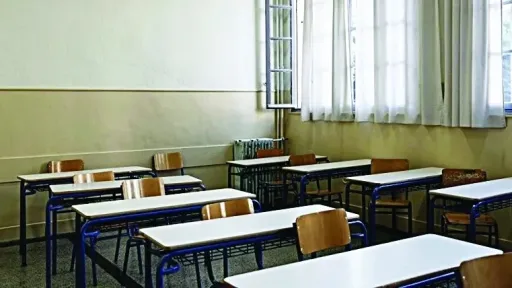
Those inside classrooms are instructed to immediately take cover underneath their desks and hold on to a desk leg to protect themselves from falling objects.
In other indoor areas where no sturdy table or desk is available, students should crouch in a safe location away from potentially dangerous objects and protect their heads and necks with their arms. They must remain in the protective position until the shaking stops.
Students who are outdoors should remain outside, keeping away from building façades, windows and other structures or objects that could pose a danger.
EVACUATION PROCEDURES AFTER AN EARTHQUAKE
Once the shaking has stopped and evacuation instructions have been given, students must calmly follow the designated escape routes under the supervision of their teachers.
Everyone is then directed to a predetermined safe assembly point outdoors, where attendance is checked to ensure that no one remains inside the school building.
Special procedures also cover the possibility of another earthquake occurring during evacuation. If a second tremor strikes, the evacuation must immediately be suspended and students must take protective measures wherever they are.
Once the shaking ends, the evacuation resumes from the point at which it was interrupted.
SCHOOLS URGED TO IDENTIFY SAFETY GAPS
Regular earthquake drills are considered an essential part of disaster prevention and efforts to strengthen earthquake awareness among students.
An educator quoted in the report stressed that the exercises are important for preparing children to respond correctly and quickly in emergency situations.
The systematic implementation and evaluation of these drills are intended to improve school safety and ensure that students and staff know how to act when a natural disaster occurs.