Greece's human rights record reviewed at the United Nations
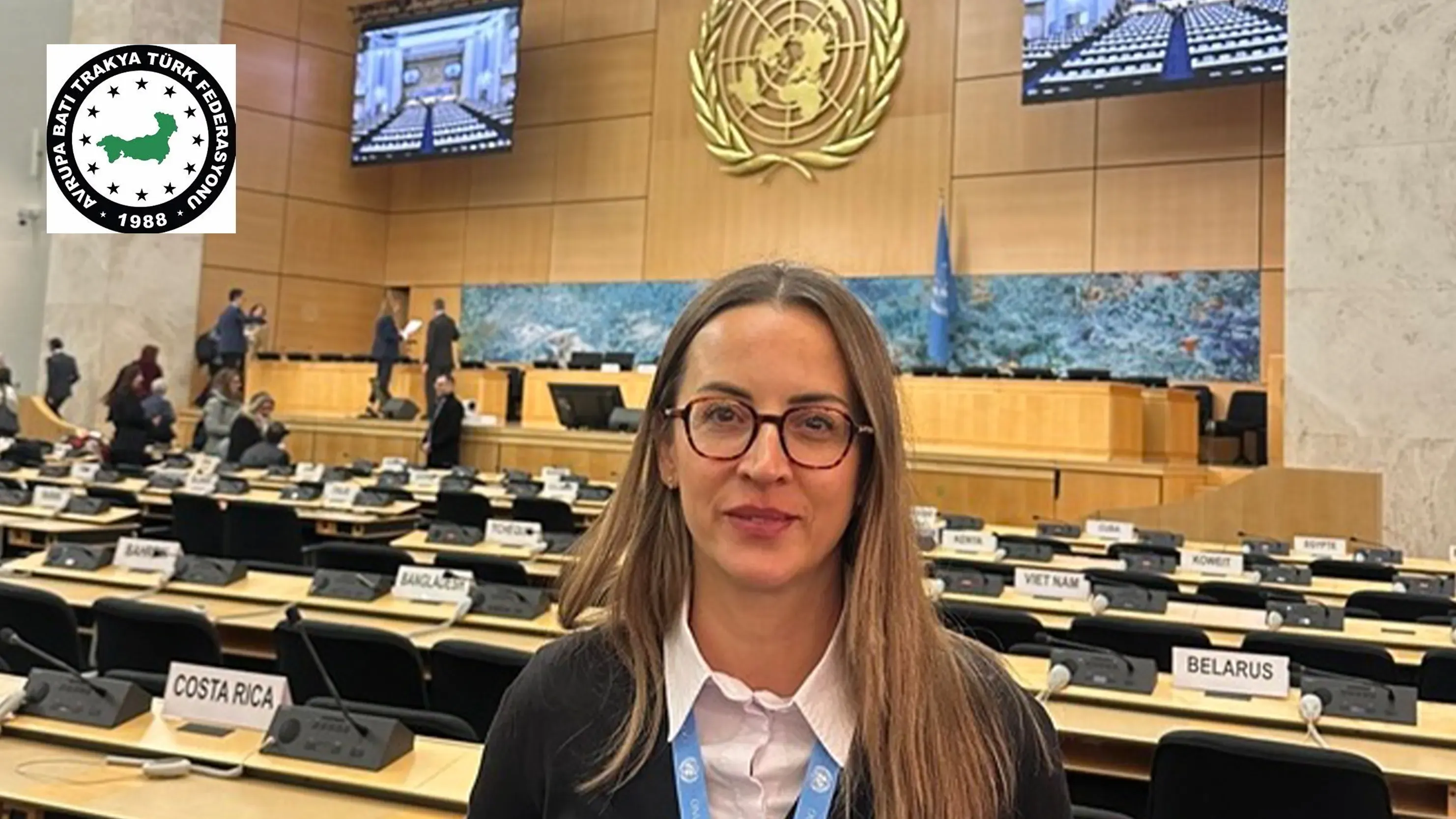
Greece's human rights record came under scrutiny at the United Nations Human Rights Council in Geneva on 2 November, with particular attention given to minority rights, freedom of association, education and religious autonomy in Western Thrace. During the country's fourth Universal Periodic Review (UPR), Türkiye called on Athens to recognise the ethnic Turkish identity of the Western Thrace Turkish Minority and respect its educational and religious autonomy.
The review was conducted by the UN Human Rights Council's UPR Working Group during its 53rd session. Melek Kırmacı, Director of International Relations at the Federation of Western Thrace Turks in Europe (ABTTF), attended the proceedings in Geneva.
The Greek delegation, led by Ambassador Ioannis Ghikas, Permanent Representative of Greece to the UN Office in Geneva, included 34 representatives from various ministries. It presented measures taken to advance human rights since the country's previous review in 2021.
In a video address, Greek Deputy Foreign Minister Alexandra Papadopoulou outlined reforms and administrative measures concerning the judiciary, the rule of law, gender equality, violence against women, children's and disability rights, migration and asylum policies, and efforts to combat racism and discrimination.
99 COUNTRIES ADDRESS GREECE'S HUMAN RIGHTS RECORD
Representatives of 99 countries took the floor during the review, making recommendations on a range of human rights issues.
Key concerns included the rights of migrants and asylum seekers, allegations of pushbacks, violence against women, the functioning of the judicial system, discrimination, hate crimes and the protection of human rights defenders.
Several countries called on Greece to implement its Second National Action Plan against Racism and Intolerance effectively and strengthen measures against hate speech.
Recommendations also addressed restrictive legal provisions, registration requirements and criminal penalties affecting civil society organisations working on migration and asylum issues. States urged Greece to ensure that these organisations and human rights defenders could operate freely.
TÜRKİYE RAISES THE RIGHTS OF THE WESTERN THRACE TURKISH MINORITY
Türkiye called on Greece to recognise the ethnic Turkish identity of the Western Thrace Turkish Minority, end state interference in the minority's religious affairs and officially recognise muftis elected by the community.
Türkiye also recommended that Greece:
- Implement European Court of Human Rights (ECtHR) judgments concerning Turkish associations.
- Guarantee the right to establish and administer Turkish minority schools.
- Open bilingual Greek-Turkish kindergartens.
- End the closure of Turkish minority schools.
- Address issues concerning the administration of minority foundations.
Combat hate speech and discrimination targeting the Western Thrace Turkish Minority.
Azerbaijan also recommended that Greece protect the educational, religious and cultural heritage rights of ethnic and ethno-religious minorities and take effective action against political and media hate speech targeting the Turkish community.
North Macedonia, meanwhile, called on Greece to fully respect everyone's right to individual self-identification and ensure its effective protection through national legislation.
GREECE RESPONDS TO QUESTIONS ON THE TURKISH MINORITY
Following the interventions by participating countries, representatives of the relevant Greek ministries responded to recommendations concerning their respective areas of responsibility.
Regarding the Western Thrace Turkish Minority, Elias Kastanas of the Greek Ministry of Foreign Affairs addressed the issues raised.
Referring to the 1923 Treaty of Lausanne, Kastanas described the community as a Muslim minority defined on the basis of religious identity and comprising Turkish, Pomak and Roma groups.
He stated that more than 240 mosques were operating in Western Thrace and that three muftiate offices had been reorganised, with the appointment process for muftis completed.
On freedom of association, Kastanas said Greece was engaging constructively with the Council of Europe regarding the implementation of ECtHR judgments.
He also stated that approximately 80 minority schools were operating in Western Thrace, serving more than 3,500 students. According to Kastanas, some schools had suspended operations because of insufficient student numbers, adding that the same policy applied to schools across the country, not only minority schools.
ABTTF SUBMITTED EIGHT RECOMMENDATIONS TO THE UN
Ahead of the review, ABTTF had submitted a written contribution to the United Nations, alongside an information brief and eight specific recommendations addressed to national delegations.
The federation raised concerns regarding the Turkish identity of the minority, freedom of association, educational and religious autonomy, muftiates, minority foundations and discrimination.
ABTTF President Halit Habipoglu criticised the Greek government's response to the recommendations, particularly the fact that the Ministry of Foreign Affairs had addressed issues concerning the minority.
"The fact that the Greek Ministry of Foreign Affairs speaks on matters concerning the Western Thrace Turkish Minority, which consists of citizens of its own country, clearly exposes the flawed and contradictory nature of our country's approach towards us," Habipoglu said.
He also pointed to the presence of a Political Affairs Office of the Greek Ministry of Foreign Affairs in İskeçe (Xanthi), describing it as an institutional dimension of this approach.
"From our perspective, this shows that our country, Greece, regards us as a foreign policy and security issue, even as a potential threat, rather than as its own citizens," he added.
Habipoglu further criticised Greece for maintaining its position at the UN, rejecting the minority's Turkish identity and disregarding its educational and religious autonomy.
He said ABTTF would closely monitor the outcome document of the UPR review, the recommendations addressed to Greece and their implementation.
The federation would also continue its work at the United Nations to defend the rights of the Western Thrace Turkish Minority, he added.
The UPR is a peer-review mechanism through which UN member states assess one another's human rights records. The recommendations made during the review are subject to subsequent consideration and follow-up; they do not, by themselves, constitute findings of violations by the UN.