Twelve major wildfires caused 80% of Greece’s fire damage in 2026
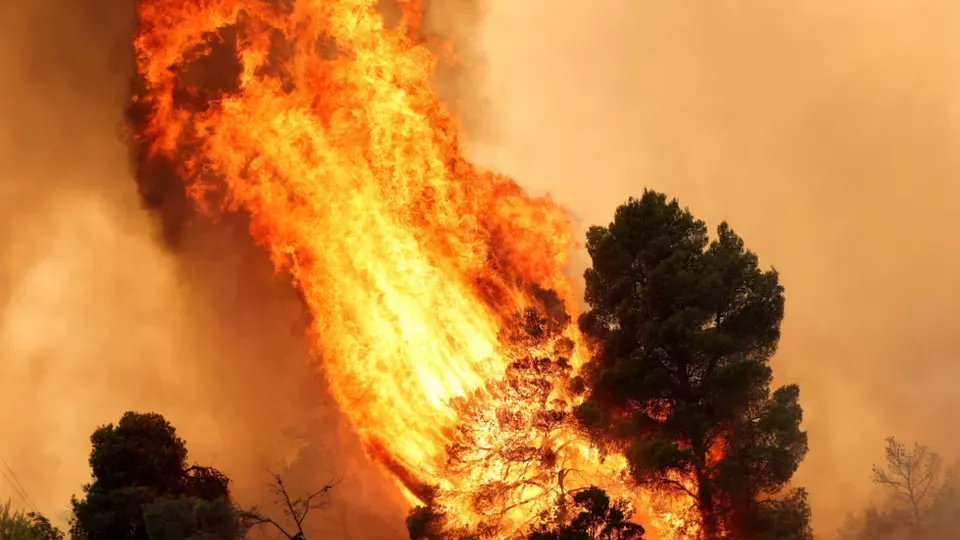
Greece recorded more than 40,000 hectares of land destroyed by wildfires in 2026, with just 12 major fires accounting for approximately 80% of the total damage, according to a joint report published on Tuesday by WWF Greece, the FLAME fire meteorology research group of the National Observatory of Athens and the Firewatch forest fire observatory.
Although the total area burned remained below the annual average of the past 20 years, the report identified serious weaknesses in the country's ability to contain large and complex wildfire incidents.
Eleven people, including firefighters and members of the public, lost their lives during the summer fires, while dozens of homes and businesses were destroyed.
The 2026 season ranked as the eighth most destructive of the past two decades in terms of burned area and number of fires.
“The basic lesson of 2026 is that an efficient response to most wildfires is not enough when a small number of incidents still cause most of the damage,” the report stated.
Major fires expose weaknesses in emergency response
The researchers stressed that the overall fire-weather conditions across most of Greece were relatively close to normal levels this year.
This indicates that the scale of destruction cannot be attributed to weather conditions alone, but also reflects the effectiveness of preventive measures, preparedness and the ability of firefighting services to manage major emergencies.
Extreme winds significantly hampered firefighting operations during some of the largest incidents.
The report highlighted the continuing difficulty of controlling large-scale wildfires, even when initial responses to most smaller fires are effective.
It also identified electricity distribution networks as a source of particularly destructive fires, calling for targeted preventive measures to reduce the risk of new outbreaks.
Thousands of hectares burned repeatedly
Another major concern is the repeated destruction of forest areas.
Nearly 6,000 hectares burned for a second time within less than 20 years, reducing the capacity of forests to regenerate naturally and increasing the risk of long-term environmental degradation.
The affected areas include parts of Rethymno in Crete, Attica, Porto Germeno and Mount Kithaironas in Viotia, southern Evia near Karystos, as well as the islands of Skyros and Paros.
In Attica and neighbouring Viotia, approximately 110,000 hectares have been destroyed by wildfires over the past two decades. Around 20% of the affected land has burned at least twice since 2006.
The wildfire near Porto Germeno alone destroyed approximately 11,300 hectares, more than a quarter of which had already been affected by fires during the previous 20 years.
Ancient forests face long-term damage
The report also raised concerns over a major wildfire near Konitsa in northern Greece, which was triggered by lightning and burned uncontrolled for approximately a month.
The fire devastated high-altitude forests of Bosnian Pine, a species also found on Mount Olympus that can live for more than 1,000 years.
Researchers warned that the destruction may have left too few mature trees capable of supporting the forest's natural regeneration.
“There do not appear to be enough unscathed mature trees left to contribute to the forest’s regeneration,” the joint statement said.
The damage raises concerns about the long-term survival of these valuable mountain ecosystems.
Prevention remains a critical priority
Despite the extensive destruction, the report acknowledged the effective initial response to most wildfires as a positive development during the 2026 season.
However, the concentration of damage in a small number of major incidents demonstrates that containing individual outbreaks quickly is not enough to protect forests and communities.
The findings underline the need for stronger prevention, improved emergency preparedness, better management of large-scale incidents and targeted action against fire risks linked to electricity infrastructure.
The report concludes that Greece's wildfire strategy must focus not only on preventing fires from spreading, but also on ensuring that the most dangerous incidents can be contained before they develop into major disasters.