Greece orders local authorities to accelerate flood protection measures ahead of winter

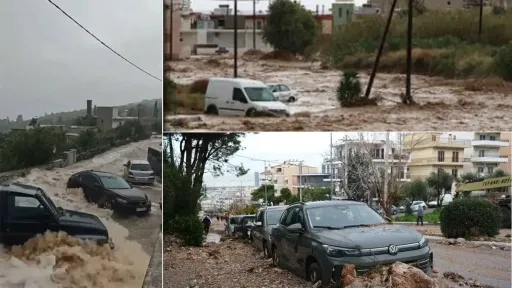
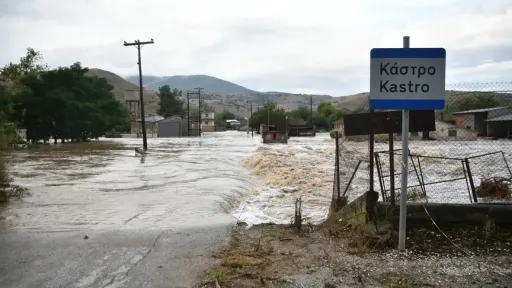
Greece's General Secretariat for Civil Protection has issued an urgent circular ordering municipalities and regional authorities to accelerate flood prevention and preparedness measures ahead of the coming winter.
The directive calls on local government authorities to immediately inspect infrastructure, map flood risks and strengthen coordination mechanisms, with particular attention to watersheds in areas affected by recent wildfires.
The circular sets a series of tight deadlines throughout September, effectively putting municipal and regional services on an accelerated schedule for flood preparedness.
Key September deadlines
Municipal and regional authorities have been given several specific deadlines:
- By the first 10 days of September: Municipal and regional coordination bodies must hold mandatory preparedness meetings. Representatives of municipal water and sewerage companies and land-improvement organizations must also participate.
- By September 15: Municipal and regional technical services must submit mapped lists identifying potentially dangerous locations, including road crossings, interchanges and streams intersecting with roads.
- By the end of September: Municipalities and regions must conduct civil protection exercises focused on flooding, including procedures for the organized evacuation of residents.
- By September 20: Non-island regions must identify and report to the General Secretariat for Civil Protection areas where flooding could simultaneously affect neighboring municipalities belonging to different regions.
Municipalities ordered to inspect drainage infrastructure
Municipal authorities have been instructed to immediately clean stormwater drainage networks under their responsibility.
The circular emphasizes that drainage grates should be cleaned repeatedly following heavy rainfall, particularly in urban areas.
Authorities must also record dangerous crossings and update evacuation plans under the “DARDANOS 2” framework.
Municipalities are further expected to identify suitable buildings that could serve as temporary safe shelters, including multi-story reinforced concrete or steel structures and buildings located on naturally elevated ground.
Faster warnings and emergency response
Mayors are also expected to maintain direct communication with the National Coordination Center for Operations and Crisis Management (ESKEDIK), notifying authorities immediately when local conditions indicate a dangerous development.
The aim is to ensure that emergency warnings, including 112 alerts, can be issued in time when necessary.
Municipalities must also submit updated monthly registers of available construction and emergency-response machinery, together with their operators, so the equipment can be mobilized rapidly during flood-related emergencies.
Regions given priority over streams in wildfire-affected areas
Regional authorities face additional responsibilities, particularly concerning the cleaning and maintenance of streams and riverbeds.
The circular gives absolute priority to waterways in areas affected by recent wildfires, where the loss of vegetation can significantly increase the risk of flooding, landslides and mudflows.
Regional authorities are therefore expected to inspect both mountainous and lowland sections of waterways and take preventive measures before the winter rainfall season.
The new measures reflect growing concern over the combined risks posed by extreme rainfall, wildfire-damaged watersheds and insufficiently maintained drainage infrastructure, placing local authorities under pressure to complete preventive work before the start of the winter season.